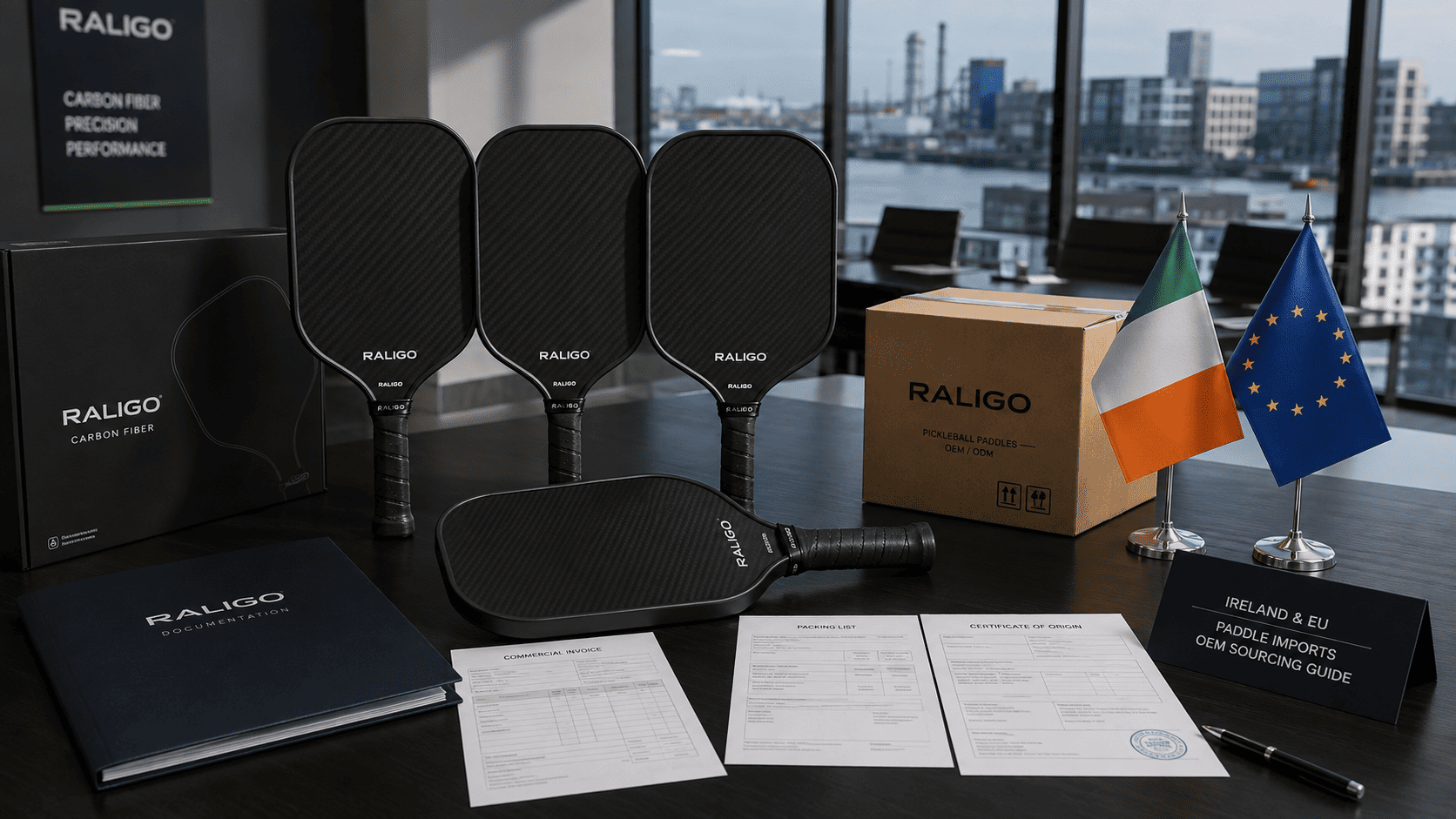
Ireland & EU Pickleball Paddle Import Guide for B2B Buyers
Pickleball is the fastest-growing racket sport in Europe, and Ireland is no exception. Court construction is accelerating, clubs are multiplying, and distributors are hunting for reliable paddle supply. But before a shipment of carbon fiber paddles clears customs in Dublin or Rotterdam, the buyers and the factories behind them have to get the compliance and procurement details right.
This guide is written for European distributors, brand owners, and procurement managers who want to import pickleball paddles from overseas factories into Ireland and the wider EU. It covers the marking rules, material regulations, tariff codes, customs entry points, and the OEM sourcing path that determines whether your paddle performs on court and clears at the border without delay.
1. CE vs UKCA: Which Marking Applies in Ireland?
A common point of confusion is that Ireland is a member of the European Union, while the United Kingdom is not. Ireland applies the CE marking regime for most products placed on the Irish market. The UKCA marking applies to Great Britain, not to Northern Ireland, which follows EU rules for goods.
| Market | Marking Required | Notes |
|---|---|---|
| Republic of Ireland (EU) | CE | Full EU single-market access |
| Northern Ireland | CE (EU rules) | Windsor Framework keeps EU alignment |
| Great Britain | UKCA or CE (transitional) | Separate regime |
For a paddle manufacturer shipping to a distributor in Dublin, the CE marking is the operative requirement. The paddle itself, as sports equipment, is not subject to the same machinery directive as industrial goods, but the materials and any electrical components in accessory products must comply with applicable rules.
2. REACH and Material Compliance for Carbon Fiber Paddles
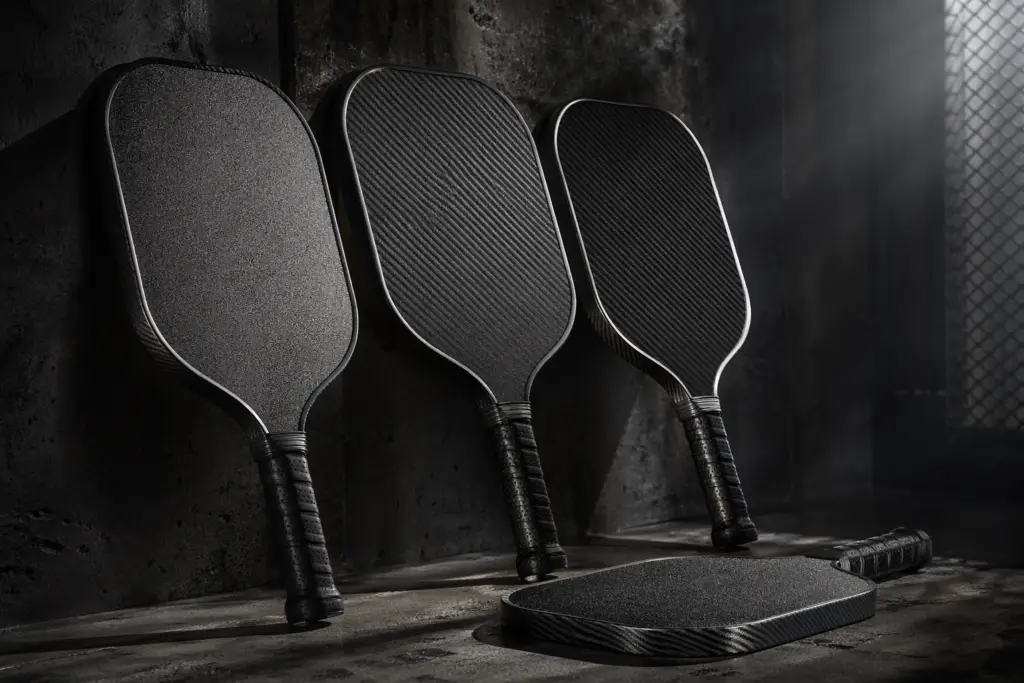
The most enforcement-heavy area for imported paddles is chemical compliance under REACH — the EU regulation on the Registration, Evaluation, Authorisation and Restriction of Chemicals. A carbon fiber paddle is built from composite face sheets, a core (polypropylene honeycomb, polymer, or foam), an edge guard, and a grip.
| Component | REACH Concern | Factory Action |
|---|---|---|
| Carbon fiber face sheets | No restricted fillers | Use virgin tows, verify SDS |
| Handle grips | Phthalates, PAHs | PVC-free materials, lab test |
| Adhesives / edge guard | VOC, restricted plasticizers | REACH-compliant resins |
| Core materials | Foam blowing agents | CFC-free manufacturing |
A factory that can supply test reports for the resin systems and grip materials makes the import path much smoother. OEM buyers should ask for material data sheets and, where requested, third-party lab results before committing to production. Cutting corners here leads to detention at customs and reputational damage in a market that takes compliance seriously.
3. Tariff Codes and Duty Rates for Paddle Imports
The correct harmonized system code for a pickleball paddle determines the duty you pay at import. Most racket and paddle sports equipment falls under Chapter 95 of the EU Combined Nomenclature. There is no single “pickleball” line item, so consistent classification matters.
| Item | HS Code (EU CN) | Typical Duty |
|---|---|---|
| Pickleball paddle (sports equipment) | 9506.29 / 9506.99 | Approx. zero to 2.7% depending on origin |
| Carbon fiber face sheets (in wide form) | 3921 / 7019 | Higher, if imported separately |
| Grips and accessories | 9506.99 | Varies |
Paddles imported from China, Vietnam, or Taiwan are generally classified under Chapter 95, and the EU applies relatively low or zero duty on most sports equipment. The larger cost is often VAT — charged at the point of entry (Ireland VAT is 23%) plus any customs brokerage fees. A B2B importer should model the landed cost including duty, VAT, freight, and insurance before setting wholesale pricing.
4. Customs Entry Points and Documentation for Ireland
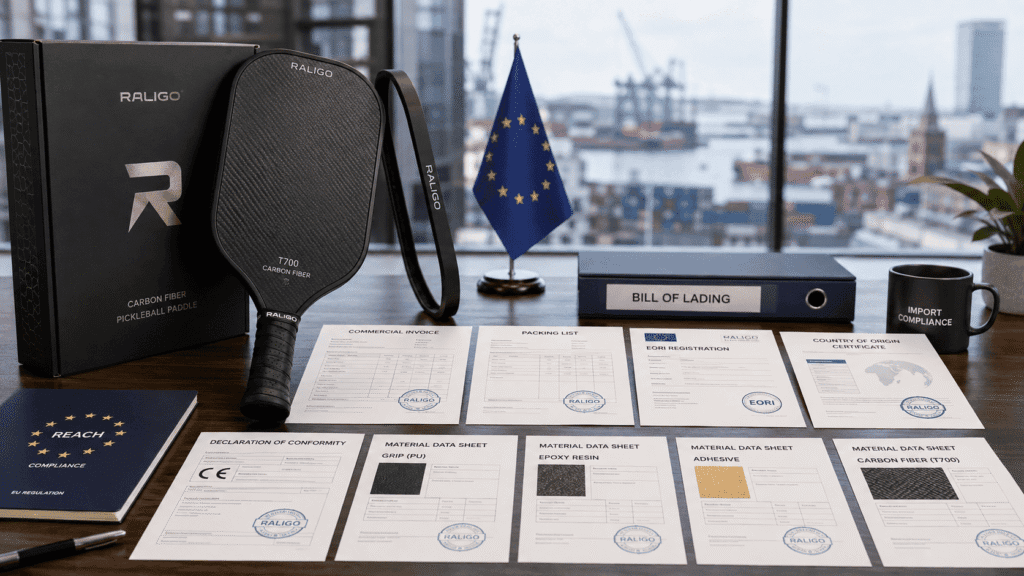
Ireland’s main gateways for container and air freight are Dublin Port, Rosslare Europort, Cork, and Shannon Airport, with a large share of EU-bound cargo also landing in Rotterdam or Felixstowe and moving overland. Each entry requires a complete commercial invoice, packing list, and bill of lading or airway bill.
For customs clearance, the buyer needs an EORI number and, for goods above certain thresholds, a customs declaration filed through the EU’s new systems. The manufacturer should provide a country of origin certificate and, where applicable, a declaration of conformity. Delays almost always trace back to mismatched documentation — descriptions that don’t match the HS code, or vague material declarations.
5. OEM Sourcing Path: From Factory to European Warehouse
The procurement path for a European brand usually starts with an OEM or ODM factory in China or Vietnam. The buyer specifies the construction — core density, face layer count, edge guard profile, and grip type — and the factory produces under the buyer’s brand. This is where paddle performance is decided before customs is ever involved.
| Sourcing Decision | What to Specify | Why It Matters |
|---|---|---|
| Core density | Low / mid / high (g/cm³) | Affects weight, pop, and feel |
| Face construction | Carbon fiber weave 3K / 12K / 18K | Stiffness and durability |
| Edge guard | Thermofusion vs adhesive | Impact resistance in use |
| Grip | Overgrip vs integrated grip | Player comfort and REACH status |
| QC sampling | AQL level, drop test | Consistent quality at scale |
Specifying core density and carbon fiber construction in the factory purchase order is what separates a paddle that plays predictably from one that ships with inconsistent weight and balance. A European buyer should negotiate a pre-shipment inspection report and reserve samples for in-house testing before the container leaves the factory.
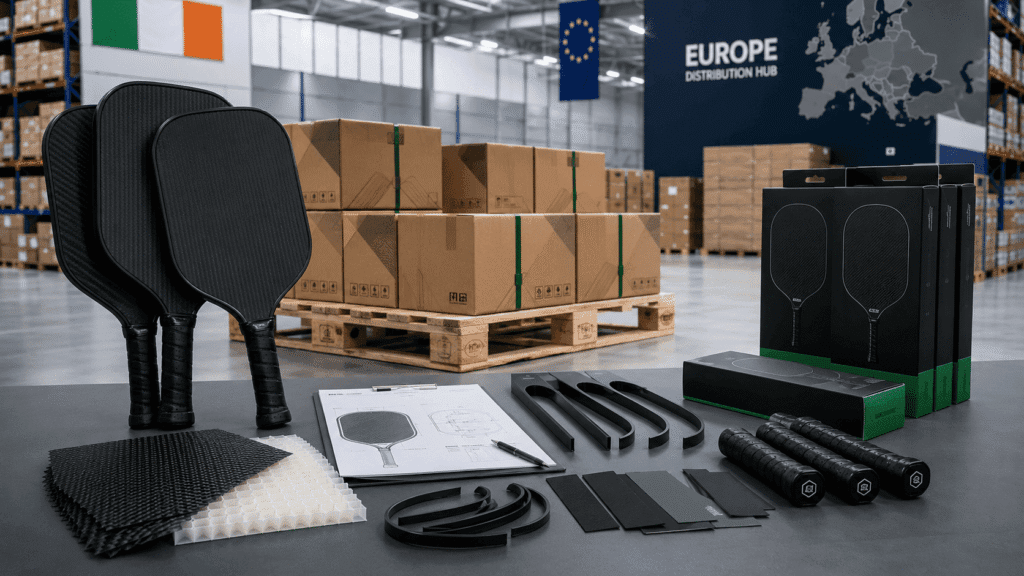
6. Building a Resilient EU Supply Chain
The brands that succeed in the European pickleball wave plan for more than the first container. They split orders across multiple factories to avoid single-source risk, hold buffer stock in an EU or UK warehouse to hedge against port delays, and maintain compliance files that survive an audit.
Warehousing in Ireland or mainland Europe shortens the final-mile time to Danish clubs, German distributors, and French retailers. It also moves VAT risk: with an IOSS or deferred VAT arrangement for imports, the money stays in the business’s cash flow rather than being tied up at customs. For a growing brand, that cash flow difference can be the difference between scaling and stalling.
7. Final Checklist for Your First EU Shipment
Before your first container of carbon fiber pickleball paddles leaves the factory, run this checklist. A missed item here is costly at the border, not at the supplier.
- [ ] Confirm CE marking applies and your Declaration of Conformity is drafted
- [ ] Collect REACH-compliant material test reports for grips, resins, and adhesives
- [ ] Lock the correct HS code and confirm duty and VAT rates for Ireland entry
- [ ] Register your EORI and set up your customs broker and freight forwarder
- [ ] Specify core density, face weave, edge guard, and grip in the OEM purchase order
- [ ] Arrange pre-shipment inspection and ship reserve samples for in-house testing
- [ ] Decide on buffer stock location (EU or UK warehouse) for demand spikes
Get these right and the paddle performance you designed in the factory reaches the player’s hands intact, with the paperwork clean and the duty paid at the right rate. That is the foundation of a durable, growing pickleball brand in Ireland and across Europe.
Frequently Asked Questions
What compliance steps do I need before importing pickleball paddles into the EU?
Confirm the paddle meets EU general product safety expectations and CE-relevant requirements, prepare the required technical documentation, and align importer responsibilities. Work with a factory that documents materials and testing so the paperwork is clean and duty is paid at the correct rate when the shipment crosses the border.
Should I hold buffer stock in the EU or the UK?
It depends on whether you primarily serve EU or UK customers. Holding reserve stock in a local warehouse (EU or UK) supports demand spikes and reduces cross-border duty friction, but adds holding cost. Match buffer stock location to where your core buyers are concentrated.
What should I include in an OEM purchase order for imported paddles?
Specify core density, face weave, edge guard, and grip in the purchase order before production. Arrange pre-shipment inspection, ship reserve samples for in-house testing, and confirm labeling/packaging compliance for the destination market.
How do I verify paddle quality before committing to a full container?
Request a sample review and pre-shipment inspection before full production, then keep ship reserve samples for in-house testing. This lets you confirm the paddle performance you designed reaches the player’s hands intact before you commit to thousands of units.
Ready to Get Started?
Talk to our OEM team about your pickleball paddle manufacturing needs. From spec development to bulk production, we handle it all at our ISO-compliant factory.