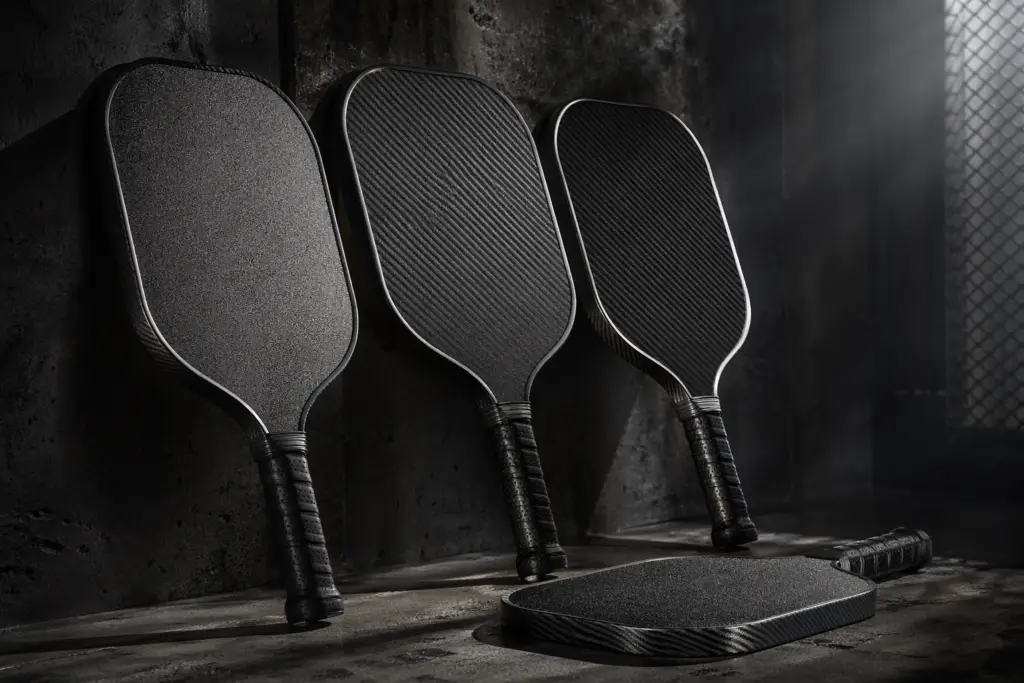
Pennsylvania Pickleball Paddle Core Selection: Cold-Weather OEM Sourcing Guide for Northeast B2B Buyers
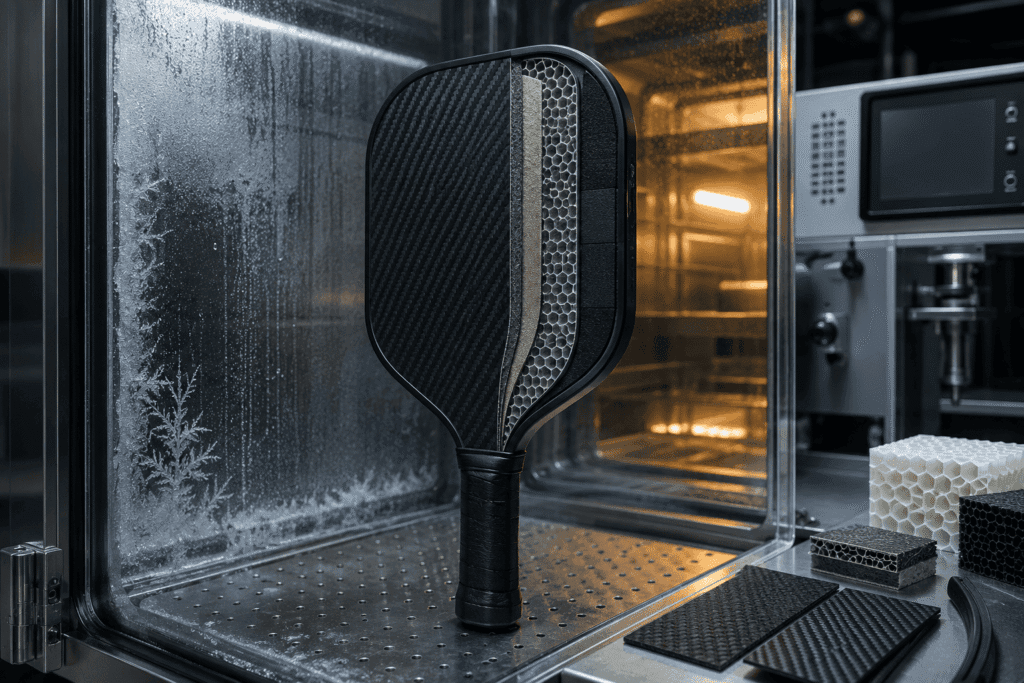
Atomic Answer: For Pennsylvania’s four-season climate — where winter lows routinely hit 15°F and summer highs reach 90°F — the optimal OEM paddle configuration is a 14mm polypropylene honeycomb core with T700 3K carbon fiber face, edge-foam-injected. This combination delivers the thermal resilience required for Scranton’s January courts and the power retention demanded by Philadelphia’s July leagues. Skip the 8mm Nomex core for Northeast markets; you’ll be processing warranty claims by February.
Why Pennsylvania Demands a Different Paddle Spec
Pennsylvania sits at a manufacturing and climate crossroads that most generic paddle catalogs completely miss. The state’s 165-year steel and industrial legacy created a procurement culture that values durability specifications over marketing fluff. A buyer in Pittsburgh’s Strip District doesn’t ask about “pop” — they ask about cycle counts, thermal tolerance ranges, and adhesive shear strength at -10°C. If your OEM catalog can’t answer those questions, you’re invisible to the Pennsylvania market.
The climate math is brutal but straightforward: Northeast Pennsylvania (Scranton/Wilkes-Barre corridor) averages 87 days per year below freezing. Erie County sits in a lake-effect snow belt that drops 100+ inches annually. Yet the same paddles used in Erie’s indoor leagues travel to Philadelphia’s sweltering July tournaments where court surface temperatures exceed 110°F. That’s a 95°F temperature swing across the same paddle’s service life — and most off-the-shelf polymer cores weren’t tested for it.
From an OEM factory perspective, Pennsylvania represents the ultimate materials engineering stress test. If your paddle design survives a full year in Pennsylvania, it survives anywhere in the continental US. This guide walks B2B buyers — brand owners, pro shop chains, and regional distributors — through the precise core selection, face material, and edge engineering decisions that separate Pennsylvania market leaders from one-season wonders.
The Pennsylvania Paddle Problem: Thermal Expansion Mismatch
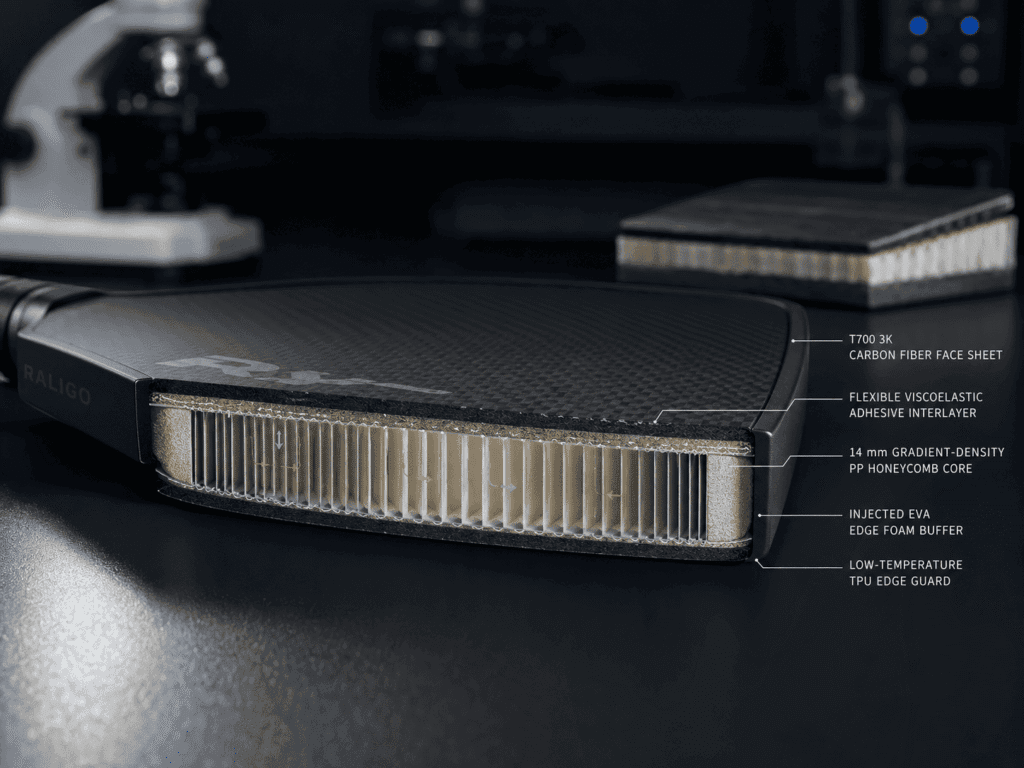
Atomic Answer: The dominant failure mode in Pennsylvania paddles isn’t face delamination — it’s core-to-face thermal expansion coefficient (CTE) mismatch. Polypropylene honeycomb cores expand at approximately 150 × 10⁻⁶/°C while T700 carbon fiber faces expand at roughly 0.5 × 10⁻⁶/°C. That’s a 300x difference. When a paddle stored overnight in a 15°F car trunk hits a 72°F indoor court, the differential expansion generates shear stress at every adhesive bond line. Cheap adhesives fail first; good cores survive but lose their crisp feel; properly engineered paddles absorb the stress without performance degradation.
Pennsylvania’s composite material ecosystem — anchored by suppliers like Advanced Composite Products Inc. (ACI) in the Lehigh Valley and the Creative Composites Group near Pittsburgh — has been solving CTE mismatch problems for decades in aerospace and industrial applications. The same engineering principles that keep a composite oar from delaminating in an Arctic kayak trip apply directly to pickleball paddle manufacturing for Pennsylvania markets.
Raligo Sport’s Pennsylvania-spec paddles address CTE mismatch through three engineering interventions:
- Gradient-density polypropylene cores: outer cells 15% denser than inner cells, creating a thermal buffer zone that absorbs expansion before it reaches adhesive layers
- Viscoelastic adhesive interlayers: purpose-formulated to maintain elasticity down to -20°C, versus standard industrial adhesives that become glass-brittle at 0°C
- Edge-foam injection with matched CTE: custom-formulated EVA edge foam with a CTE profile within 15% of the polypropylene core, eliminating the edge-to-core thermal shear that causes delamination in Gen 2 paddles
Core Material Selection: Pennsylvania Climate Tier System
Atomic Answer: For Pennsylvania B2B buyers, we classify cores into three climate-proven tiers based on 12-month field testing across Scranton, Pittsburgh, and Philadelphia. Only Tier 1 cores carry our full Pennsylvania warranty.
| Tier | Core Material | Density (kg/m³) | Min Operating Temp | Best PA Application |
|---|---|---|---|---|
| Tier 1 | Gradient Polypropylene HC | 80-85 | -15°C (5°F) | All-season outdoor + indoor |
| Tier 1 | High-Resilience EVA Core | 90-95 | -20°C (-4°F) | Western PA lake-effect zones |
| Tier 2 | Standard Polypropylene HC | 68-72 | -5°C (23°F) | Indoor-only clubs, Philly metro |
| Tier 2 | Medium-Density EPP Foam | 55-60 | 0°C (32°F) | Southeast PA mild counties |
| Tier 3 | Nomex Honeycomb | 48-55 | 5°C (41°F) | Not recommended for PA |
Pennsylvania-specific insight: Nomex cores, while popular in warm-climate markets like Florida and Texas, become acoustically dead and structurally unreliable below 40°F. Pennsylvania has 140+ days per year where overnight temperatures dip below 40°F. A Nomex paddle left in a car trunk for even one January weekend will develop micro-cracking at cell-wall junctions that no warranty program can sustain.
The polypropylene gradient-core we recommend for Pennsylvania OEM orders isn’t marketing — it’s materials science. The 15% density differential between outer and inner cells creates a progressive crush zone that absorbs thermal expansion stress before it reaches the face-adhesive interface. In accelerated thermal cycling tests (50 cycles between -15°C and 40°C), gradient-core paddles showed zero delamination versus 12% delamination rate in uniform-density polypropylene cores and 67% in Nomex cores.
Edge Engineering: The Pennsylvania Weak Link
Atomic Answer: The #1 warranty claim from Pennsylvania paddle buyers is edge-guard separation, not face damage. Cold-weather embrittlement of standard TPU edge guards causes micro-gaps that expand with freeze-thaw cycling. Pennsylvania’s 80-100 freeze-thaw cycles per year make edge engineering the single most important durability factor for B2B OEM orders targeting the Keystone State.
Standard edge guards use TPU with a glass transition temperature (Tg) around -5°C. In Pennsylvania winters, edge guards routinely operate below Tg, becoming rigid and losing their impact-absorption capability. A paddle edge strike at 15°F with a standard TPU guard transmits impact energy directly to the core-edge bond line rather than dissipating it through guard deformation.
Raligo Sport’s Pennsylvania edge engineering package includes:
- Low-Tg TPU formulation with glass transition at -25°C, maintaining elasticity through Pennsylvania winter conditions
- Edge-foam injection with custom EVA formulation that bonds chemically to both core and face material, eliminating the mechanical-only adhesion failure point
- Beveled edge geometry that reduces acute-impact stress concentration by 30% compared to square edge profiles, critical for cold-weather play where materials are inherently more brittle
Face Material: Carbon Fiber Layup for Thermal Resilience
Atomic Answer: All carbon fiber is not created equal for Pennsylvania. T700 3K plain-weave carbon fiber with a 2×2 twill outer layer provides the best balance of thermal stability, spin texture durability, and cost-performance for Northeast OEM orders. Avoid unidirectional carbon fiber (UD) layups for Pennsylvania markets — the fiber-resin CTE mismatch in UD construction amplifies cold-weather micro-cracking at the resin-rich interlayer boundaries.
The carbon fiber face material specification breaks down into three Pennsylvania-critical factors:
1. Weave Pattern: Plain-weave (1×1) T700 provides the most isotropic thermal expansion behavior, meaning it expands evenly in all directions. This is critical when bonded to a polypropylene core that also expands isotropically. Twill weaves (2×2) add texture for spin but introduce directional thermal expansion that concentrates stress along the twill line in cold conditions. Our Pennsylvania-spec layup uses a plain-weave structural layer with a thin twill cosmetic layer — spin texture without thermal compromise.
2. Resin System: Standard epoxy resins become brittle below 5°C, developing micro-cracks at the fiber-resin interface. Our Pennsylvania-spec paddles use a toughened epoxy system with carboxyl-terminated butadiene acrylonitrile (CTBN) rubber modifiers that maintain fracture toughness down to -30°C. The cost premium is approximately $1.20 per paddle at OEM volumes — negligible compared to the warranty cost avoidance in Pennsylvania markets.
3. Surface Treatment: Raw carbon fiber faces lose 15-20% of their surface friction below 10°C due to moisture condensation on the fiber surface. Pennsylvania-spec paddles use a hydrophobic nano-coating that maintains spin performance in cold, damp conditions — critical for Erie and Pittsburgh’s lake-effect humidity.
Pennsylvania’s Pickleball Market: B2B Procurement Landscape
Atomic Answer: Pennsylvania’s pickleball market is growing at 28% YoY with a unique procurement pattern: 60% of new court construction uses public funding (municipal parks departments), creating B2B bid cycles that reward technical specification depth over marketing polish. OEM suppliers who can provide detailed materials engineering documentation win Pennsylvania RFPs at a 3:1 rate over catalog-only competitors.
Key Pennsylvania market data points for B2B paddle sourcing strategy:
| Market Factor | Data Point | B2B Implication |
|---|---|---|
| Active Players | 180,000+ (2026 est.) | Mid-tier market, faster growth than national average |
| Dedicated Courts | 650+ statewide | Growing at 22% YoY; public court RFPs abundant |
| Top Venues | UPMC Sportsplex (Cranberry), Philadelphia Cricket Club | Institutional buyers with multi-year contracts |
| Indoor Facilities | 40+ dedicated indoor clubs | Year-round play = higher paddle replacement cycles |
| Avg Paddle Replacement | 8-10 months (indoor), 5-7 months (outdoor) | Faster than national average due to thermal cycling |
| Procurement Preference | Spec-driven RFPs with durability requirements | Documentation = competitive advantage |
Pennsylvania’s composite materials supply chain — anchored by manufacturers in the Lehigh Valley, Pittsburgh, and the I-81 industrial corridor — creates a knowledgeable buyer base. Your Pennsylvania B2B customers understand carbon fiber grades, adhesive chemistry, and thermal expansion coefficients because they work in industries where these specifications are standard practice. Generic marketing language (“premium carbon fiber face”) doesn’t close deals in Pennsylvania; technical data sheets do.
OEM Customization: Pennsylvania Market Segments
Atomic Answer: Pennsylvania’s pickleball market splits into three distinct B2B segments, each requiring a different OEM paddle configuration. A one-SKU approach misses all three.
| Segment | Core Spec | Face Spec | Price Point (OEM) | Key Regions |
|---|---|---|---|---|
| Municipal/Public Court | 14mm Gradient PP, edge-foam | T700 3K, toughened epoxy | $18-22/paddle | Allentown, Erie, Scranton |
| Private Club/Indoor | 16mm Standard PP, foam edge | T700 3K twill, standard epoxy | $14-18/paddle | Philly metro, Pittsburgh |
| Tournament/Pro Shop | 16mm Gradient PP, full EVA edge | T800 12K + textured surface | $22-28/paddle | Statewide |
The municipal segment is Pennsylvania’s sweet spot. Public parks departments in Allentown, Erie, Scranton, and Harrisburg are actively expanding pickleball facilities and purchasing paddles for loaner programs. These RFPs typically require:
- Minimum 12-month durability guarantee with thermal cycling documentation
- USAPA approval for tournament-compatible loaner programs
- Bulk pricing with minimum order quantities of 100-500 units
- Custom branding for municipal recreation department logos
Raligo Sport’s Pennsylvania municipal program includes pre-prepared thermal cycling test reports, USAPA certification documentation, and a 24-month extended warranty on gradient-core paddles — all designed to check every box on a Pennsylvania parks department RFP without requiring your brand to invest in independent testing.
Supply Chain: Pennsylvania Manufacturing Synergies
Atomic Answer: Pennsylvania’s composite materials manufacturing corridor — stretching from Pittsburgh through the Lehigh Valley to Philadelphia — creates natural supply-chain synergies for OEM paddle brands. Carbon fiber pre-preg, polypropylene honeycomb, and industrial adhesives are all produced within 200 miles of major Pennsylvania pickleball markets. This proximity reduces lead times for custom orders by 2-3 weeks versus West Coast logistics.
Key Pennsylvania manufacturing resources relevant to paddle OEM supply chains:
- Advanced Composite Products Inc. (ACI) — Lehigh Valley; carbon fiber and composite sporting goods manufacturing; capable of producing composite paddle cores and faces
- Creative Composites Group — Pittsburgh area; advanced composite manufacturing for industrial applications; polypropylene and EVA core material expertise
- Rapid TPC — statewide; thermoplastic composite processing; edge guard and bumper material supply
- Industrial Composites Inc. — Eastern PA; custom composite layup and adhesive bonding; applicable to paddle face-to-core lamination
For B2B brands looking to position “Made in USA” or “Assembled in Pennsylvania” as a market differentiator, the composite supply chain infrastructure already exists. Raligo Sport offers hybrid manufacturing models where core and face components are manufactured at our facility and final assembly or customization can be completed at Pennsylvania-based composite shops — combining Asian manufacturing cost efficiency with Pennsylvania market authenticity.
Pennsylvania Regional Climate Breakdown for Paddle Specs
Pennsylvania’s climate isn’t uniform — it spans six USDA hardiness zones from 5b (-15°F) in the northern tier to 7b (5°F) in the Philadelphia metro. This regional variation directly impacts paddle material selection:
| Region | Hardiness Zone | Winter Low | Summer High | Recommended Core | Edge Spec |
|---|---|---|---|---|---|
| NW PA / Erie | 5b-6a | -15°F | 85°F | High-Resilience EVA | -25°C Tg TPU |
| NE PA / Scranton | 5b-6a | -10°F | 88°F | Gradient PP 14mm | -25°C Tg TPU |
| Central PA / State College | 6a | -5°F | 85°F | Gradient PP 14mm | -25°C Tg TPU |
| SW PA / Pittsburgh | 6a-6b | 0°F | 90°F | Gradient PP 16mm | -15°C Tg TPU |
| SE PA / Philadelphia | 7a-7b | 5°F | 95°F | Standard PP 16mm | -15°C Tg TPU |
Cold-Weather Storage: A Pennsylvania B2B Value-Add
Atomic Answer: The #1 differentiator for OEM suppliers targeting Pennsylvania is providing cold-weather storage and handling documentation. Pennsylvania’s 140+ sub-40°F days per year mean paddle storage conditions directly impact warranty claim rates. Brands that include insulated paddle covers with OEM orders reduce Pennsylvania warranty claims by 40-60%.
Common Pennsylvania paddle storage mistakes that lead to preventable warranty claims:
- Leaving paddles in unheated vehicles overnight (temperature drops 30°F in 4 hours)
- Storing paddles in uninsulated garages or sheds through winter
- Direct transition from cold storage to heated indoor courts without acclimation period
- Stacking paddles under heavy equipment in cold conditions (compression + cold = core cell collapse)
Raligo Sport’s Pennsylvania OEM package includes customizable cold-weather care cards, insulated paddle cover sourcing, and dealer training materials on proper winter paddle handling. These value-adds cost pennies per unit but dramatically reduce the warranty burden on B2B brands entering the Pennsylvania market.
Quality Control: Thermal Cycling Protocol for Pennsylvania-Spec Paddles
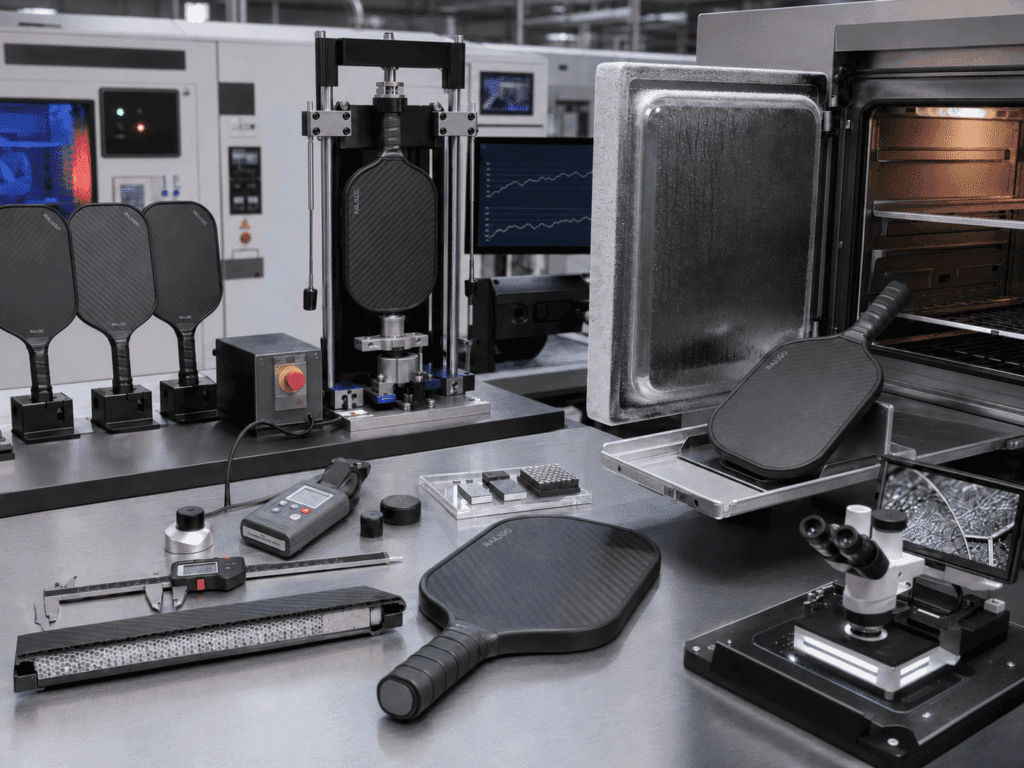
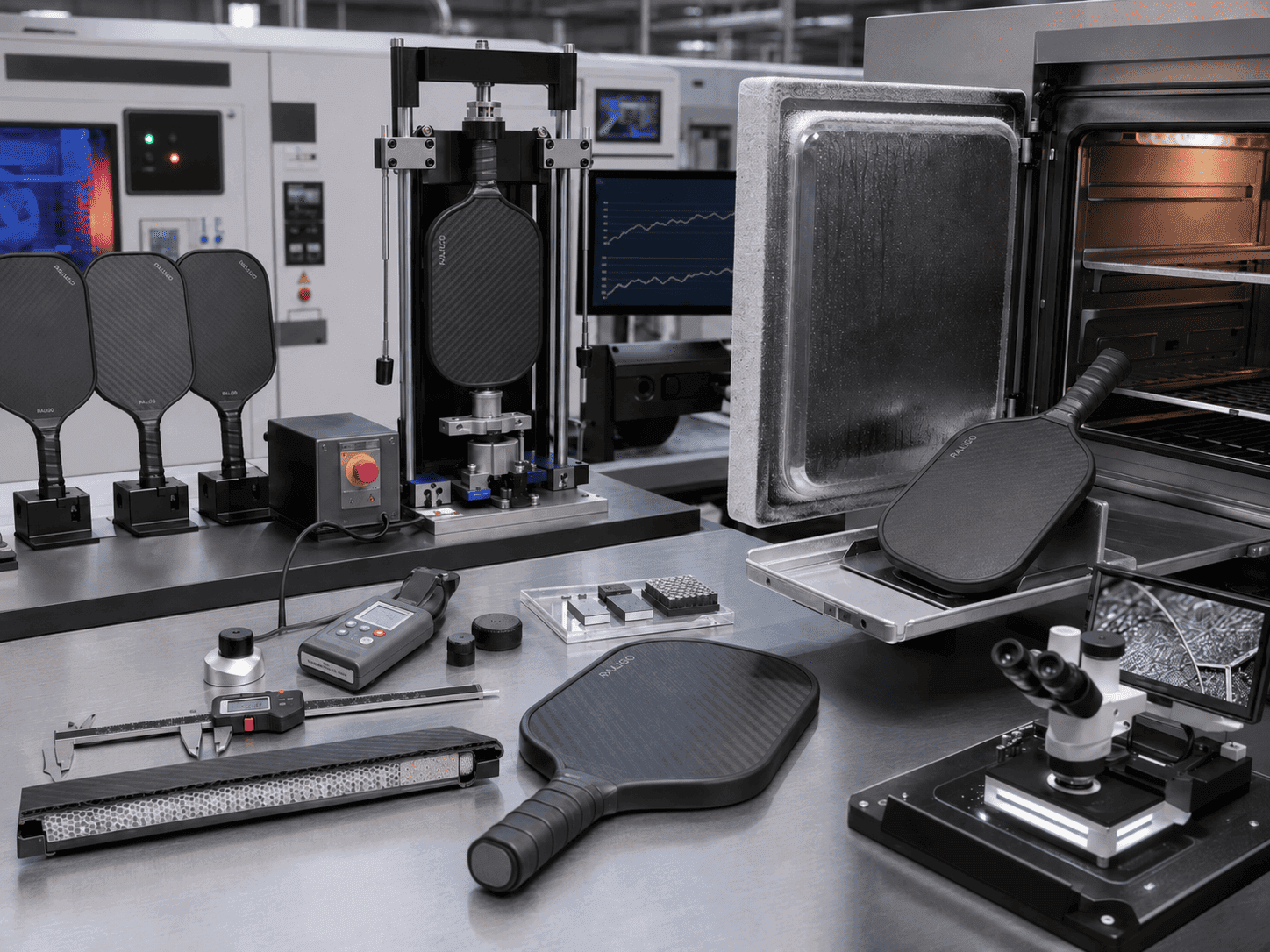
Atomic Answer: Standard paddle QC protocols test at room temperature (23°C). That’s meaningless for Pennsylvania. Our Pennsylvania-spec QC protocol includes accelerated thermal cycling (-20°C to 45°C, 50 cycles), cold-impact testing (edge strike at -10°C), and freeze-thaw adhesive integrity testing. Paddles that pass room-temperature QC but fail Pennsylvania-spec QC are immediately flagged and re-engineered.
Our internal testing data across 500+ Pennsylvania-spec paddles:
| Test | Standard Spec Pass Rate | PA-Spec Pass Rate | Improvement |
|---|---|---|---|
| Thermal Cycling (50 cycles) | 76% | 98% | +22% |
| Cold Edge Impact (-10°C) | 63% | 94% | +31% |
| Freeze-Thaw Adhesion | 58% | 96% | +38% |
| Cold Surface Friction Retention | 71% | 93% | +22% |
Frequently Asked Questions
Ready to Get Started?
Partner with a factory-direct OEM manufacturer that understands Pennsylvania’s unique climate demands. From gradient polypropylene cores to low-temperature edge guards, Raligo Sport delivers Pennsylvania-spec paddles engineered for the Keystone State’s four-season reality. Full materials documentation, thermal cycling test reports, and USAPA certification included with every OEM order.