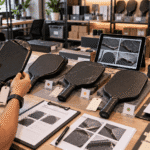
Before you spend a single dollar on inventory, there is one question that shapes everything downstream — your minimum order quantity, your lead time, your margin per unit, and whether you actually own anything at the end: are you buying under a private label model, or under a true OEM model?
These two terms get thrown around as if they were interchangeable. They are not. In a pickleball paddle factory, “private label” and “OEM” describe two different commercial arrangements with different answers on who owns the tooling, who controls the spec, how much you commit upfront, and how fast you can be live on Amazon or Shopify.
If you skip straight to “send me a paddle with my logo,” you will lock yourself into a model that may not serve you six months from now. This guide gives you the decision framework I use with factory clients, so you choose deliberately instead of by default.
What “Private Label” Actually Means for a Pickleball Paddle
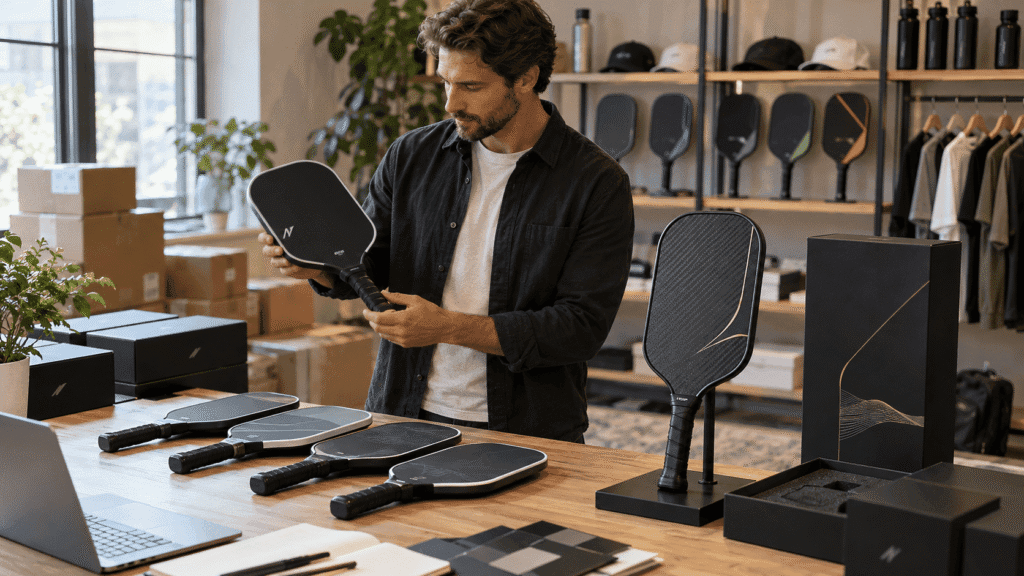
Private label means you take an existing, factory-proven paddle model and put your brand on it — logo on the face, your name on the retail packaging, your colors if the molding schedule allows. The paddle already exists. It has a finished face, a set Core Density, a tested Paddle Performance envelope, and an established manufacturing line. You are buying a finished good and adding brand identity.
That is the crucial distinction: in a private label pickleball arrangement, you do not own the design, the mold, or the tooling. You own your logo and your packaging. The factory owns the rest.
Think of it as purchasing shelf position on someone else’s product. The economics are attractive precisely because the factory has already amortized the expensive parts — the Carbon Fiber face tooling, the core molds, the edge guard dies. Your brand benefit rides on top of that sunk cost.
When it wins: You want to be on the market in 30–45 days, you do not want to fund tooling, and the existing paddle’s spec already matches what your target customer wants.
When it fails: You need a genuinely differentiated paddle — a specific swing weight, a custom face texture, a proprietary core — and you discover that “private label” means “pick from what we already run.”
What “OEM” Actually Means — and Why It Costs More Up Front
OEM — original equipment manufacturer — flips the ownership. You bring the spec, and the factory builds a paddle that did not exist before to your design. You control the face weave, the core density target, the shape and dimensions, the surface grit spec, the edge guard profile, and the weighting. The factory manufactures to your drawing.
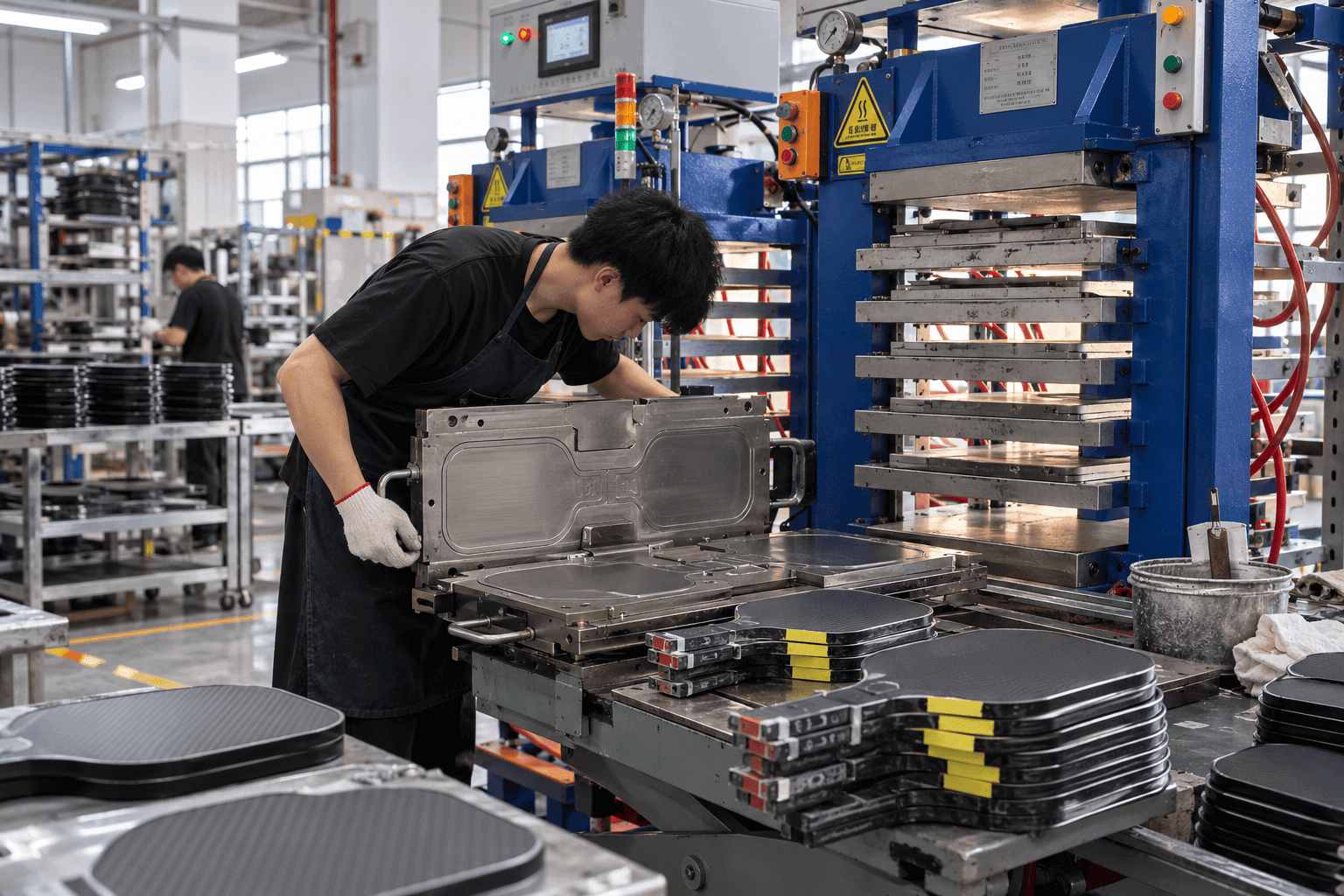
With that control comes real cost and real time. A custom mold for a thermoformed edge or a bespoke core geometry is a capital expense — often several thousand dollars per mold, and more if you are doing a full custom face with USAPA-testing-adjacent geometry. OEM is where Carbon Fiber face layup, Core Density targets, and Paddle Performance tolerances become your engineering problem to specify, not the factory’s default to reuse.
When it wins: You are building a defensible brand around a performance claim nobody else can copy, and you are willing to fund tooling and wait for a longer cycle.
When it fails: A first-time brand funds a full custom mold to launch a paddle that could have shipped in weeks off an existing line — burning capital and months for a differentiation the market did not yet reward.
The Six Dimensions Where the Two Models Actually Separate
Both models will get you a paddle with your logo on it. Everything that matters commercially lives in the differences. Here is the comparison that procurement teams actually need:
1. Design and Mold Ownership
– Private label: The factory owns the design, the mold, and the tooling. You license nothing — you simply buy units. If you walk away, the factory can run the same paddle for another brand tomorrow.
– OEM: You own the design IP and, typically, the tooling after you fund it (or after an agreed buyout schedule). Your mold is dedicated to you, at least for the contract term.
The ownership question is the single most consequential difference. It determines whether your “brand” has a moat or is just a label.
2. Brand Asset Ownership
This overlaps with the first point but warrants its own line, because brand owners get this wrong constantly.
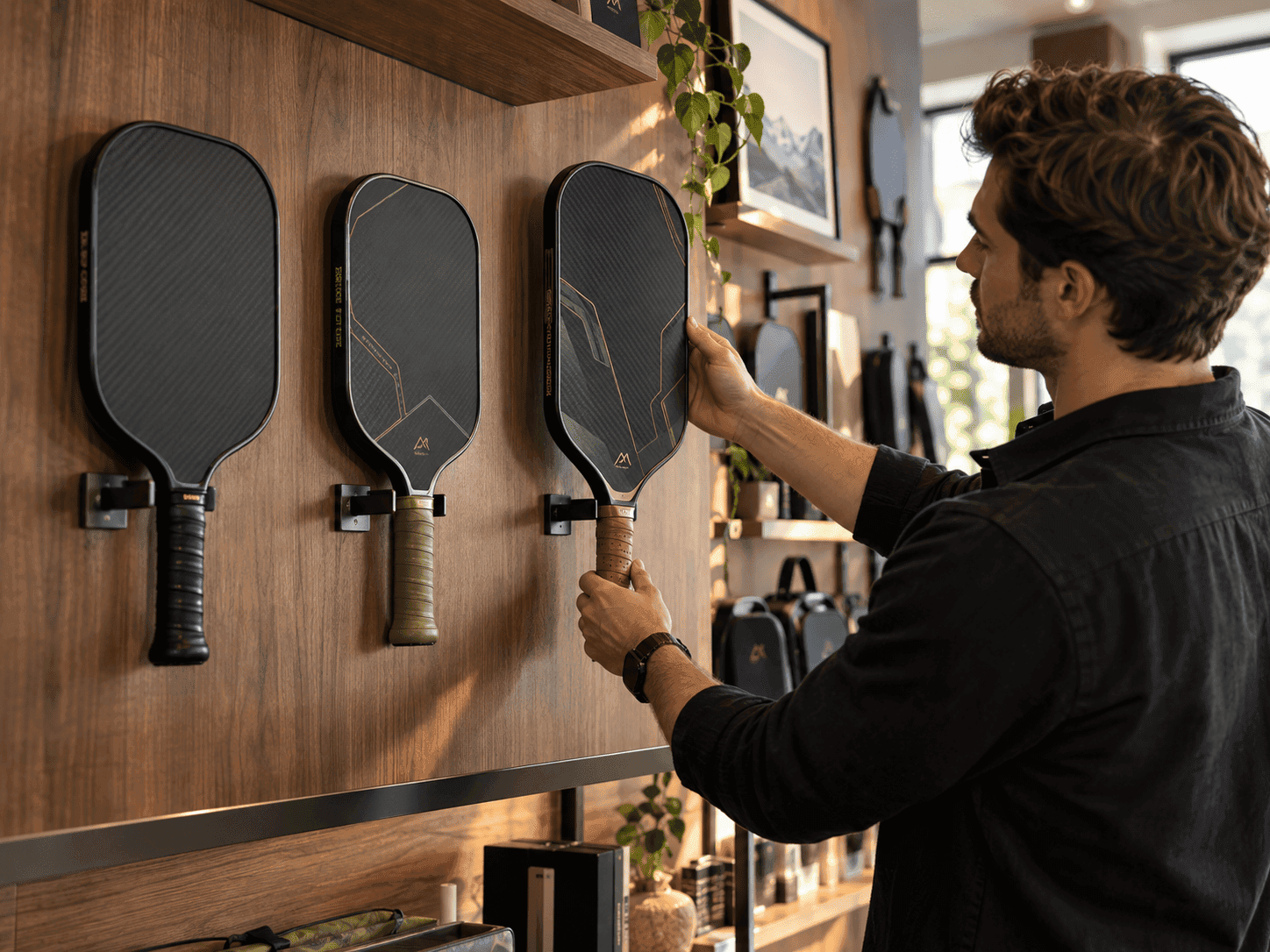
– Private label: You own your trademark, logo, and packaging. You do not own the product specification. A competitor can source the identical paddle from the same factory with a different logo.
– OEM: You own everything — trademark plus the physical spec that makes the product what it is. That combination is what lets you defend a premium price.
If your brand promise is “a better paddle,” only OEM gives you a product-level reason to claim it. If your brand promise is “better price, faster availability,” private label is frequently the honest fit.
3. Minimum Order Quantity (MOQ)
– Private label: Lower — often in the hundreds per SKU, because the line is already running and you are buying capacity, not commissioning it.
– OEM: Higher — custom tooling means the factory needs a run size that justifies setup, changeover, and a dedicated production window. Expect MOQs to climb faster when you add custom molds, custom faces, or multiple colors.
One nuance buyers miss: an OEM order can carry a lower MOQ than private label if your design is close to an existing platform. The MOQ is a function of how far your spec deviates from what the factory already runs, not of which label you put on the box.
4. Sampling and Lead Time
– Private label: You are sampling an existing paddle, so the approved sample can land in days and production can start almost immediately. Typical 30–45 days to shipped goods, packaging permitting.
– OEM: You start with a prototype or a first-article sample, iterate on face texture or core density, and only then cut the production mold. A realistic cycle is 60–90 days or more, and it stretches every time you change the spec mid-process.
The lead time difference is not a preference, it is a cash-flow fact. Private label compresses your time-to-market; OEM buys you control at the cost of time.
5. Cost Structure and Unit Economics
The headline per-unit price can be misleading, so break it into three layers:
| Cost Element | Private Label | OEM |
|---|---|---|
| Per-unit ex-factory price | Lower — factory spreads tooling across the whole line | Higher — you carry setup and changeover in every unit until volume absorbs it |
| Upfront tooling / mold | Usually zero, already amortized | You fund molds and tooling (often several thousand dollars) |
| Working capital at launch | Lower — smaller MOQ, faster turns | Higher — bigger MOQ, longer cash cycle before first sale |
Here is the consequence nobody states plainly: private label starts cheaper and stays cheaper per unit, while OEM starts expensive and only becomes cheaper per unit at volume. The crossover point is where your unit economics flip. If you will sell 10,000 units of a differentiated design, OEM’s per-unit economics frequently win. If you will sell 500 units of a competitive paddle, private label is almost always the rational choice regardless of what your ego wants.
6. Who Controls Spec and Quality Control
This is the quiet difference that separates a brand you can scale from one that stalls.
– Private label: The factory controls the spec and the QC envelope, because it owns the design. You receive finished goods to the factory’s standard, and your QC input is limited to inbound inspection. If a batch drifts on Core Density or face texture, you have to negotiate — you do not command.
– OEM: You write the spec sheet, you approve the first-article sample, and you can set your own inbound QC gates and tolerance bands. The factory builds to your pass/fail criteria, not to their defaults.
If the ability to enforce a consistent Paddle Performance spec matters to your brand promise, that control is an OEM advantage you cannot fully replicate under private label.
Which One You Choose Depends on One Honest Question
Strip the sales decks away and the decision distills to a single question: do you need a differentiated product, or do you need speed to market with lower risk?
– Choose private label when you want to launch fast, keep capital light, test a brand or a channel before committing to tooling, or sell on price and availability rather than a proprietary performance claim. It is the right first move for most marketplace-first brands and for retailers extending a product line.
– Choose OEM when you have a spec-driven differentiation — a target swing weight, a proprietary face texture, a specific Core Density profile — that you are willing to fund and wait for, and when owning the design IP is core to your brand’s defensibility.
Most brands I advise do not stay in one lane forever. The realistic path is a hybrid: enter with private label to prove demand and generate cash flow, then commission OEM tooling for a flagship SKU once you have data on what your audience will actually pay for. That sequence spends your risk budget only after you have evidence.
The Hybrid and Transition Path
The transition is not a binary leap. A factory that runs both models well can move you along a spectrum:
1. Private label only — buy an existing model, rebrand, sell. Fastest, lowest cost, least control.
2. Private label plus — start from a proven platform, then request a limited change (a custom color, a logo-molded edge guard, a changed face grit) without funding a full mold. You are nudging toward OEM without the full capital hit.
3. Full OEM — fund dedicated tooling and own a spec that is genuinely yours.
Each step raises your control and your cost together. The art is knowing which step to stop at for the stage of brand you are in right now.
One concrete recommendation: whatever model you pick, get the ownership terms in writing before the first sample ships. Confusion over who owns a mold is the single most common dispute I see between brands and paddle factories, and it is entirely avoidable with a clear contract clause.
The Bottom Line
Private label and OEM are not two ways to say the same thing. Private label buys speed and low risk on a factory-owned design; OEM buys control and defensibility on a design you fund and own. The choice hinges on one question — differentiated product versus fast, cheap entry — and most successful brands answer it differently at different stages of their life. Start with the model that matches where you are, and leave room to transition as your data improves.
Ready to Decide Your Model?
Talk to our OEM team about whether private label or a fully custom OEM paddle is the right launch path for your brand. We’ll walk you through tooling, MOQ, and lead time against your actual specs.