What Is the Difference Between 3K, 12K, and 18K Carbon Fiber in Pickleball Paddles?
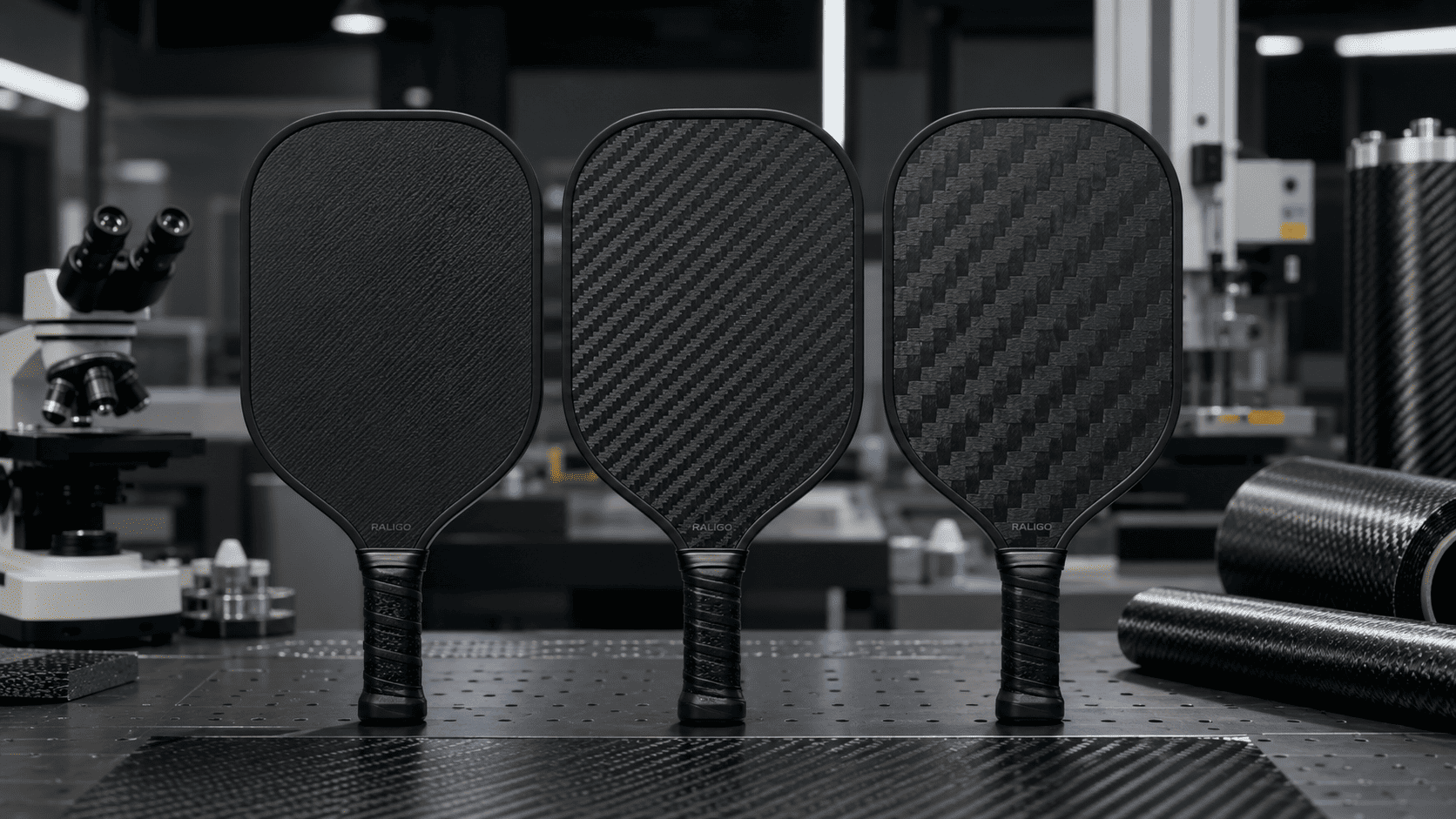
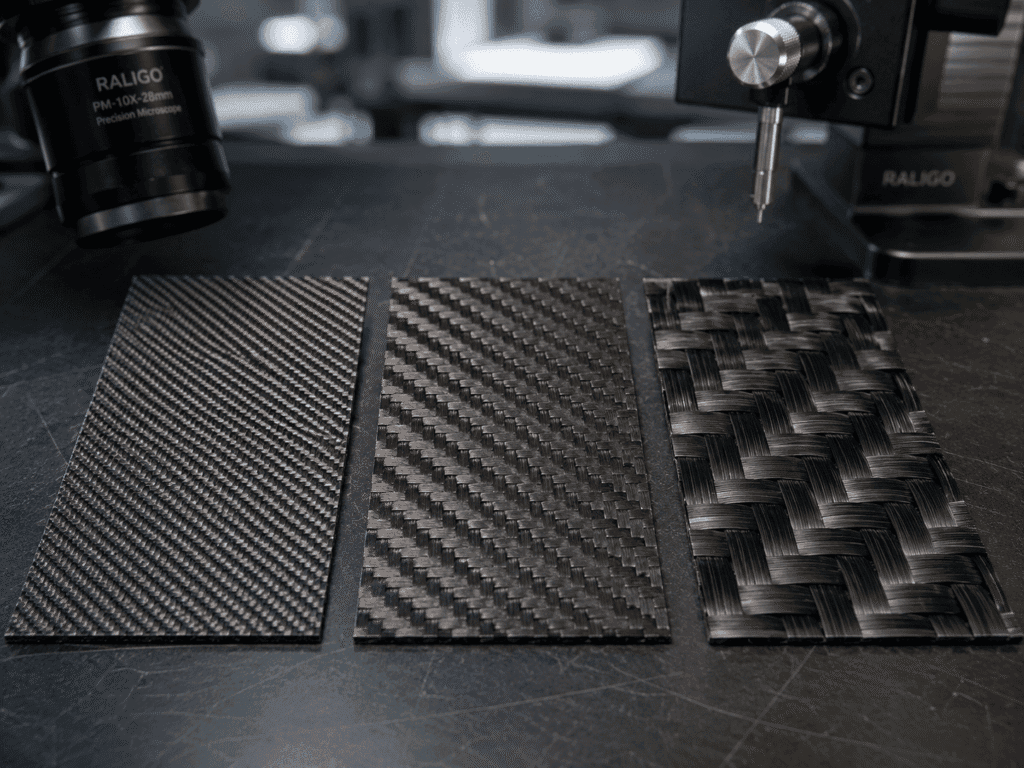
The difference between 3K, 12K, and 18K carbon fiber in pickleball paddles comes down to filament count per tow: 3K contains 3,000 carbon filaments per bundle, 12K contains 12,000, and 18K contains 18,000. This filament count fundamentally changes weave density, surface texture, resin flow during thermoforming, and ultimately how a paddle feels at contact. A 3K weave uses finer threads and more intersections per square inch — producing a tighter, visually smoother surface. An 18K weave uses fatter bundles with fewer crossings, creating an open, aggressively textured face. Neither is universally “better.” The right K-count depends on your target player profile, your layup schedule, and what your core material is doing underneath.
—
Understanding K-Count: What “K” Actually Means in Carbon Fiber Manufacturing
At its simplest, the “K” in carbon fiber designations stands for kilo, or thousand. A 3K tow bundles 3,000 individual carbon filaments into a single thread before weaving. A 12K tow bundles 12,000. An 18K tow bundles 18,000.
But this isn’t just a label. The tow size directly determines:
– Weave density: Fewer filaments per tow → thinner threads → more threads per inch → tighter weave. More filaments → thicker threads → fewer crossings → more open pattern.
– Surface texture: 3K weaves produce a micro-textured, uniform surface. 18K weaves produce a visibly coarser, 3D-ribbed surface that you can feel with your fingers.
– Resin flow behavior: Tighter weaves restrict resin flow during thermoforming; open weaves let resin penetrate more easily. This affects void formation, bond strength, and ultimately paddle durability.
– Material cost: 3K tows are more expensive per square meter because the weaving process requires more thread handling and tighter tolerances.
In factory reality, tow size isn’t the only variable. The carbon fiber grade matters just as much. A 3K Toray T300 weave performs differently from a 12K Toray T700 weave — not just because of the K-count, but because T700 has roughly 40% higher tensile strength than T300 (4,900 MPa vs 3,530 MPa). When an OEM buyer asks “should I use 3K or 12K?”, the conversation should actually start with “what grade of carbon are we talking about?”
Key Data: Toray Carbon Fiber Grades in Paddle Manufacturing
| Grade | Tensile Strength (MPa) | Tensile Modulus (GPa) | Common Tow Sizes | Typical Paddle Application |
|---|---|---|---|---|
| T300 | 3,530 | 230 | 1K, 3K, 6K | Entry-level / mid-range facesheets |
| T700S | 4,900 | 230 | 6K, 12K, 24K | Competition-grade raw carbon faces |
| T700G | 4,900 | 240 | 12K | Premium paddles, higher modulus |
| M40J | 4,400 | 377 | 6K, 12K | High-stiffness specialty applications |
Source: Toray Composite Materials technical datasheets. Most premium pickleball paddles on the market today use T700 in either 3K or 12K configurations.
—
3K Carbon Fiber: Tight Weave, Fine Control, and Consistent Spin
Atomic Answer: 3K carbon fiber produces the tightest and most uniform weave pattern among the three options. With 3,000 filaments per tow, the fabric has approximately 6–8 tows per centimeter in a standard twill weave — creating a dense grid of micro-intersections that distributes ball impact forces evenly across the paddle face. This translates to predictable, consistent spin generation and a “crisp” feel at contact that control-oriented players favor.
Manufacturing Characteristics
From a factory perspective, 3K prepreg is finicky to work with. The tight weave restricts resin flow during the thermoforming cycle. If your mold temperature ramp is too aggressive, you’ll trap air in the weave intersections and create micro-voids — invisible to the naked eye but detectable in a tap test (a duller sound = voids). Reputable OEMs compensate by using a longer cure cycle (closer to 25–30 minutes at 160°C rather than the 15-minute quick cycles used for more open weaves) and higher initial pressure to force resin through the tight fiber matrix.
The typical layup for a 3K paddle face at our factory uses three plies of 3K twill prepreg oriented at 0°/90°/+45° or simply 90°/0°/90° depending on the desired flex profile. Because 3K threads are thinner, you sometimes need an extra ply compared to a 12K layup to achieve the same facesheet thickness — which means more material cost and longer layup labor.
On-Court Translation
3K paddles dominate the “control” segment of the market for a reason. The uniform surface produces consistent ball response regardless of where you strike the face — off-center hits behave more predictably than with coarser weaves where the texture varies more across the surface. In profilometry testing (measuring surface roughness with a contact profilometer), a raw 3K twill face typically registers Ra values of 4–7 μm — smooth enough for clean ball release, rough enough for spin.
> “In our QC lab, the 3K paddles show the tightest standard deviation in spin RPM across face locations. That consistency is what control players pay for.” — Raligo Sport manufacturing notes
However, 3K isn’t without tradeoffs. The tighter weave creates a stiffer face sheet at equivalent thickness. Some players describe the feel as “boardy” compared to the livelier, more elastic rebound of 18K. If your target customer is a power player using an elongated paddle with a thin polypropylene core, 3K might make the paddle feel overly rigid.
Bottom line for OEM buyers: 3K is the competitive standard — consistent, predictable, and trusted. It’s harder to manufacture correctly but easier to QC. If you’re launching a control-oriented or all-court paddle and want reliable performance across your production run, 3K from Toray is the conservative bet.
—
12K Carbon Fiber: The Industry’s Balancing Act
Atomic Answer: 12K carbon fiber occupies the middle ground — 12,000 filaments per tow create a weave that is visibly coarser than 3K but more structured than 18K. This produces a paddle face that blends the uniformity of finer weaves with some of the textural aggression of larger tows. In OEM factories, 12K is often the most cost-efficient weave to manufacture because it strikes a practical balance between prepreg handling ease, cure cycle speed, and final product consistency.
Why 12K Is Often the Factory Default
There’s a practical reason you see so many 12K paddles on the market, and it isn’t purely about performance. 12K prepreg sheets are easier to cut, stack, and position in the mold than 3K — the thicker threads are less prone to fraying at the edges during handling. The more open weave allows faster resin penetration, meaning shorter cure cycles (18–22 minutes is typical) and higher throughput. A factory running three 12K paddle molds per press cycle can produce roughly 15–20% more units per shift than the same line running 3K.
The typical 12K layup uses 2–3 plies of prepreg — often two plies of 12K twill at 0°/90° plus an additional 45° ply for torsional stiffness. Because each ply is thicker (12K tows are roughly 2.5× the cross-sectional area of 3K tows), you need fewer layers to hit a target facesheet thickness of 0.8–1.2 mm.
The Versatility Argument
12K paddles are genuinely versatile. The surface texture — think of it as medium-grit sandpaper compared to 3K’s fine-grit — produces good spin without requiring extreme swing mechanics. Ball dwell time sits between the longer hold of 3K and the quicker release of 18K. This makes 12K paddles forgiving for players who don’t have one dominant play style.
From a manufacturing QC perspective, 12K is the most forgiving of the three. Minor inconsistencies in the weave pattern (slightly uneven tow spacing, small gaps) are less likely to be felt by the player than identical inconsistencies in a 3K face. The coarser texture “masks” small defects better.
> “When a brand comes to us without a strong opinion on weave pattern, 12K T700 is what we recommend. It’s the lowest-risk path to a paddle that sells.”
Bottom line for OEM buyers: 12K is the safe, scalable choice. It’s got the best factory economics, acceptable performance across all player segments, and the fewest manufacturing headaches. If you’re launching a brand with multiple SKUs and need to hedge your bets, lead with 12K.
—
18K Carbon Fiber: Power, Elasticity, and the Paradox
Atomic Answer: 18K carbon fiber, with 18,000 filaments per tow, produces the most open and aggressive weave pattern of the three. Fewer intersections per square inch create a three-dimensionally ribbed surface that generates significant ball grip. Counterintuitively, 18K paddles often feel more elastic — springier — than 3K paddles because the open weave allows slightly more face deflection under load, creating a trampoline-like rebound effect that power players exploit.
The Elasticity Paradox
This is where most consumer-facing content gets it wrong. The assumption is: more filaments = stiffer paddle. That’s too simple.
Stiffness in a carbon fiber laminate depends on three things: fiber modulus (the grade), fiber volume fraction (how much fiber vs. resin), and layup orientation. A 3K weave packs more fiber intersections per square centimeter — each intersection acts as a stress concentration point that resists bending. An 18K weave has fewer intersections. Under identical layup schedules and resin systems, the 18K face can actually flex more before fiber breakage because the load paths are longer and less interrupted.
This is why some 18K paddles feel “softer” or “springier” than 3K paddles despite using larger tows. It’s not about the filament count — it’s about the structure of the woven fabric, specifically the crimp angle and the number of crossover points. In engineering terms, the weave architecture dominates the meso-scale mechanical behavior.
Spin Generation
The raw surface of an 18K weave is noticeably aggressive. Where 3K produces a uniform micro-texture and 12K produces a medium texture, 18K creates visible ridges — almost like a built-in grit pattern. In spin testing (high-speed camera, ball RPM measurement), 18K raw carbon faces can generate 10–15% more RPM than equivalent 3K faces at the same swing speed. However, the spin is less consistent across the face — center strikes produce massive spin, but off-center hits on the “flat” areas between tow ridges produce noticeably less.
Manufacturing Challenges
18K is the most difficult weave to QC consistently. The large tow bundles are prone to “fuzziness” at cut edges. The open weave pattern means resin can pool in the gaps between tows if pressure is too high during curing, creating resin-rich zones that change local stiffness. A good 18K paddle requires precise pressure profiling during the thermoforming cycle — starting with lower pressure to let resin flow evenly, then ramping up for the final cure.
Layup schedules for 18K typically use 2 plies (sometimes just 1 ply in ultra-thin face designs) with a 0°/90° orientation. The thicker individual plies mean you can hit target thickness with fewer layers, which reduces labor but also reduces the degrees of freedom for tuning flex characteristics.
Bottom line for OEM buyers: 18K is a statement material. It’s more expensive to QC, harder to manufacture consistently, and produces a polarizing feel — players love it or hate it. But for the “power” segment of the market, especially elongated paddles with foam-injected edges, 18K commands premium pricing. If your brand targets aggressive tournament players and you can absorb the higher QC rejection rate, 18K is worth the investment.
—
Comparative Matrix: 3K vs 12K vs 18K at a Glance
| Property | 3K Carbon Fiber | 12K Carbon Fiber | 18K Carbon Fiber |
|---|---|---|---|
| Filaments per tow | 3,000 | 12,000 | 18,000 |
| Weave density | Highest (6–8 tows/cm) | Medium (3–4 tows/cm) | Lowest (2–3 tows/cm) |
| Surface texture | Micro-textured, uniform | Medium-grit, visible weave | Coarse, 3D-ridged |
| Typical plies (facesheet) | 3–4 | 2–3 | 1–2 |
| Cure cycle (typical) | 25–30 min at 160°C | 18–22 min at 160°C | 20–25 min at 160°C |
| Feel at contact | Crisp, firm, “dry” | Balanced, medium-firm | Elastic, springy, responsive |
| Spin RPM (relative) | Baseline (consistent across face) | +3–5% vs 3K | +10–15% center, variable off-center |
| Manufacturing difficulty | High (resin flow restricted) | Medium (forgiving) | High (QC consistency challenging) |
| Relative material cost | Highest | Medium | Medium-high |
| Best player profile | Control / all-court | Versatile / all-around | Power / aggressive |
| Recommended Toray grade | T300 or T700 | T700S or T700G | T700G or M40J |
—
How Carbon Fiber Weave Pattern Affects the Manufacturing Process
Prepreg Selection and Handling
The choice of K-count starts before the mold ever closes. Prepreg suppliers (Toray, Mitsubishi, Hexcel) produce carbon fiber fabrics in standard weave configurations — plain, twill, and satin — across all K-counts. For pickleball paddle faces, 2×2 twill is the dominant weave style because it balances drapeability (how well the fabric conforms to mold curves) with structural integrity.
3K twill prepreg arrives at the factory as thin, tightly woven rolls. The edges fray easily during cutting. Fabric nesting software (used to optimize cut patterns and minimize waste) must account for the tighter thread count, which affects kerf width on the cutting table. 12K and 18K prepreg rolls are notably easier to handle — the coarser weave resists fraying and the fabric holds its shape better during manual layup.
Resin Flow and Void Formation
During thermoforming, the heated mold (150–200°C) activates the epoxy resin already present in the prepreg. As the resin liquefies and flows through the carbon fiber matrix, the weave density directly governs flow behavior.
In 3K weaves, the tight fiber packing creates high capillary pressure — resin flows slowly through the narrow channels between filaments. If the mold pressure ramps too quickly, resin gets forced to the edges before fully wetting out the interior tows, leaving dry spots or micro-voids. Factories compensate by using a staged pressure cycle: 2–3 minutes at low pressure (~0.5 MPa) to allow resin infiltration, then ramping to full pressure (~2–3 MPa) for the final cure.
In 18K weaves, the opposite problem occurs. The large gaps between tows let resin flow freely — too freely, sometimes. If initial pressure is too high, resin pools in the interstitial spaces and partially drains from areas that need it. The result: resin-rich patches that cure to a different local stiffness than the surrounding laminate.
Layup Schedule Integration
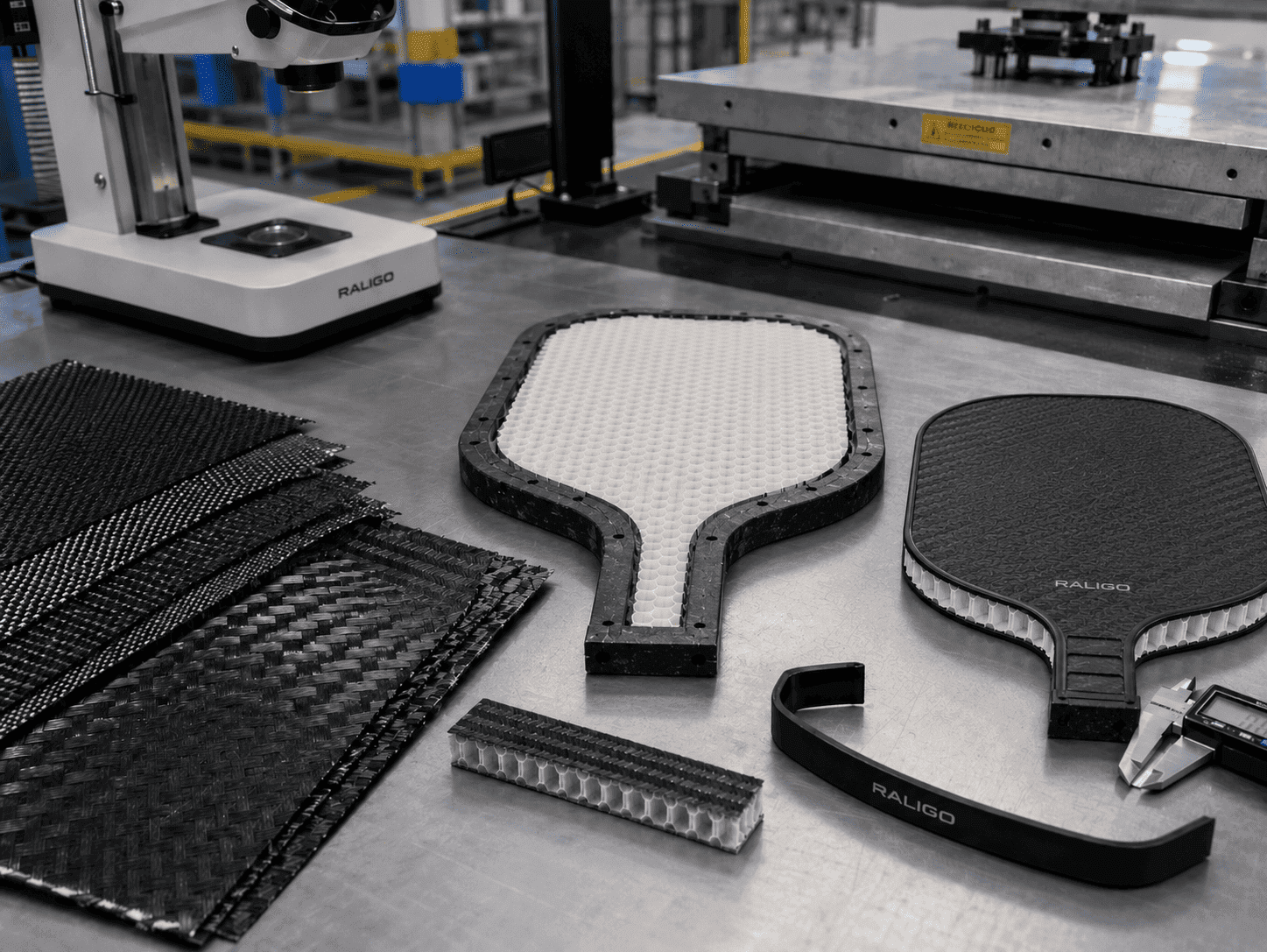
The weave pattern and K-count can’t be considered in isolation. They must be designed into the full layup schedule alongside the core material and edge construction. A typical high-end paddle layup looks like:
`
Layer 1 (face): 3K twill carbon fiber prepreg, 0° orientation
Layer 2 (face): 3K twill carbon fiber prepreg, 90° orientation
Layer 3 (face): 12K twill carbon fiber prepreg, +45° orientation
—— Core: Polypropylene honeycomb, 8 mm ——
Layer 4 (back face): 12K twill carbon fiber prepreg, -45° orientation
Layer 5 (back face): 3K twill carbon fiber prepreg, 90° orientation
Layer 6 (back face): 3K twill carbon fiber prepreg, 0° orientation
`
This asymmetric-hybrid layup — using finer 3K on the outer plies for surface quality and 12K on the inner plies for cost efficiency — is increasingly common in mid-to-premium paddles. It’s an example of why the “3K vs 12K” debate is often too binary: the smart money is on layup engineering, not K-count fetishism.
> “I’ve seen too many brands obsess over putting ’18K Carbon Fiber’ on the packaging while completely ignoring the layup schedule underneath. The weave pattern is marketing. The layup engineering is performance.”
—
Spin Generation by Weave Pattern: What the Data Actually Shows
Does 3K, 12K, or 18K produce more spin? The shortest honest answer is: 18K tends to produce the highest peak spin on center strikes, 3K produces the most consistent spin across the face, and 12K splits the difference. But the differences are smaller than most marketing claims suggest — typically 5–15% RPM variation between weaves, which for most recreational players is within the noise of their stroke variability.
Spin in pickleball comes from two mechanisms working together: surface friction (how well the paddle face grips the ball) and dwell time (how long the ball stays on the face). A coarser weave like 18K increases friction but reduces dwell time because the ball rebounds off the high points of the weave faster. A finer weave like 3K reduces peak friction but increases dwell time because the ball compresses into the uniform surface more evenly.
The net spin result depends on which mechanism dominates for a given swing style. Fast, glancing swings favor friction (advantage: 18K). Slower, more compressive swings favor dwell (advantage: 3K). This is why you can’t just say “18K has more spin” — it depends on the player.
—
Procurement Guide: How OEM Buyers Should Evaluate Carbon Fiber Weave Options
If you’re sourcing paddles from a manufacturer — whether in China, Taiwan, Vietnam, or elsewhere — here’s how to think about carbon fiber weave selection as a procurement decision, not a marketing one.
Five Questions to Ask Your Factory Before Choosing a Weave
1. “What Toray grade are you using, and can you provide the certificate of authenticity?” — T700 from Toray Japan is materially different from generic “T700-grade” carbon. Ask for the mill certificate. If the factory can’t produce it, assume it’s not genuine Toray.
2. “What’s your cure cycle for this weave, and how do you validate void content?” — A factory that shrugs and says “standard cycle” without specifying temperature ramp, pressure staging, and hold time doesn’t have process control. Ask to see a cross-section microscope image of the laminate — voids should be below 1% by volume.
3. “What layup schedule do you recommend for my target player profile, and why?” — The right factory will ask about your target market before suggesting a weave. A factory that jumps straight to “we use 12K for everything” is optimizing their production line, not your product.
4. “What’s your rejection rate for surface defects by K-count?” — Good factories track this. If 18K has a 3× higher rejection rate than 12K, that cost is being passed to you somewhere — either in per-unit pricing or in quality inconsistency.
5. “Can you do a hybrid layup with different K-counts on face vs. inner plies?” — Some factories can, some can’t. The ones that can have better engineering capability. A hybrid layup (3K outer, 12K inner) is often the best value proposition for mid-to-premium paddles.
Cost Implications (FOB Shenzhen/Yantian, Approximate)
| Configuration | Approximate Unit Cost (MOQ 500) | Notes |
|---|---|---|
| 3K T300, 2-ply face | $12–15/paddle | Entry-level, lower tensile strength |
| 3K T700, 3-ply face | $18–24/paddle | Industry standard control paddle |
| 12K T700, 2-ply face | $15–20/paddle | Best price-to-versatility ratio |
| 12K T700, 3-ply face | $18–22/paddle | Premium all-around |
| 18K T700, 2-ply face | $20–26/paddle | Power segment, higher QC cost |
| Hybrid (3K outer + 12K inner) | $20–25/paddle | Best engineering value |
These are indicative ranges based on current market conditions. Actual pricing depends on order volume, tooling amortization, edge construction (foam vs. none), and finish requirements.
Decision Matrix for Brand Owners
| Your Brand Positioning | Recommended Weave | Rationale |
|---|---|---|
| Budget / Entry-level ($60–90 retail) | 3K T300 or 12K T700, 2-ply | Minimize material cost; T700 12K offers best value |
| Mid-range all-court ($90–130 retail) | 12K T700, 2–3 ply | Versatile performance, forgiving manufacturing |
| Premium control ($130–180 retail) | 3K T700, 3-ply | Consistent QC, predictable performance |
| Premium power ($130–180 retail) | 18K T700, 2-ply or hybrid | Aggressive surface, premium positioning |
| Tour-level / pro signature ($180+) | Hybrid layup, custom schedule | Differentiate on engineering, not just materials |
—
Frequently Asked Questions
What is the difference between twill weave and plain weave in carbon fiber paddles?
Twill weave (2×2 pattern, where each tow passes over two and under two) is the standard for pickleball paddles because it offers better drapeability — the fabric conforms to mold contours more easily than plain weave (1×1, over-under). Plain weave is stiffer and more stable dimensionally but harder to form around curved paddle edges, especially in thermoformed unibody molds where the carbon wraps around the edge. Twill weave’s diagonal pattern also contributes to the distinctive aesthetic that brands market as “raw carbon.”
Does a higher K-count mean a heavier paddle?
Not directly. Paddle weight is determined by total material mass in the finished product — facesheet thickness, core density, edge guard material, and grip assembly. A 12K ply is thicker than a 3K ply (more filaments per tow), but you use fewer 12K plies to hit the same thickness. The net weight difference between K-counts at equivalent final thickness is negligible (typically 1–3 grams). Core density and edge construction have far more influence on final paddle weight.
Can you mix different K-count weaves in the same paddle?
Yes — and many high-end paddles already do. A common configuration is 3K twill on the outer face ply (for surface quality and brand aesthetics) with 12K or unidirectional carbon on the inner structural plies (for cost efficiency and targeted stiffness). Some manufacturers even mix weave styles — 3K twill face with 12K plain weave backing — to tune vibration characteristics. This is where good factory engineering separates from “slap carbon on a core and call it done.”
How does core density interact with carbon fiber weave choice?
Core density is arguably more important than weave pattern for overall paddle feel. A soft, low-density polypropylene core (60–70 kg/m³) paired with stiff 3K facesheets creates a “trampoline in a box” effect — the core flexes but the face doesn’t, producing unpredictable rebound. A denser core (80–90 kg/m³) paired with elastic 18K faces produces a more synergistic feel because both the face and core deform and recover at similar rates. Smart OEMs tune core density and weave pattern as a system, not as independent choices.
—
Ready to Get Started?
Talk to our OEM team about your pickleball paddle manufacturing needs. From spec development and carbon fiber weave selection to bulk production, we handle it all at our ISO-compliant factory.
Ready to Get Started?
Talk to our engineering team about carbon fiber weave selection, layup optimization, and your next production run. We’ll help you pick the right configuration for your target player profile — not just whatever’s easiest to manufacture.