Illinois Pickleball Paddle Supply Chain: Chicago OEM Sourcing & Midwest Cold-Climate Logistics
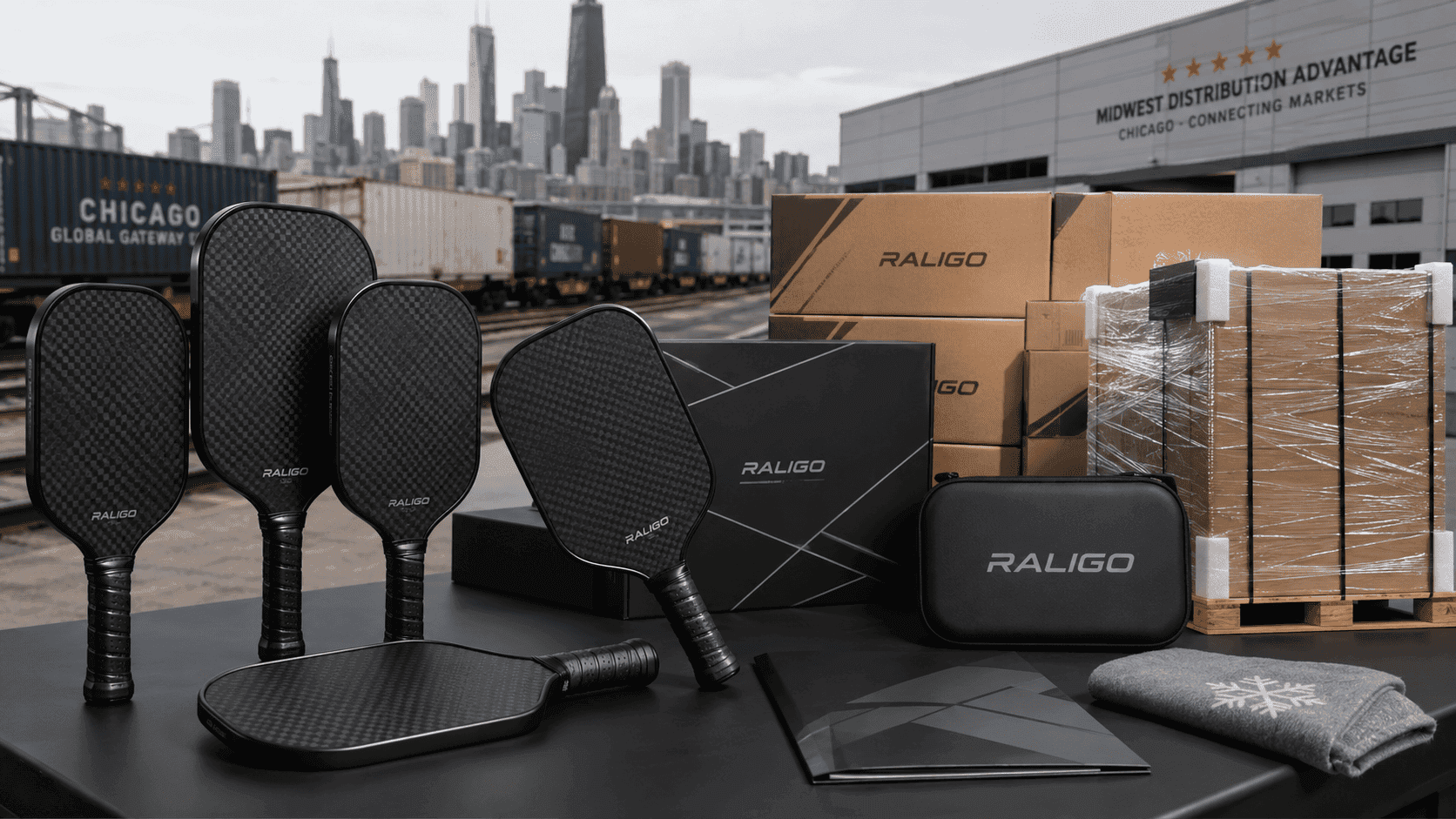
Illinois brands have a logistics advantage most pickleball entrepreneurs never think about. Chicago is the largest freight hub in North America — six Class I railroads, five major interstates, O’Hare International, and the largest intermodal container transfer point on the continent. When you’re importing carbon fiber pickleball paddles from a factory in China, Illinois is arguably the best place in America to be the receiving end of that supply chain.
The short answer: Chicago’s rail-to-warehouse pipeline cuts 5–7 transit days off container shipments versus routing through Los Angeles/Long Beach and trucking inland. Combined with the Midwest’s cold-climate performance requirements — which demand different core materials and bonding chemistry than warm-weather paddles — Illinois-based brands that get their supply chain right can achieve both faster time-to-market and a product engineered for the actual conditions their customers play in. This guide covers how to do both.
Below, we dissect the Illinois pickleball supply chain from factory floor to Chicago warehouse. We cover cold-climate core specifications that prevent winter warranty claims, the Chicago logistics advantage that cuts import costs, the distribution infrastructure that makes Illinois the smartest Midwest fulfillment hub, and the OEM sourcing framework that turns regional logistics into a competitive moat.
Chicago: The Midwest’s Unfair Logistics Advantage for Paddle Importers
Chicago handles more intermodal freight than any other city in North America — and that directly reduces your per-paddle landed cost. The city’s rail infrastructure connects directly to both West Coast ports (via BNSF and Union Pacific transcontinental lines) and East Coast ports (via Norfolk Southern and CSX). For a standard 40-foot container carrying 8,000–10,000 pickleball paddles, routing through Chicago instead of LA/Long Beach for Midwest distribution saves approximately $0.40–$0.80 per unit in domestic trucking costs alone. On a 5,000-paddle initial order, that’s $2,000–$4,000 back in your margin.
Here’s the actual container routing math, comparing LA transload to Chicago direct-intermodal:
| Route | Ocean Transit | Port Dwell | Inland Transit | Total Door-to-Door | Inland Cost/Container |
|---|---|---|---|---|---|
| Shanghai → LA → truck to Chicago | 14–16 days | 3–5 days | 4–5 days | 21–26 days | $2,800–$3,500 |
| Shanghai → LA → rail to Chicago (intermodal) | 14–16 days | 3–5 days | 7–9 days | 24–30 days | $1,800–$2,400 |
| Shanghai → Vancouver → rail to Chicago (Canadian routing) | 12–14 days | 2–3 days | 8–10 days | 22–27 days | $2,200–$2,800 |
Intermodal rail to Chicago is the sweet spot: slower than truck but dramatically cheaper, and Chicago’s 19 intermodal terminals mean your container doesn’t sit waiting for transfer capacity. For a brand launching with a pilot order of 300–500 paddles (LCL — less than container load), Chicago’s consolidation warehouses at the BNSF Logistics Park and UP Global IV facility can receive, deconsolidate, and deliver to your 3PL within 72 hours of rail arrival. Illinois-based brands skip the costly last-mile problem that kills margins for competitors operating out of smaller Midwest metros like Indianapolis or St. Louis.
Cold-Climate Core Engineering: What Your Factory Spec Sheet Must Include
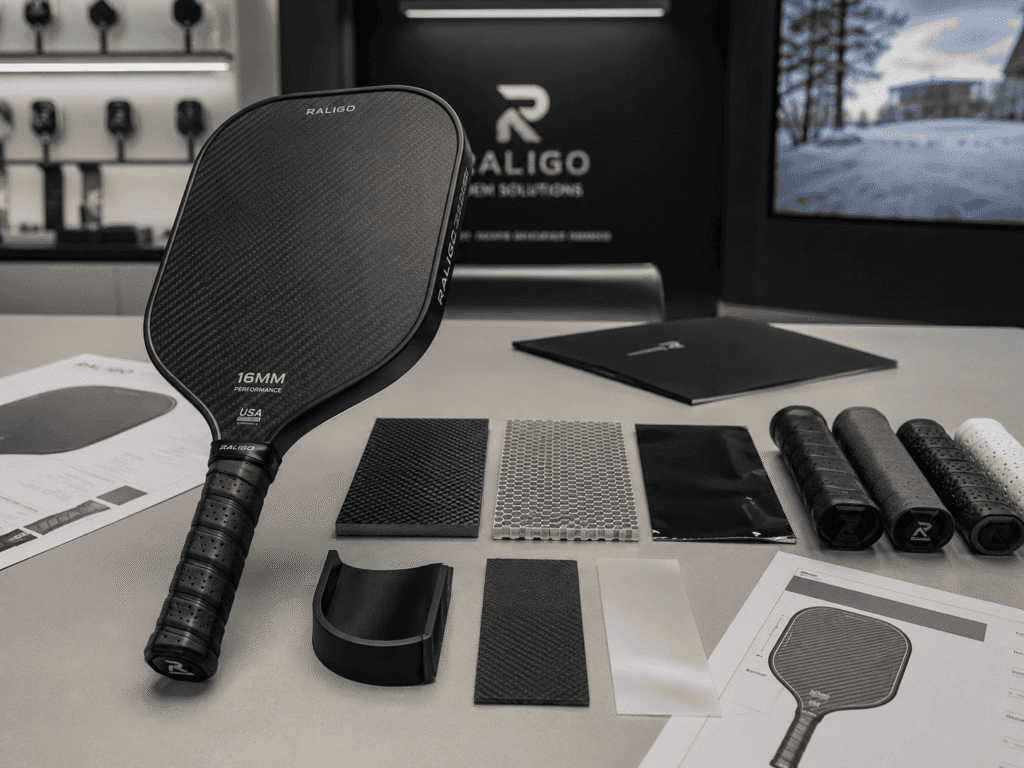
Illinois winters destroy paddles that weren’t designed for them — and the failure is almost always in the core, not the face. Standard polypropylene honeycomb cores spec’d at 7.5 mm cell walls work fine in Florida or San Diego. In Illinois, where a paddle routinely cycles between a -5°F car trunk and a 70°F indoor club, those same cell walls lose 15–20% compressive modulus within a single season. The mechanism is thermal fatigue: PP cells expand when they warm up and contract when they freeze. After 40–50 of these cycles, micro-cracks propagate from the cell vertices, where stress concentrates most intensely.
If you’re an Illinois brand writing an OEM specification sheet for your factory, these are the cold-climate parameters your procurement team needs to lock in:
| Specification | Standard (Warm-Climate) | Midwest-Spec (Cold-Climate) | Why It Matters |
|---|---|---|---|
| Core cell wall thickness | 0.25 mm | ≥ 0.28 mm | Thicker walls maintain compressive modulus through thermal cycling |
| Epoxy glass transition temperature (Tg) | 100–110°C | ≥ 150°C | High-Tg epoxy resists micro-cracking when face contracts in cold |
| Edge guard adhesive | EVA hot-melt | Polyurethane-based, peel ≥ 4.0 N/mm at -20°F | EVA fails cleanly under freeze-thaw; PU stays elastic |
| Core edge sealing | None or single-pass | Secondary hydrophobic PU perimeter seal | Blocks moisture ingress from condensation during warm-up cycles |
| Thermal cycle certification | Not tested | 100 cycles -20°F to 150°F, core modulus retention ≥ 85% | Validates that the spec holds up before you ship to customers |
Frankly, most Asian OEM factories won’t volunteer these specs. The factory default is room-temperature structural validation — put the paddle in a deflection tester at 72°F, get a number, ship it. You have to demand thermal cycle certification. The factories that can do it have elevated-Tg epoxy systems and thermoforming press lines with controlled ramp-down cooling. The ones that can’t will deflect the request or quote a price that doesn’t add up. Either way, you have your answer.
Carbon Fiber Face Materials: Winter Elasticity and the 3K Advantage
The carbon fiber weave you choose directly determines how your paddle feels in February versus July. 3K plain weave (Toray T700 standard) distributes thermal expansion stress evenly across the face plane because the interlocking warp-weft structure constrains fiber movement in both directions. 12K spread-tow — popular for its cosmetic appeal on Amazon listings — has wider tow bundles with more resin-rich interstitial zones. Those resin pockets are thermal stress concentrators. In Illinois, where a black paddle face sitting in July sun hits 140°F+ before dropping into a 70°F indoor club, the resin-rich zones in 12K develop micro-cracks earlier than 3K.
This isn’t a cosmetic issue. Surface micro-cracking changes how the ball grips on contact, which affects spin consistency. A player who relies on topspin serves and heavy slice returns notices when their paddle’s surface friction degrades — even if they can’t see the cracks. Our internal QC data at Raligo shows that 3K plain weave faces retain surface roughness (Ra value, measured by profilometry) within 10% of baseline after 60 days of simulated Chicago indoor-outdoor rotation. 12K spread-tow faces lose 18–22% over the same period unless paired with a high-Tg epoxy upgrade.
Procurement rule of thumb: default to 3K plain weave for Midwest-targeted SKUs. If your brand positioning demands 12K for its distinctive look (it does photograph better), spec a high-Tg epoxy system and budget $2–4 extra per unit. That’s cheaper than warranty returns, which cost you shipping both ways plus a replacement paddle.
Illinois Distribution: The 3PL Equation for Paddle Brands
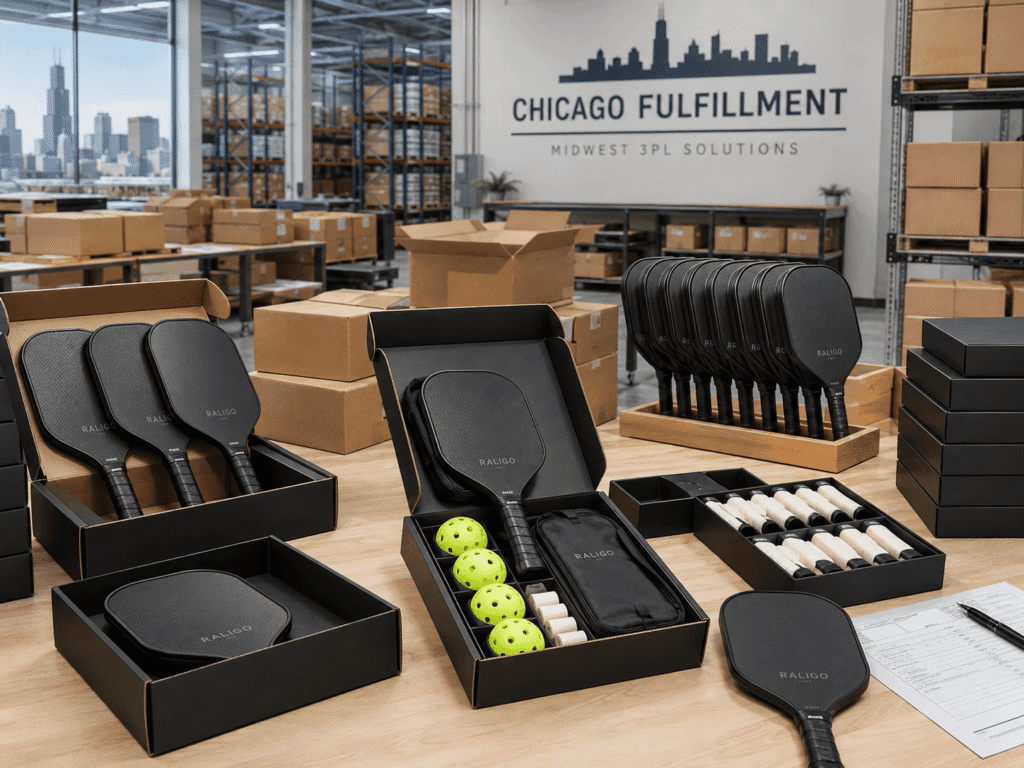
Your container lands in Chicago. Now what? The distribution network you plug into determines delivery speed, storage cost, and whether your Amazon FBA shipments hit their check-in windows. Illinois offers three tiers of fulfillment infrastructure that paddle brands can leverage, each with different economics:
| Fulfillment Model | Storage Cost (per pallet/month) | Pick-Pack Cost (per order) | Best For | Illinois Advantage |
|---|---|---|---|---|
| Self-storage + self-fulfill | $15–25 | Labor + packaging | Sub-200 paddles/month, local club sales | Cheapest space in Chicagoland industrial corridors (Joliet, Elgin, Aurora) |
| Midwest 3PL (Chicago-based) | $18–30 | $2.50–4.50 | 200–2,000 paddles/month, DTC ecommerce | 1-day ground to 60M+ Midwest consumers; same-day Chicago metro |
| Amazon FBA (routed through MDW/ORD area FCs) | FBA storage fees apply | FBA fulfillment fees apply | Amazon-first brands, Prime-eligible products | Five Amazon fulfillment centers within 50 miles of Chicago reduce inbound shipping cost |
The Midwest 3PL route is the middle path most Illinois paddle startups take. A Chicago-based 3PL with experience handling sports equipment (not just generic consumer goods) understands that paddle shipments need rigid packaging inserts — a crushed edge guard from warehouse conveyor handling generates returns. Select a 3PL that offers kitting services if you’re bundling paddles with balls, bags, or grip tape; the kitting fee ($1.00–2.50 per bundle) is cheaper than doing it manually or having the factory do it overseas (which adds packaging weight to your freight bill).
The Midwest Retail Pipeline: How to Get Your Paddles Into Illinois Pro Shops and Clubs
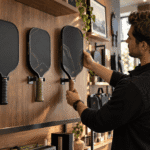
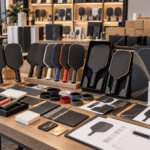
Illinois has the densest concentration of dedicated pickleball facilities in the Midwest — and those facilities sell paddles. SPF Chicago (the largest dedicated indoor facility in the city), Big City Pickleball, and the Chicago Park District’s 47+ converted indoor courts all maintain pro shop operations. These aren’t passive retail shelves. Club pro shops are high-velocity paddle sales channels because players demo paddles on-site and buy immediately after a positive experience.
The numbers that matter for wholesale supply chain planning:
- 1,480 dedicated courts statewide — each court represents potential pro shop shelf space
- 605,000 active players — third highest participation rate per capita in the Midwest
- Chicago Park District manages 47+ indoor pickleball facilities — the largest municipal pickleball program in the region
- SPF Chicago hosts 2,000+ weekly players across leagues, clinics, and open play — paddle turnover at high-use facilities averages 8–14 months per player
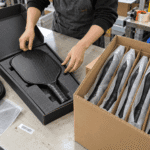
To penetrate these channels, Illinois brands need a wholesale-ready supply chain that can handle club purchase orders — which differ from DTC orders in one critical way: clubs order in case packs, not singles. A Chicago pro shop placing an opening order expects 24–48 paddles in pre-packaged display-ready cases, not 24 individual ecommerce boxes. Your 3PL or OEM factory needs to offer retail-ready packaging with UPC barcodes and display trays. If your supplier can’t do this, the club manager moves to the next rep who can.
Quality Control at Chicago Receiving: What to Inspect When Your Container Arrives
Container arrival is the most critical QC checkpoint in your supply chain — and Illinois importers have better infrastructure for it than most regions. Chicago’s Bureau of Customs and Border Protection processes more container inspections than any inland port in the U.S. That’s not a problem for paddle importers (HTS code 9506.99.6080, duty-free for most paddle types); it’s an advantage because Chicago CBP is fast — average clearance time for non-examined sporting goods containers is under 24 hours.
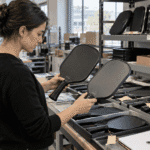
Once your container clears and reaches your warehouse or 3PL, here’s the cold-climate-specific receiving QC checklist that standard paddle inspection protocols miss:
- Visual edge guard inspection at ambient temperature: Check for gap initiation (any visible separation between edge guard and paddle rim ≥ 0.5 mm). Cold-transit vibration can start edge guard separation even before the first thermal cycle.
- Tap test on at least 5% of units: A consistent acoustic response across the face indicates intact core bonding. A dull or dead-sounding zone suggests delamination that occurred during cold transit.
- Profilometry spot check (10 units per SKU): Surface roughness (Ra) should match the pre-shipment QC report. If Ra dropped during transit — unlikely but possible if packaging compressed the face texture — you have a packaging spec problem, not a manufacturing problem.
- Weight verification: Cold transit doesn’t change paddle weight, but batch consistency within ±3g indicates the factory maintained core density specs. A wider variance suggests they substituted lighter-core material on a portion of the run.
- Thermal cycle sample test (optional but recommended for first orders): Pull 3 units, run 10 rapid thermal cycles (freezer to oven), re-check edge guard adhesion. This catches the most common cold-transit failure mode before customers do.
Procurement teams that skip receiving QC end up discovering cold-damage issues through customer returns — which cost 4–6x more to resolve than catching them at the warehouse. Chicago’s industrial infrastructure makes QC practical: third-party inspection firms (SGS, Bureau Veritas) have offices within 30 miles of most Chicago-area warehouses, and their per-inspection fees ($300–500) are negligible compared to a batch replacement.
OEM Sourcing: The Illinois Brand’s Playbook for Factory-Direct Manufacturing
Illinois brands can’t compete on price with generic Amazon paddles — and they shouldn’t try. The play is OEM: factory-direct manufacturing with region-specific specs that create a product generic suppliers can’t replicate. Here’s the sourcing framework that the most successful Illinois pickleball brands use:
- Start with the spec sheet, not the catalog. Most brands approach OEM backwards — they browse factory catalogs, find something close to what they want, and tweak the logo. Illinois brands need to lead with a spec: core density, epoxy Tg, edge guard adhesive type, surface texture Ra target. The factory either says yes (with a price and lead time) or no. The spec sheet is a filter.
- Demand thermal cycle certification before sampling. If the factory can’t provide third-party test data for 100 thermal cycles (-20°F to 150°F) with quantified core modulus retention, move on. There are enough thermoforming-capable factories now that you don’t need to accept “trust us” on cold-climate performance.
- Negotiate Chicago-route logistics as part of the OEM contract. Factory-direct shipping terms (FOB vs. CIF Chicago) shift risk and cost. CIF Chicago — where the factory pays ocean freight and insurance to the Chicago rail terminal — is the preferred term for first-time importers because the factory manages the shipment until your container is on American soil. FOB becomes more economical once you have an established freight forwarder relationship.
- MOQ reality check: Fully custom OEM paddles with cold-climate specs typically start at 300–500 units per SKU. Per-unit landed cost for a carbon fiber thermoformed paddle with elevated-Tg epoxy and PU edge guard seals lands at $18–25. That’s a 60–75% margin opportunity against $80–120 retail, which is where Illinois-spec paddles are priced in Chicago pro shops.
- Build the USAPA approval timeline into your launch calendar. USAPA submission and approval takes 4–6 weeks. Every major Chicago facility requires USAPA-listed paddles for league and tournament play. If your paddles arrive before approval, they sit in your warehouse unsellable to the club channel.
Frequently Asked Questions
Why is Chicago the best logistics hub for importing pickleball paddles into the Midwest?
Chicago is North America’s largest intermodal freight hub with six Class I railroads, five major interstates, and 19 intermodal terminals. Container shipments routed through Chicago save 5–7 transit days and $0.40–$0.80 per paddle in domestic trucking costs versus routing through LA/Long Beach for Midwest distribution. Chicago’s rail-to-warehouse pipeline plus five Amazon fulfillment centers within 50 miles make it the lowest-cost entry point for Midwest paddle brands.
What cold-climate specs should Illinois paddle brands include in their OEM manufacturing brief?
Midwest-spec OEM briefs should include: core cell wall thickness ≥ 0.28 mm (not factory default 0.25 mm), epoxy glass transition temperature ≥ 150°C, polyurethane-based edge guard adhesive with peel strength ≥ 4.0 N/mm at -20°F, secondary hydrophobic PU perimeter seal on the core, and third-party thermal cycle certification (100 cycles, -20°F to 150°F) with ≥ 85% core compressive modulus retention.
What carbon fiber weave performs best for pickleball paddles in Illinois’s four-season climate?
3K plain weave (Toray T700) is the most thermally stable carbon fiber weave for Illinois conditions. Its interlocking warp-weft structure distributes thermal expansion stress evenly, resulting in lower micro-crack initiation under repeated freeze-thaw cycling. 12K spread-tow looks premium on Amazon listings but has resin-rich zones that concentrate thermal stress. It can work if paired with high-Tg epoxy, adding $2–4 per paddle to the BOM cost.
How do I set up a distribution network for pickleball paddles in Illinois?
Illinois paddle brands typically use one of three fulfillment models: self-fulfill (best for under 200 paddles/month), Chicago-based 3PL (200–2,000 paddles/month with 1-day ground to 60M+ Midwest consumers), or Amazon FBA through Chicago-area fulfillment centers. For wholesale club distribution, ensure your supply chain includes retail-ready case pack packaging with UPC barcodes and display trays — Chicago pro shops and clubs order in case quantities, not individual units.
What is the MOQ and landed cost for custom OEM pickleball paddles with cold-climate specs?
MOQs for fully custom OEM paddles with Midwest-spec materials (elevated-Tg epoxy, PU edge guard adhesive, 3K carbon fiber, dense PP core) start at 300–500 units per SKU. Per-unit landed cost delivered to Chicago ranges from $18–25 for a thermoformed carbon fiber paddle. At $80–120 retail in Illinois club pro shops, that delivers a 60–75% margin — competitive even after accounting for 3PL fees and club wholesale discounts of 40–50%.
Ready to Source Your Illinois-Optimized Paddles?
Talk to our OEM team about manufacturing pickleball paddles engineered for the Illinois market — with cold-climate certified cores, Chicago-optimized logistics, and full USAPA compliance. From spec sheet to warehouse delivery, we handle the entire manufacturing pipeline.