Colorado Outdoor Paddle Brands: How to Avoid Common Manufacturing Pitfalls
The Colorado Brand’s Guide to Avoiding Pickleball Paddle Manufacturing Pitfalls
At Raligo Sport, we’ve spent years working with outdoor brands across the Rockies, and if there’s one thing we’ve learned, it’s that manufacturing in Colorado isn’t just about making products—it’s about making products that can handle Colorado. As the pickleball wave continues to crest across the state, we’re seeing more outdoor brands looking to ride it. But jumping into paddle manufacturing at 5,000+ feet without understanding the local manufacturing landscape is like trying to summit a 14er in sneakers. You might make it, but the journey will be painful.
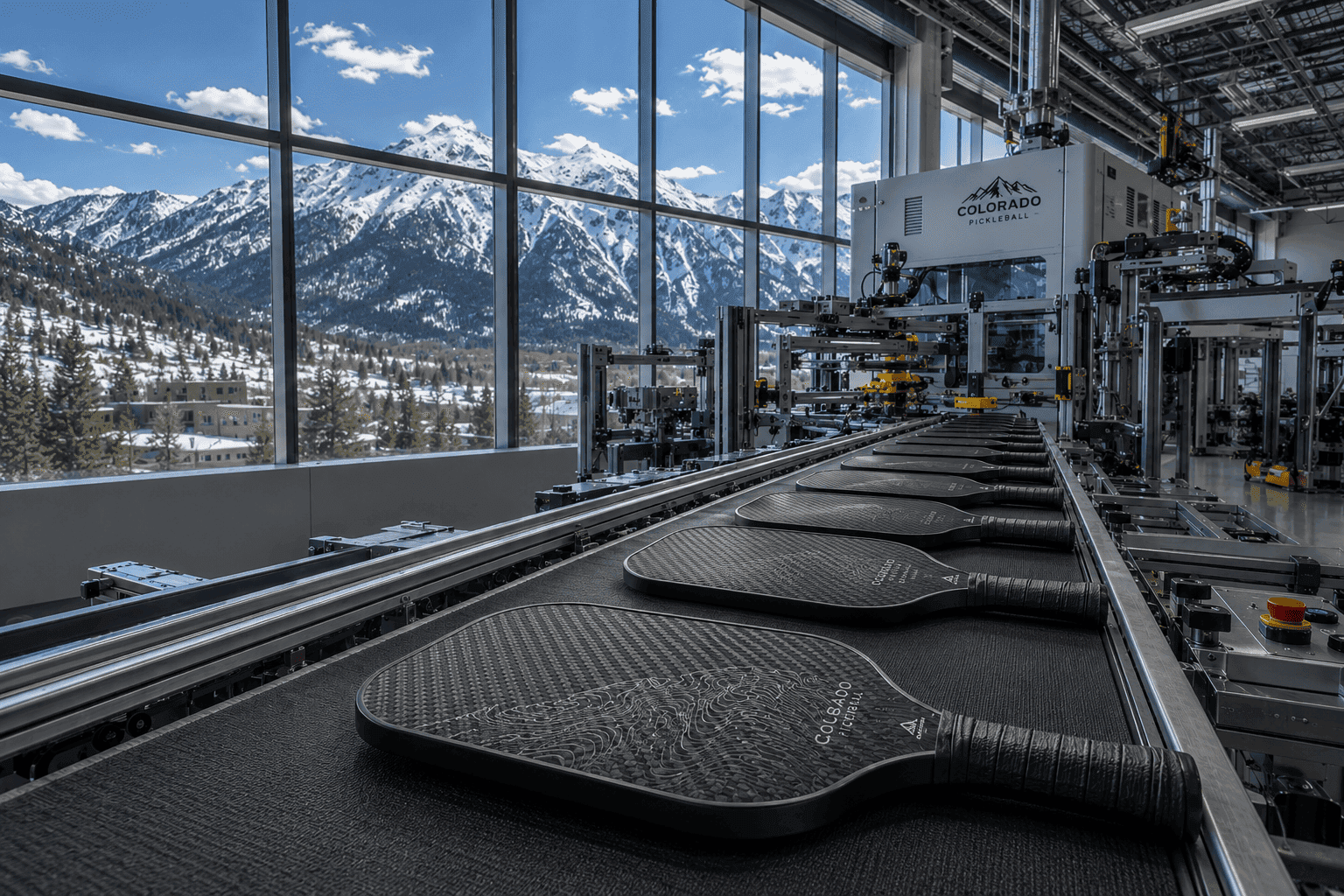
Understanding What Makes Colorado’s Manufacturing Different
When we evaluate manufacturing sites for our clients, we start with the fundamentals. Colorado’s geography and climate create conditions that fundamentally alter how materials behave.
Altitude isn’t just a number—it’s a manufacturing parameter. At elevations where breathable air becomes a commodity, polymers and composites expand and contract differently than they do at sea level. We’ve seen perfectly good paddle designs fail in Colorado because manufacturers didn’t account for reduced atmospheric pressure affecting expansion rates. Then there’s the sun. Colorado’s UV radiation is brutal on materials, accelerating degradation in ways you don’t see in coastal facilities.
Logistics here have their own rhythm. Winter road closures don’t respect just-in-time delivery schedules. We once had a truckload of core materials stuck on Loveland Pass for thirty-six hours—not ideal when you have production lines waiting. Air freight options are limited compared to coastal hubs, and the simple truth is everything costs more to get to the mountains.
And workforce? Colorado’s skilled labor market is a study in contrasts. You’re competing with tech companies offering stock options and cannabis operations with cash-heavy payrolls. Finding composite specialists who understand both material science and mountain manufacturing quirks is challenging. Seasonal labor fluctuations mean your best technician might vanish for ski season. During our first Colorado production run, we had to cross-train existing staff on composite handling techniques they’d never encountered in other regions.
Common Pitfalls We See Brands Make (and How to Dodge Them)
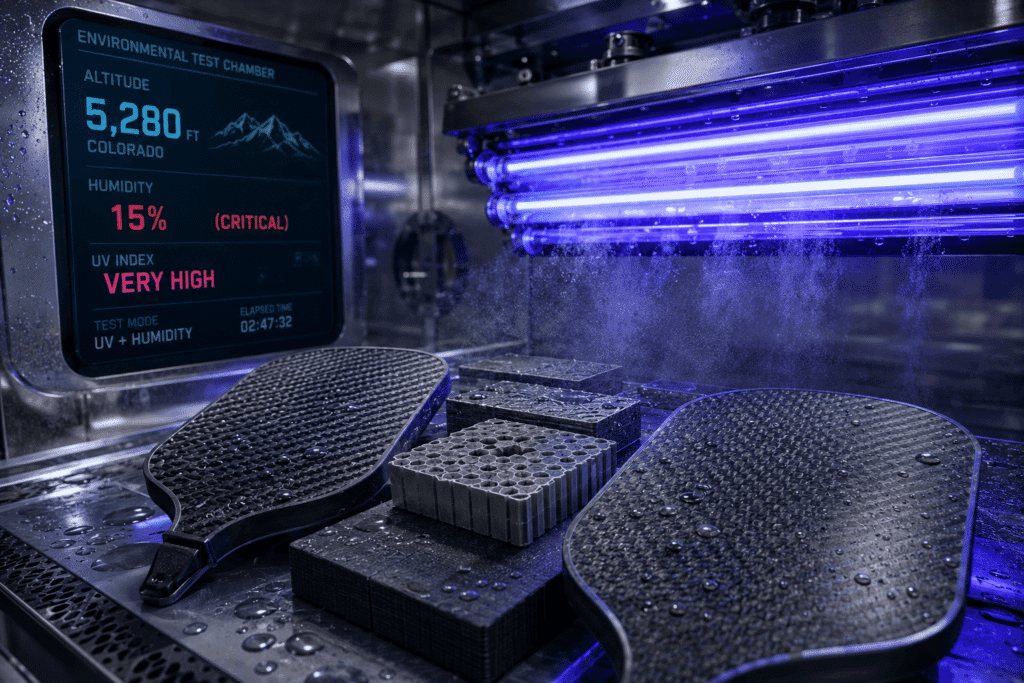
The most frequent mistake? Underestimating the climate control investment. I’ve walked into too many Colorado workshops where the environmental controls felt more appropriate for a weekend cabin than a precision manufacturing facility. Without proper humidity and temperature regulation, you get composite materials that cure with internal stress points, adhesives that release prematurely, and surface finishes that look like they were applied in a sandstorm.
At Raligo, we learned this lesson early. Our first test batch in a Denver facility had a twenty percent failure rate—paddles delaminating after just a few hours of play. The culprit? Humidity variation between morning and afternoon production runs. The fix was straightforward but costly: proper environmental controls with continuous monitoring. Now we can track humidity changes down to the hour across seasons, adjusting our production parameters accordingly.
Altitude-specific testing is non-negotiable but often overlooked. A paddle designed in Portland might feel responsive and crisp at sea level, but bring it up to Boulder and it plays dead. The reduced air density changes everything about ball impact response and sweet spot characteristics. We test prototypes in a tight loop along the Front Range—from Denver’s mile-high baseline to Golden’s slightly elevated courts, all the way up to mountain towns like Breckenridge. Only when performance remains consistent across that gradient do we sign off on a design.
Seasonal variation sneaks up on manufacturers who aren’t paying attention. Summer humidity versus winter dryness creates such different manufacturing conditions that you might as well be operating in two different states. We’ve developed seasonal protocols that build temperature and humidity adjustments directly into production schedules. Storage facilities need specific considerations too—a warehouse that works in July might ruin your stock by February.
Colorado-Specific Manufacturing Practices That Actually Work
Sourcing locally solves more problems than it creates. Partnering with Colorado-based material suppliers means they understand the climate challenges inherently. Reduced lead times matter when weather can shut down I-70. More importantly, creating supply chains within Colorado builds resilience and supports the circular economy we’re trying to foster here at Raligo.
Our altitude-adjusted production parameters have become one of our signature advantages. We’ve documented how composite cure times need extension, pressure applications require recalibration, and finishing processes must compensate for the dry mountain air. This isn’t theoretical—it’s data-driven manufacturing refined through hundreds of production cycles across different seasons.
Mountain-proof durability isn’t a marketing tagline—it’s an engineering requirement. Consumers expect Colorado outdoor products to handle rapid temperature changes, maintain performance in punishingly dry air, and resist UV degradation at altitude. Our testing protocols reflect actual Colorado play conditions, including the dust bowl conditions of mountain town courts after a dry spell. We simulate rapid temperature drops—like when you play an afternoon game that starts at 70°F and finishes at 45°F as the sun drops behind the peaks.
The Competitive Advantage of Manufacturing Here
When you get past the challenges, manufacturing in Colorado offers advantages you can’t fake.
Authenticity sells at a premium. Consumers can smell a phony. When they pick up a paddle that genuinely comes from the Rockies, made by people who understand mountain sports, they respond. We’ve seen Colorado-made gear command prices twenty to thirty percent above comparable products, simply because the story is true.
Quality perception follows naturally. Colorado has earned a reputation for technical excellence in outdoor sports. Manufacturing here inherits that credibility. Our facilities near Golden get tours from serious players who want to see where their gear comes from, building a connection that translates to brand loyalty.
And the market access is immediate. Colorado is pickleball country, with hundreds of courts and an engaged, passionate player base. Being local gives us direct feedback channels. We adjust our designs based on what Colorado players actually need, not what algorithms predict coastal markets might want.
Strategic Moves for Brands Getting Started Here
Start with limited production runs to refine your processes before scaling. We advise clients to build their first few batches at half capacity—it gives you breathing room to solve altitude-specific challenges without financial pressure. Every Colorado brand we’ve worked with that’s tried to go big from day one has ended up reworking their entire manufacturing approach.
Collaborate with Colorado’s deep R&D community. Between CU Boulder’s materials science programs and the research institutions clustered along the Front Range, there’s expertise here that understands high-altitude manufacturing at a cellular level. We partner with university labs to test new composites under exaggerated Colorado conditions—if it survives their stress tests, it’ll handle actual play.
Focus on climate-adaptive materials rather than trying to force coastal recipes to work. Our R&D team is constantly experimenting with materials engineered specifically for Colorado’s conditions. The resulting paddles not only perform better here but offer unique characteristics that stand out globally.
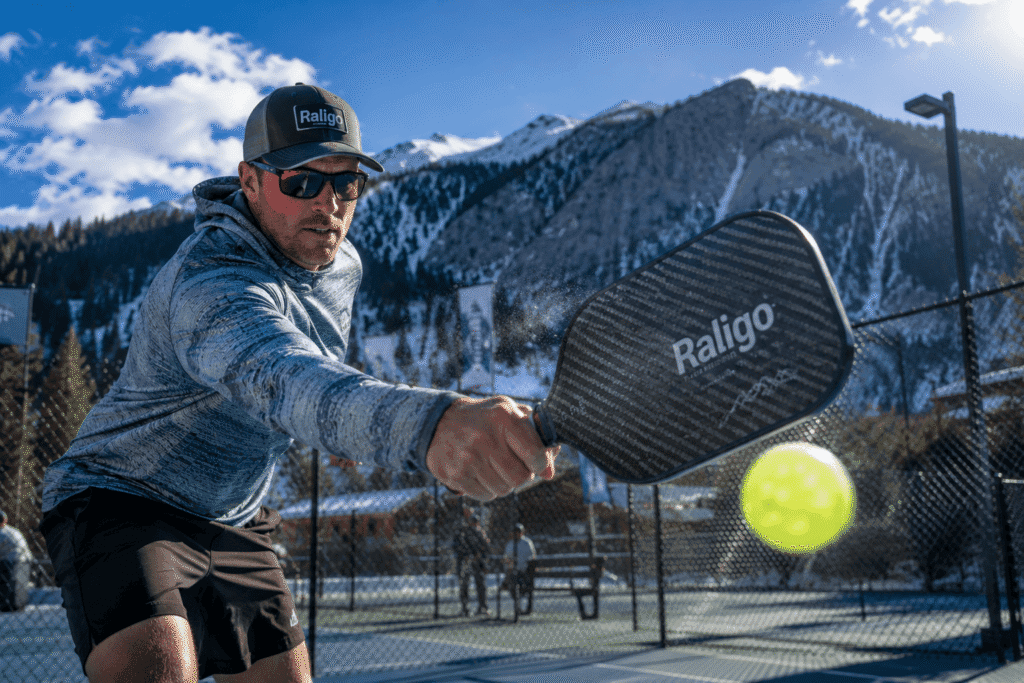
Build testing partnerships with actual Colorado players. We work with local clubs, professional players in the state, and facilities across altitude gradients. Their feedback comes in real Colorado conditions—dry courts, cold mornings, afternoon winds. That real-world input is more valuable than any laboratory simulation.
The Bottom Line
Manufacturing pickleball paddles in Colorado represents a specific kind of opportunity—one that requires understanding and embracing, rather than fighting against, the unique conditions of the Rockies. At Raligo Sport, we’ve learned to view Colorado’s manufacturing environment as our competitive edge rather than a limitation.
Paddles manufactured here for here naturally excel in similar environments worldwide, creating a compelling differentiator in a crowded market. The authenticity is real, the quality perception earned, and the connection to the outdoor sports community genuine.
For brands willing to invest in altitude-aware manufacturing—to anticipate seasonal variations, to build with mountain-proof durability, and to embody Colorado’s rugged outdoor heritage—the path isn’t just clear. It’s rewarding. You’re not just making equipment; you’re building a piece of the state’s outdoor identity. And from where we stand, that’s a manufacturing challenge worth mastering.