Why “What’s Your MOQ?” Is the Wrong First Question
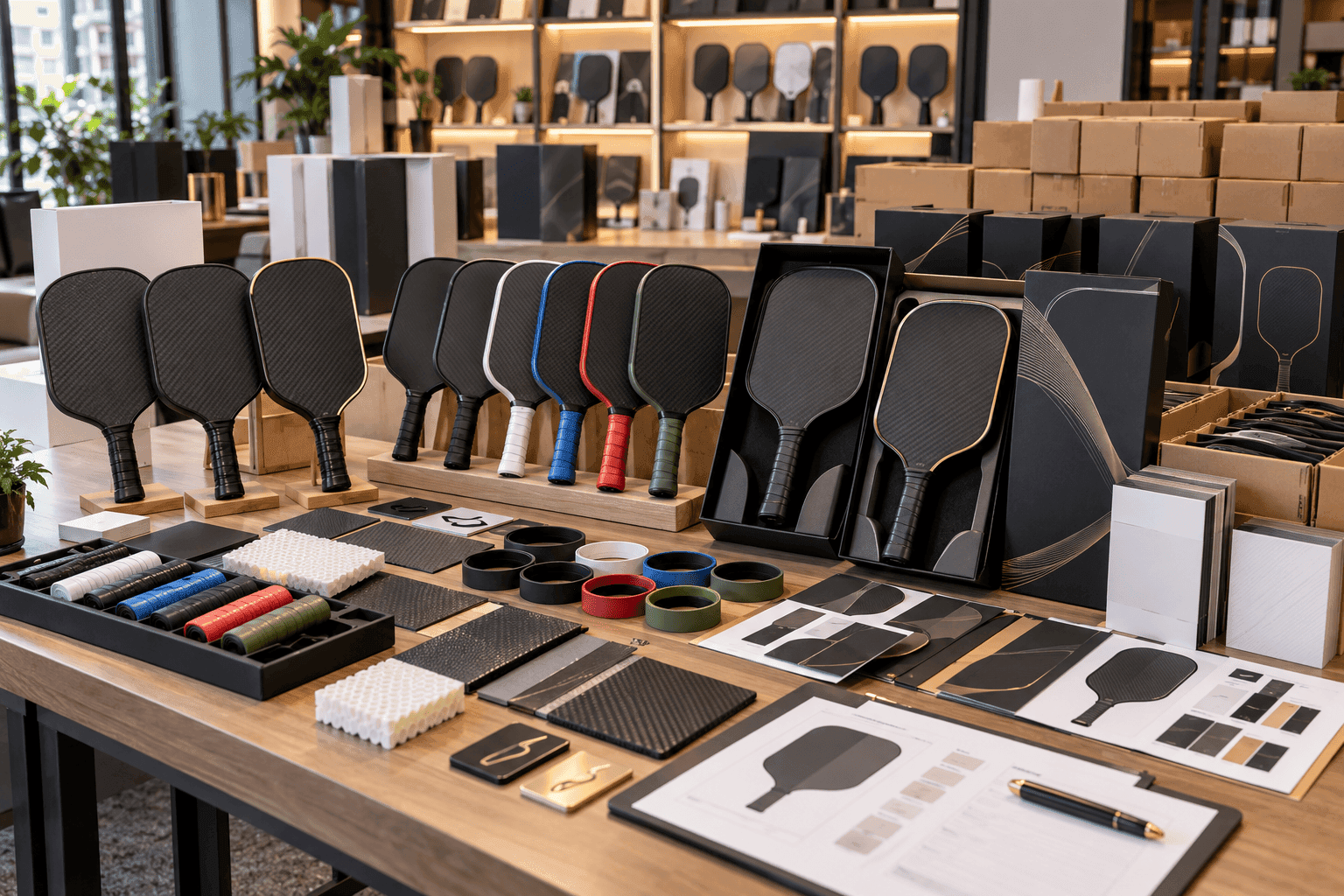
Every brand buyer opens the conversation with some version of “what’s your MOQ?” It’s a fair question, but it’s the wrong one to ask first. A pickleball paddle MOQ is not a fixed factory price tag. It is an output — the result of a handful of cost inputs that move together: the mold and tooling you’re willing to commit to, how many distinct paddle models and colors you want, whether you need custom logo and retail packaging, and how your payment and lead-time terms are structured. Two brands can walk into the same factory and walk out with a 200-unit MOQ and a 2,000-unit MOQ for what looks like the same paddle.
This guide unpacks how that number is actually built at a carbon fiber paddle OEM, so you can negotiate from the cost structure instead of haggling against a number nobody can explain. If you’re sourcing pickleball paddles for a brand, a retail shelf, or a wholesale channel, this is the part of the conversation most buyers skip — and it’s the part that decides your cash-flow runway and your landed cost.
What Actually Sets a Pickleball Paddle MOQ
The minimum order quantity for a paddle is set by whichever of four cost constraints binds first. Most buyers assume it’s always tooling amortization. It usually isn’t — for a standard-construction carbon fiber paddle, the binding constraint is more often material yield and line setup.
- Tooling and mold cost. A thermoformed or cold-pressed paddle runs on molds with real setup and amortization cost. A dedicated mold for your exact shape and edge geometry means the factory has to recover that cost across your order. Shared or “open” molds (the factory’s own existing paddle shapes) carry no tooling charge, which is the single biggest lever that drops a MOQ.
- Material minimums. Raw carbon fiber prepreg, core sheet (polymer honeycomb or foam), and edge-guard profiles are purchased in batch quantities. A factory doesn’t buy carbon fiber by the paddle; it buys by the roll or the sheet. If your color or core density is non-standard, you may trigger a material minimum well above the tooling minimum.
- Line setup and changeover. Pressing, cutting, and finishing lines run most efficiently in continuous batches. Every time a line changes over to a different color, core, or logo, you absorb downtime. Mixed orders — see below — multiply changeovers, and that shows up in the MOQ.
- Certification and QA overhead. If every batch needs USAPA submission documentation, batch certificates, or third-party inspection, the factory’s per-order fixed labor dissuades tiny runs. QA doesn’t scale down to a 50-unit trial as cheaply as buyers imagine.
- Sample stage (1–5 units). A pre-production sample is not a product order; it’s an engineering artifact. Expect to pay a sample fee that is 2–4× the eventual bulk unit price because you’re buying mold time, prepreg scrap, and one-off finishing. Samples almost never carry a true MOQ — some factories will even waive the fee if it’s credited against a later bulk order.
- Trial or pilot run (50–200 units). This is the first rung with a real minimum, and it exists to validate consistency — spec compliance, color matching, playability feel — before you commit real capital. A trial run is priced above bulk because the factory still hasn’t hit its efficient batch size. It’s the cheapest insurance you will ever buy against a container of wrong-core paddles.
- Bulk production (300–2,000+ units, model-dependent). This is where the unit economics the factory quoted you actually hold. Bulk is priced on long runs of a single spec, minimal changeover, and material full-roll consumption. If you negotiated your “bulk” price but are only ordering trial quantities, you will not get that price — and that gap is not the factory being dishonest, it’s the batch math.
- MOQ is per SKU, not per shipment. Each distinct combination of model + color + logo counts toward its own line setup and changeover. Three models × two colors = six SKUs, and if the per-SKU minimum is 300, your real order is 1,800 units — not 300.
- Color drives material and changeover cost. A non-stock carbon fiber weave color or a custom grip/case color means the factory pays a premium for small-quantity dyed prepreg or holds dedicated inventory. Stock black, white, and the factory’s existing weave finishes carry no such premium.
- Mixed-container economics. Consolidating multiple SKUs into one shipment lowers freight and lets you spread a smaller per-SKU quantity across a fuller container. This is the standard way brands keep per-SKU MOQs modest while still hitting a container-efficient total.
- Pad-printed logo — the lowest barrier. A pad-print plate is cheap and re-usable, so logo customization often adds little to the MOQ once you’re past the trial rung. This is why low-MOQ brand launches default to pad printing.
- Laser etching and in-mold graphics — higher floor. Laser is per-unit time (no tooling but slower), and in-mold graphics require a dedicated mold cavity or graphic film, which pushes both MOQ and tooling cost up meaningfully. If your brand promise is “durable mark,” in-mold is the superior engineering choice — you just pay for it in minimum quantity.
- Private-label retail packaging — a separate MOQ entirely. Custom printed boxes, hang tags, and inserts are usually quoted with their own minimums (commonly 500–1,000 units because printing plates and box dies are fixed costs). You can order paddles at one MOQ and packaging at another, but the packaging minimum frequently binds first for a small brand.
- Custom grip, case, or accessories — each is its own SKU with its own floor. A custom colorway case might carry a 500-unit minimum even when your paddle MOQ is 300.
- Payment structure scales with order size. Small trial orders usually run on full prepayment or 50/50 (50% deposit, 50% before shipment). Bulk orders with an established account shift toward 30% deposit and 70% against a bill of lading, sometimes with a credit line once the relationship and order history are proven. The larger and more repeatable your volume, the more the factory absorbs your cash-flow timing.
- Lead time is batch-sensitive, not just volume-sensitive. A 300-unit order doesn’t necessarily take a third as long as a 900-unit order, because the fixed steps — mold prep, sample approval, material lead time, QA hold — don’t compress linearly. Carbon fiber prepreg lead time alone can be 3–6 weeks, and it anchors the schedule regardless of order size.
- The deposit anchors your production slot. A factory doesn’t schedule your presses on a promise; it schedules them on a deposit. Small deposit, uncommitted timeline — that’s how orders slip a season and you miss your retail window. A committed deposit buys you a committed slot.
- Offer open-mold entry. The single fastest way to lower a brand’s MOQ is a catalog of standard paddle shapes the factory already runs. No tooling charge, factory-optimized specs, and the brand’s early money goes into product, not molds.
- Tier minimums by customization depth. A stock paddle with a pad-printed logo might carry a 100–300 unit floor, while a fully custom shape with in-mold graphics sits at 1,000+. Communicating that ladder clearly — not as a single intimidating number — is what separates a consultative supplier from a price list.
- Credit samples against the bulk order. Waiving or crediting the sample fee against a confirmed bulk PO removes the single biggest friction point for a first-time brand and signals confidence in your own quality.
- Bundle accessories to reach container efficiency. When a brand’s per-SKU minimum is modest, help them consolidate models, colors, and accessories into a mixed container so freight economics work without inflating any single SKU’s MOQ.
The rule of thumb: the more your “custom” diverges from what the factory is already running for someone else, the higher your binding MOQ. Standardize to the factory’s existing plate, and the floor drops.
The Sample → Trial → Bulk Ladder Nobody Explains Up Front
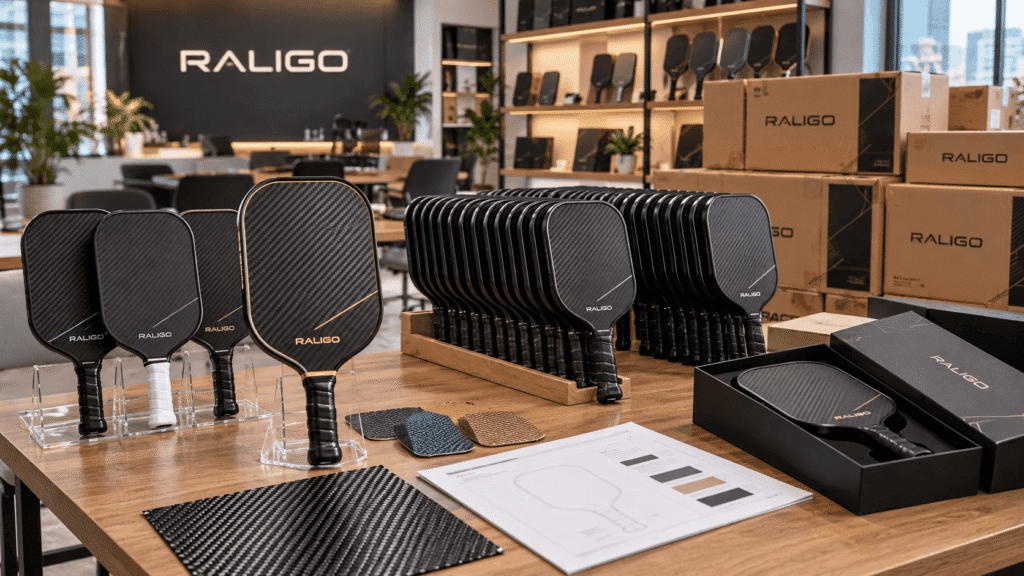
Most factories quote you a single MOQ number and stop there. In practice, a real order structure is a three-rung ladder, and each rung has its own minimum, its own price, and its own purpose. Confusing them is how brands overpay on the small end and under-commit on the big end.
A clean entry path for a new brand: pay full freight on 3–5 samples, run a 100–300 unit pilot across two or three core-density variants, then convert the winner to bulk. Skip the pilot and you’re speculating; skip the samples and you’re gambling on a color match nobody verified.
How Mixed Orders and Multiple Colors Raise Your MOQ
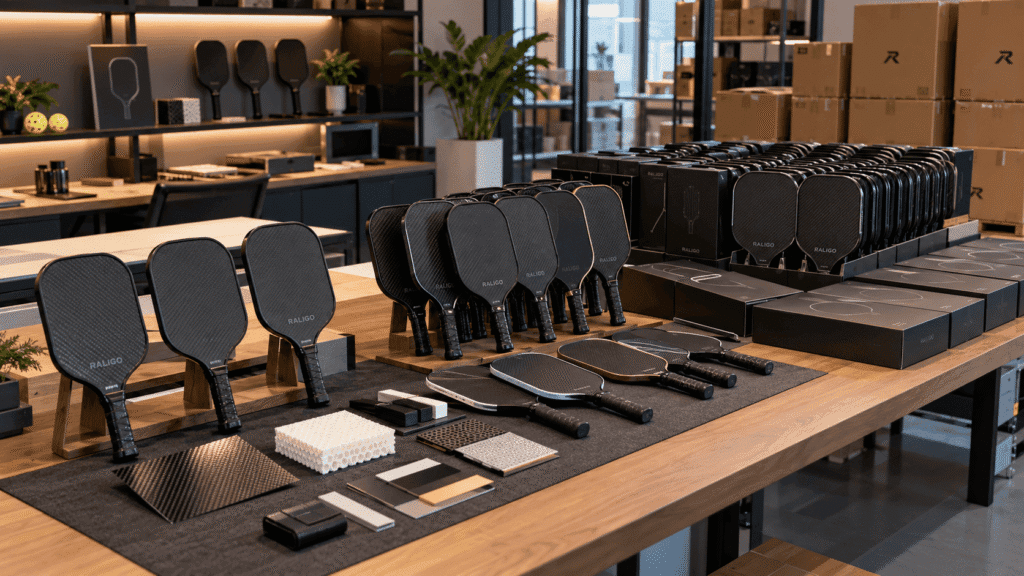
This is where MOQ conversations go sideways. A buyer says “I want three models, two colorways each, with my logo” and is surprised when the MOQ is quoted per SKU, not per order.
The practical move: consolidate the order at the model level even if you want to test the market at the color level. Run your color spread in the pilot run, then push only the confirmed colorways into bulk. That way you keep the per-SKU minimum low where you’re uncertain and pay it only where you’re committed.
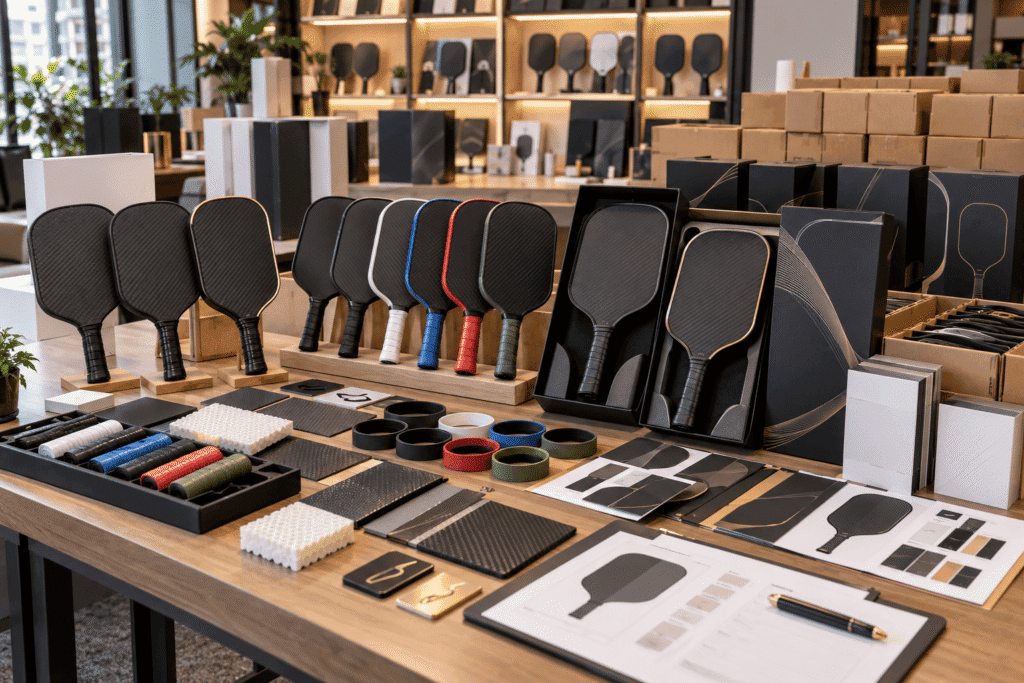
How Logo, Private Label, and Packaging Move the Floor
Customization is where MOQ costs hide in plain sight, because each form of customization has a different minimum and a different setup charge.
The takeaway for a brand on a budget: start with a stock paddle, pad-printed logo, and polybag or white-box packaging to keep the order floor low, then layer on in-mold graphics and custom retail packaging as volume justifies them. Customization is a ladder you climb with revenue, not a switch you flip at launch.
How Payment Terms and Lead Time Track the Order Structure
MOQ and payment terms are not independent dials. They move together because both are expressions of the factory’s exposure to your order.
For buyers, the leverage on terms comes from the ladder: use the trial run to prove you’re a clean, repeatable account, then negotiate better payment structure on the bulk order. Terms are a reward for demonstrated order history, not a starting-point concession.
How an OEM Should Design a Workable MOQ for a Brand Customer
From the factory side, a good MOQ isn’t a wall — it’s a path. The OEMs that win brand accounts in the long run design their minimums so a customer can start small and grow, instead of quoting a number that prices every first-time brand out of the market.
A brand buyer evaluating factories should ask three questions during the MOQ conversation (for the full supplier-selection walkthrough, see our pickleball paddle supplier vetting checklist, and the how to choose a manufacturer guide): *What’s the open-mold option, and does it drop my floor?*, *Which of my customizations is driving the minimum — logo, color, or packaging?*, and *Does the sample fee credit against a bulk PO?* The factory that answers all three clearly is structured to let you start small and scale. The one that can’t explain its own number is quoting you a wall, not a plan.
Frequently Asked Questions
What is the typical pickleball paddle MOQ for a new brand?
Most carbon fiber paddle OEMs structure a realistic entry around 200–500 units per SKU for a stock paddle with a pad-printed logo, with the floor dropping to 100–300 if you use open molds and lower as low as 50–100 for a pure trial run. Full customization, custom colorways, and retail packaging push it past 1,000 units per SKU.
Does the MOQ apply per order or per style?
Per style. Each distinct model, color, and logo combination is its own SKU with its own line setup and changeover, so three models in two colors means six SKUs — and your total order is the per-SKU minimum times six. Consolidating colors inside a single confirmed model is the standard way to keep the total manageable.
Can MOQ be lowered by combining with accessories or mixed models?
Yes. Mixed orders that consolidate multiple SKUs into one shipment — and one fuller container — let a factory accept smaller per-SKU quantities while the total order still covers setup and freight. Custom grips, cases, and other accessories each carry their own minimum, but bundling them helps you reach container-efficient totals.
What affects the lead time on a MOQ order more than quantity?
The fixed steps — mold prep, sample approval, raw carbon fiber prepreg lead time (often 3–6 weeks), and QA hold — dominate the schedule and don’t compress linearly with volume. A committed deposit is what actually secures your production slot.
Ready to Lock In Your Order Structure?
Get a clear, tiered MOQ quote for your paddle program — open-mold entry options, mixed-order consolidation, and a sample-to-bulk pricing ladder. Talk to our OEM team about your exact spec.