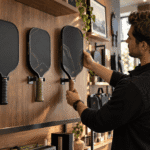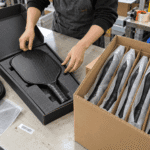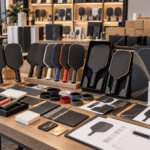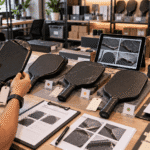
In Washington D.C., the math of pickleball procurement has tilted sharply. The District’s Department of Parks and Recreation went from zero dedicated courts in 2019 to 58 outdoor and 19 indoor facilities by FY2023. Volo DC reported a 1,450% spike in league participation between September 2022 and May 2023. DPR itself saw its registered player base balloon from roughly 70–100 participants in 2018 to more than 1,500 by FY2023. When you layer in the DPR’s FY2025 capital budget of $288.95 million—and the $165.58 million allocated for FY2026—what emerges isn’t just a recreation trend. It’s a sustained institutional supply requirement that procurement officers need a framework for.
I’ve spent years on the manufacturing side of this equation, working with institutional buyers who walk into a bulk paddle order expecting it to work like ordering office supplies. It doesn’t. The paddles sit in storage between semesters. They cycle through temperature swings in uninsulated DPR equipment sheds. They get checked out, abused, and returned by hundreds of players with zero incentive to treat them gently. If you’re buying for George Washington University’s 200-member pickleball club, Georgetown’s renovated Yates Field House facility, or the wave of new DPR courts breaking ground through 2026, the procurement framework matters as much as the paddle spec itself.
This guide walks through the procurement channels available to D.C. institutional buyers—GSA, DCSS, direct OEM—and explains why climate-controlled warehousing and carbon fiber manufacturing quality control deserve as much attention as unit pricing.
The D.C. Institutional Landscape: Why Bulk Pickleball Procurement Is Different Here
D.C. isn’t a typical municipal market. The buyer profile splits into three distinct categories, each with different funding streams, approval processes, and usage patterns:
| Buyer Category | Procurement Vehicle | Typical Order Size | Unique Requirement |
|---|---|---|---|
| Federal Agencies (GSA) | GSA MAS Schedule SIN 192 02 | 200–2,000+ paddles | USAPA-certified, competitive bidding waiver |
| DC Government (DPR, DCPS) | DC Supply Schedule (DCSS) | 100–800 paddles | Multi-year supply agreements, seasonal delivery |
| Universities (GWU, GU, Howard) | Institutional Purchase Orders | 50–300 paddles | Club + intramural dual-use, rapid reorder capability |
Federal buyers operating under the GSA Multiple Award Schedule will find pickleball equipment classified under SIN 192 02—Sporting Goods Equipment and Supplies. The advantage is real: once a supplier holds a GSA MAS contract, procurement officers can purchase directly from pre-negotiated pricing schedules without running fresh competitive bids. The catch is that most sporting goods GSA holders are generalists. They carry basketballs, volleyballs, and pickleball paddles in the same catalog, often without anyone on staff who can distinguish a thermoformed carbon fiber face from a spray-coated entry-level panel—or explain why core density ranges matter when ordering for a facility that sees 300 players per week.
The DC Supply Schedule offers a parallel path for district-level buyers. DCSS contracts are competitively awarded and open to DPR, DC Public Schools, and other municipal agencies. Unlike GSA, DCSS procurement tends to favor suppliers with regional logistics presence—which is where warehousing strategy becomes a decisive factor, a point I’ll return to.
GSA Procurement for Pickleball Equipment: What Most Guides Leave Out
The GSA pathway looks clean on paper. SIN 192 02 covers sporting goods, and a handful of contract holders list pickleball equipment in their catalogs. In practice, institutional buyers run into three friction points that don’t appear in the solicitation documents.
First, product specialization. Most GSA sporting goods contractors are broad-line distributors. When your order arrives, the paddles are whatever SKU their sourcing team pulled from a catalog. There’s rarely a technical point of contact who can speak to manufacturing tolerances, explain how surface grit profile (measured by profilometry in Ra values) affects spin durability across 1,000+ play hours, or help you spec the right core density for your player demographic. For a military base fitness center where paddles get used 12 hours a day, that knowledge gap translates directly into equipment that fails before the next budget cycle.
Second, lead time assumptions. GSA pricing schedules assume standard commercial delivery windows—usually 2 to 4 weeks. But pickleball paddles, especially USAPA-certified models built on carbon fiber faces with polymer or foam cores, are almost exclusively manufactured in Asia. Maritime freight from major Chinese ports to U.S. East Coast entry points runs 30 to 45 days under normal conditions. Add customs clearance, drayage to a DC-area warehouse, and final-mile distribution, and you’re looking at 60 to 75 days door-to-door. Institutional buyers who don’t build this reality into their procurement calendar end up placing emergency orders at premium pricing—or running equipment shortages mid-season.
Third, USAPA compliance isn’t automatic. For any federal or university program where liability insurance is in play, paddles must appear on the USAPA approved equipment list. Non-certified paddles aren’t just a quality issue—they’re a compliance exposure. A procurement officer who misses this checkbox can discover the gap during an insurance audit rather than at time of purchase, which is far more expensive to fix.
If you’re buying through GSA, ask the supplier three questions before cutting a purchase order: “Are your paddles USAPA-approved and can you provide the list verification?” “What’s your actual factory-to-DC lead time, including ocean freight?” “Do you have a technical specialist who can help spec paddle performance characteristics for our usage profile?” Vague answers to any of these are a procurement red flag.
University Procurement: GWU, Georgetown, Howard, and the Club Sports Model
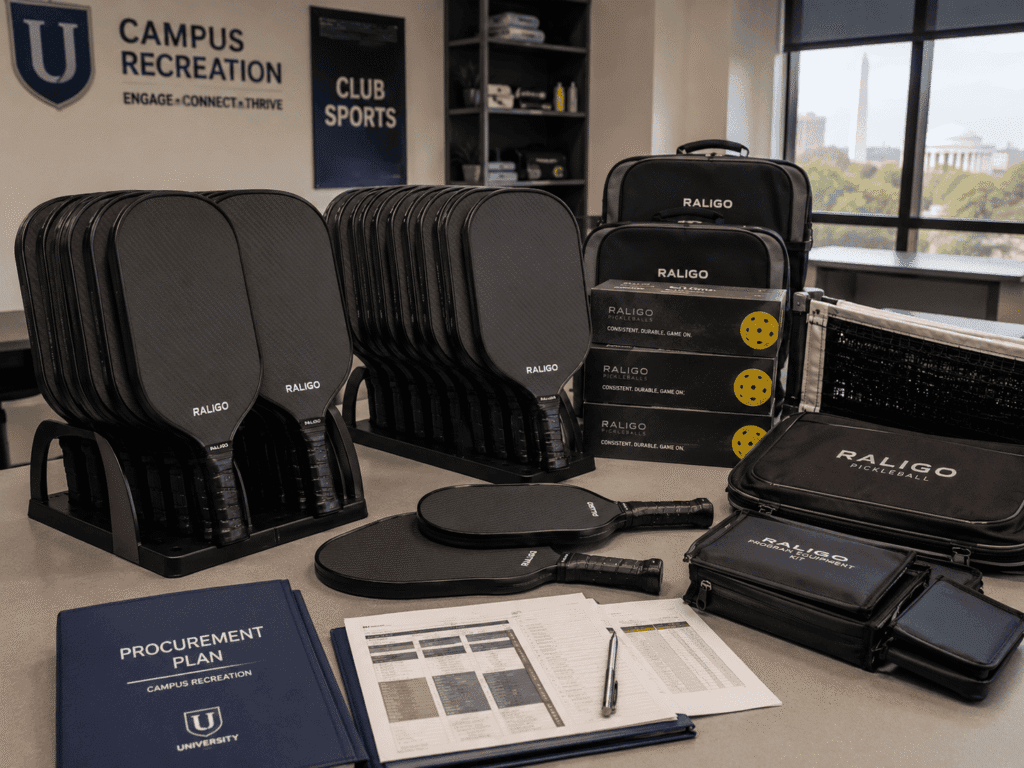
University procurement in D.C. operates on a different logic from government purchasing. The budgets are smaller—typically $5,000 to $30,000 for a paddle fleet—but the usage intensity is dramatically higher and the approval chain is shorter.
GWU’s Pickleball Club illustrates the pattern. With over 200 registered members and a 12-person competitive team, this isn’t a casual drop-in group. Equipment cycles through weekly open-play sessions at the Lerner Health and Wellness Center, plus league matches and tournaments. Paddles that last six months with recreational players might last 10 weeks under that rotation. The procurement need is not just bulk pricing—it’s consistent reorder speed and batch consistency from the same manufacturing line, so that replacing worn paddles mid-semester doesn’t introduce a different feel or balance.
Georgetown’s Yates Field House reopened its renovated pickleball facilities in January 2025, adding designated court space and launching instructional clinics for students and community members. For a facility manager outfitting a mixed-use program—open recreation plus structured instruction—the paddle fleet needs internal differentiation. Beginner clinic paddles benefit from larger sweet spots and lower core density for control; competitive play paddles prioritize surface grit longevity and higher-density cores for power. Buying 100 identical paddles saves on unit cost but under-serves the actual program.
Howard University presents a different opportunity. As of mid-2026, Howard doesn’t yet have a dedicated pickleball club within its competitive intramural and club sports program, which currently fields flag football, basketball, volleyball, soccer, tennis, and other sports through IMLeagues. Given pickleball’s demographic shift—the average player age nationally is now 35, with the 25-to-34 bracket as the largest segment—Howard is a greenfield institutional buyer. The procurement department that establishes a paddle supply relationship before a club formally launches positions itself to shape the program’s equipment standards rather than react to them.
Climate-Controlled Warehousing: The Supply Chain Lever Nobody Talks About
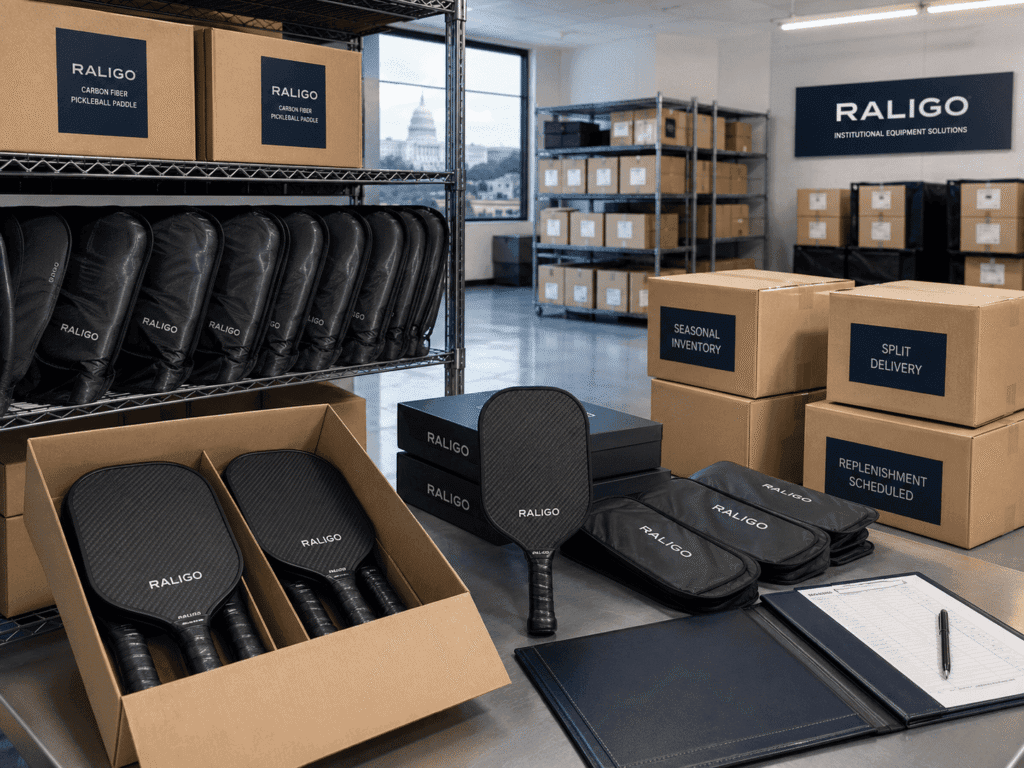
If there’s one procurement variable that D.C. institutional buyers systematically undervalue, it’s storage conditions—both at the supplier’s warehouse and at their own facility. Here’s why it matters in ways that show up on your replacement budget.
Carbon fiber paddle faces are bonded to polymer or foam cores using structural adhesives and epoxy resins. These materials have specific thermal tolerance windows. Sustained exposure above 100°F—easily reached inside a non-climate-controlled shipping container sitting on an East Coast dock in August, or in an uninsulated DPR equipment shed in July—begins softening the adhesive layers. The paddle won’t visibly delaminate immediately, but micro-separation at the bond interface accelerates wear, reduces paddle performance consistency, and shortens functional lifespan by 30 to 50 percent. Below 32°F, the epoxy stiffens to the point of brittleness; a dropped paddle in a cold storage room can crack.
The ideal storage range is 50°F to 80°F with relative humidity between 30% and 50%. This isn’t just a best-practice suggestion—it’s a procurement specification that should appear in your supplier evaluation criteria. A manufacturer who operates climate-controlled warehousing at their consolidation point, and can document temperature and humidity logs for your stored inventory, is offering something materially different from a supplier who drop-ships from an unconditioned third-party logistics center.
This becomes especially relevant when ocean freight gets unpredictable. Port congestion at Long Beach or Savannah, canal transit restrictions, or seasonal typhoon disruptions in the South China Sea can add 15 to 30 days to a shipment timeline. If your supplier’s warehousing isn’t climate-controlled, those extra weeks in transit and consolidation expose every paddle in the shipment to thermal cycling that degrades the carbon fiber-to-core bond before the equipment ever reaches your program. A supplier with temperature-managed storage absorbs the delay without absorbing the quality penalty.
For institutional buyers in D.C. specifically, there’s a seasonal dimension: bulk orders for spring semester university programs often ship from factories in November and December. That puts containers on the water during peak holiday shipping congestion and into U.S. ports during winter temperature drops. A shipment that sits in an unheated warehouse for two extra weeks in January arrives with paddles that have been cold-soaked below recommended storage temperatures. Programs that receive equipment in this condition and put it directly into service see elevated early failure rates—blamed on manufacturing defects when the actual culprit was logistics.
OEM vs. Distributor: What Institutional Volume Changes About the Math
At institutional order volumes—say, 150 paddles and above—the economics of OEM-direct procurement start diverging sharply from distributor purchasing. A distributor adds roughly 30% to 50% margin on top of factory cost. On a 300-paddle order at $35 per unit factory-direct versus $55 through a distributor, that’s $6,000 in captured budget that can fund another 170 paddles, or cover shipping and storage, or buy replacement stock for mid-cycle attrition.
But the real value of OEM procurement for institutional buyers isn’t just unit price. It’s spec control. When you buy through a distributor, you’re selecting from whatever SKUs they stock—usually a narrow range of off-the-shelf models with fixed face materials, fixed grip circumferences, and fixed core density configurations. When you buy OEM, you can specify:
| Spec Dimension | Distributor (Off-the-Shelf) | OEM (Custom Spec) |
|---|---|---|
| Face Material | Pre-selected (usually T300 or unknown grade) | Choice of T700 or 3K/12K/18K carbon fiber weave |
| Core Density | Fixed (typically standard density only) | Custom density options: low (control), medium (all-around), high (power) |
| Surface Grit | Factory default | Spec Ra values for spin durability requirements |
| Grip Size | Standard circumference only | Multiple circumference options for diverse player bases |
| Edge Guard | Stock color/material | Custom material, color, and attachment method |
For a university program serving a diverse player base—different hand sizes, different skill levels, different preferences for control versus power—that spec control translates directly into player satisfaction and equipment longevity. It also means you’re not paying for features you don’t need, or missing features your program requires.
Weather, Seasons, and the D.C. Procurement Calendar
D.C.’s climate shapes the institutional procurement rhythm in specific ways. Outdoor play peaks April through October, moderated by the summer humidity that makes midday sessions brutal. Indoor play—at DPR recreation centers, university field houses, and community facilities—continues year-round but intensifies November through March. Smart procurement splits annual paddle orders into two tranches: a pre-spring delivery for the outdoor season ramp-up, and a pre-fall delivery for the indoor season surge.
The shipping timeline backs into these windows. A spring delivery arriving by March 1 means placing the factory order by mid-December and the shipment departing Asian ports by early January—right in the teeth of Lunar New Year factory closures. Miss that window and your spring paddles arrive in April or May, after programs have already started borrowing equipment or rationing court time.
A fall delivery arriving by September 1 needs the factory order placed by early June. This is more forgiving on the manufacturing side but creates a summer-storage challenge: those paddles ship during the hottest months, arrive at U.S. ports when ambient temperatures routinely exceed 90°F, and sit in warehouses or distribution centers through peak summer heat. If those warehouses aren’t climate-controlled, every paddle in your order experiences thermal stress before your first player touches it. This is exactly the scenario where a supplier’s temperature-managed storage capability converts from a nice-to-have to a must-have.
I’ve seen institutional programs budget carefully for per-unit paddle costs—down to negotiating $2 off a $40 unit—then lose thousands in early replacement costs because the shipment baked in a non-climate-controlled container for three weeks before delivery. Procurement savings evaporate fast when paddles fail at twice the expected rate.
Evaluating a Supplier for D.C. Institutional Procurement: Eight Questions That Matter
After years of working with institutional buyers, I’ve distilled the supplier evaluation process to eight questions that separate OEM-capable manufacturers from order-takers. These aren’t the questions on a standard RFQ template. They’re the questions that determine whether your paddle fleet lasts one semester or three.
- Are your paddles USAPA-approved, and can you verify current listing status? If the answer is “we can get them approved” rather than “they are approved,” move on. Retroactive USAPA certification takes months and isn’t guaranteed. For any program with liability insurance requirements—which is every government and university program—this is non-negotiable.
- What carbon fiber grade and weave pattern do you use in your standard OEM paddle? A supplier who answers with the grade (T700, T300) and weave (3K, 12K) knows their manufacturing chain. A supplier who says “high-quality carbon fiber” without specifics doesn’t.
- Can you provide core density options, and do you have QC data showing batch-to-batch consistency? Core density is the single biggest determinant of how a paddle feels and performs. If your supplier only offers “standard” density with no measurement data, every batch is a surprise.
- What’s your actual lead time from purchase order to DC-area delivery, including ocean freight? Get a week-by-week breakdown: production time, quality inspection, port consolidation, vessel transit, customs clearance, drayage, and final delivery. If they can’t provide this breakdown, their logistics are reactive rather than managed.
- Do you operate climate-controlled warehousing, and can you provide temperature and humidity logs for stored inventory? If the answer is no, build a 15% to 25% replacement-cost buffer into your budget. You’ll use it.
- What’s your batch consistency protocol? Will my reorder match my original order in weight, balance, and surface texture? Institutional programs depend on equipment interchangeability. A paddle that feels different from the same SKU ordered six months earlier creates complaints, confusion, and accelerated replacement cycles.
- Can you split my order into two delivery tranches without doubling shipping costs? Two deliveries per year aligned with seasonal program cycles is standard institutional practice. A supplier who treats each delivery as a separate, fully-costed transaction isn’t structured for institutional accounts.
- Do you have experience with GSA or government procurement paperwork? A supplier who has navigated even one GSA or DCSS contract cycle understands the documentation requirements, the payment terms (Net 30 is standard), and the compliance hoops. A supplier who hasn’t will learn at your expense.
Frequently Asked Questions From D.C. Institutional Buyers
Making the Decision: When to Move From Distributor to OEM
Here’s a framework I use when advising institutional buyers on when the OEM transition makes sense. It’s not purely about volume—it’s about program maturity.
Stay with a distributor if: your annual paddle budget is under $10,000, you order fewer than 100 paddles per year, and your program doesn’t have someone who can manage a supplier relationship that includes spec sheets, QC batch approvals, and seasonal delivery scheduling. The convenience premium you pay to a distributor is buying you exactly that—convenience—and for small programs, it’s often worth it.
Move to OEM when: your annual paddle spend exceeds $15,000, you’re ordering 150+ paddles per year in at least two delivery tranches, and your program has predictable replacement cycles (e.g., fall semester fleet refresh plus spring competitive-team replenishment). At this scale, the OEM route typically saves 25% to 40% on per-unit costs and—more importantly—gives you control over paddle performance specs that directly affect your program’s equipment budget line.
The D.C. region’s institutional pickleball infrastructure is expanding faster than most procurement departments have updated their supplier lists. By the time the five new courts at Garfield Park’s Robert M. Krughoff Pickleball Center open, by the time Jefferson Athletic Field’s two new courts are finished, and by the time DPR’s next round of court conversions breaks ground, the institutional buyers who got ahead of their supply chain will be the ones not scrambling for emergency paddle orders in peak season.
Frankly, the difference between a smooth institutional procurement process and a budget headache usually comes down to two decisions made early: choosing a supplier who understands manufacturing rather than just distribution, and building logistics assumptions—climate-controlled storage, ocean freight lead times, seasonal delivery scheduling—into the purchase order rather than discovering them after the fact.
Ready to Equip Your D.C. Program?
Talk to our institutional procurement team about GSA-compatible bulk orders, USAPA-certified OEM paddles, and climate-controlled warehousing that protects your equipment investment through every season. From spec development to DC-area delivery, we handle the supply chain so you can focus on your players.