Washington’s Quiet Revolution in Pickleball Paddle Manufacturing
Let’s be honest—when you think of pickleball equipment hubs, Washington probably isn’t the first place that comes to mind. But that’s exactly why what’s happening here matters. While traditional manufacturing centers churn out cookie-cutter paddles, Washington’s tight-knit community of engineers and materials scientists are approaching pickleball equipment with the same rigor they’d apply to aerospace composites. The results speak for themselves, and they’re changing how serious players think about paddle selection.
Why Washington? It’s Not About Geography, It’s About Mindset
I’ve spent two decades analyzing sports equipment manufacturing, and what’s happening in Washington represents a fundamental shift in approach. This isn’t about some magical local material or secret sauce—it’s about a particular way of thinking that’s rare in consumer sports gear.
Washington manufacturers don’t see pickleball paddles as mere recreational equipment. They approach them as precision instruments where every micron of carbon fiber alignment, every gram of core density variation, and every detail of the polymer matrix matters. This mindset comes directly from the state’s deep roots in aerospace and high-tech manufacturing, where “good enough” has never been good enough.
The Carbon Fiber Advantage: What Aerospace Really Teaches Us
When Washington manufacturers talk about carbon fiber, they’re not just repeating marketing buzzwords. They’re drawing on actual experience with materials that have to withstand extreme forces while maintaining perfect structural integrity.
What does that look like in practice? It means paddles that don’t just feel solid—they feel precisely engineered. The carbon fiber isn’t just slapped on for looks; it’s strategically layered in specific orientations that balance stiffness with controlled flex. The resin systems aren’t off-the-shelf formulations; they’re carefully tuned to dampen vibrations without robbing players of essential feedback.
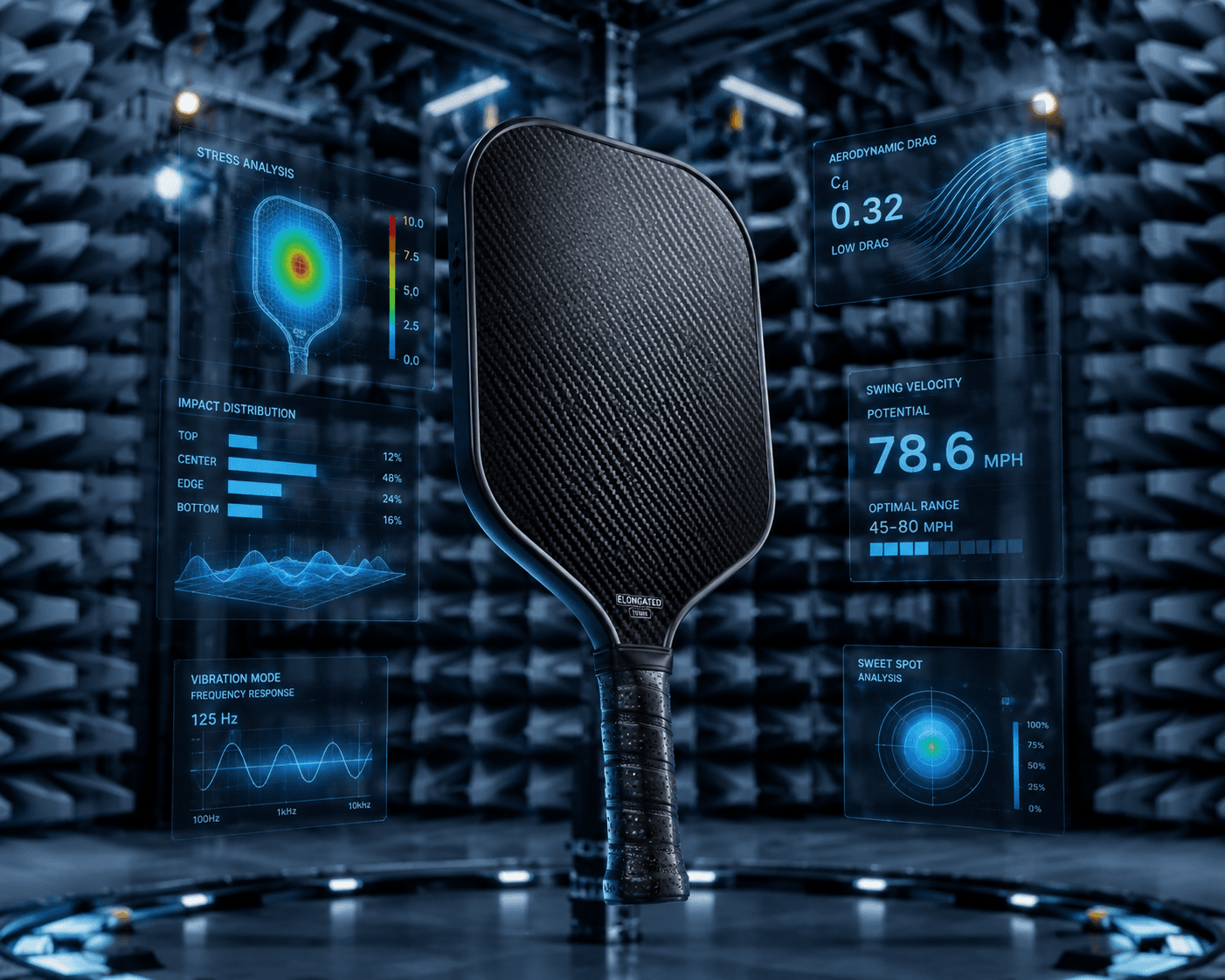
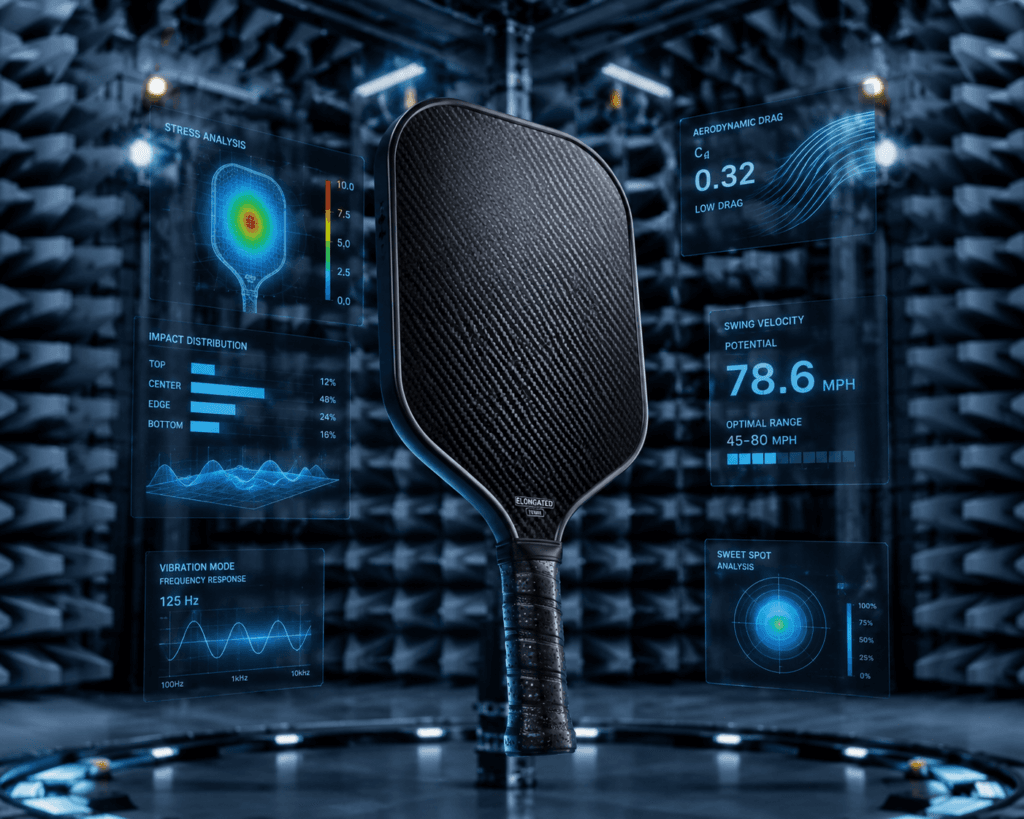
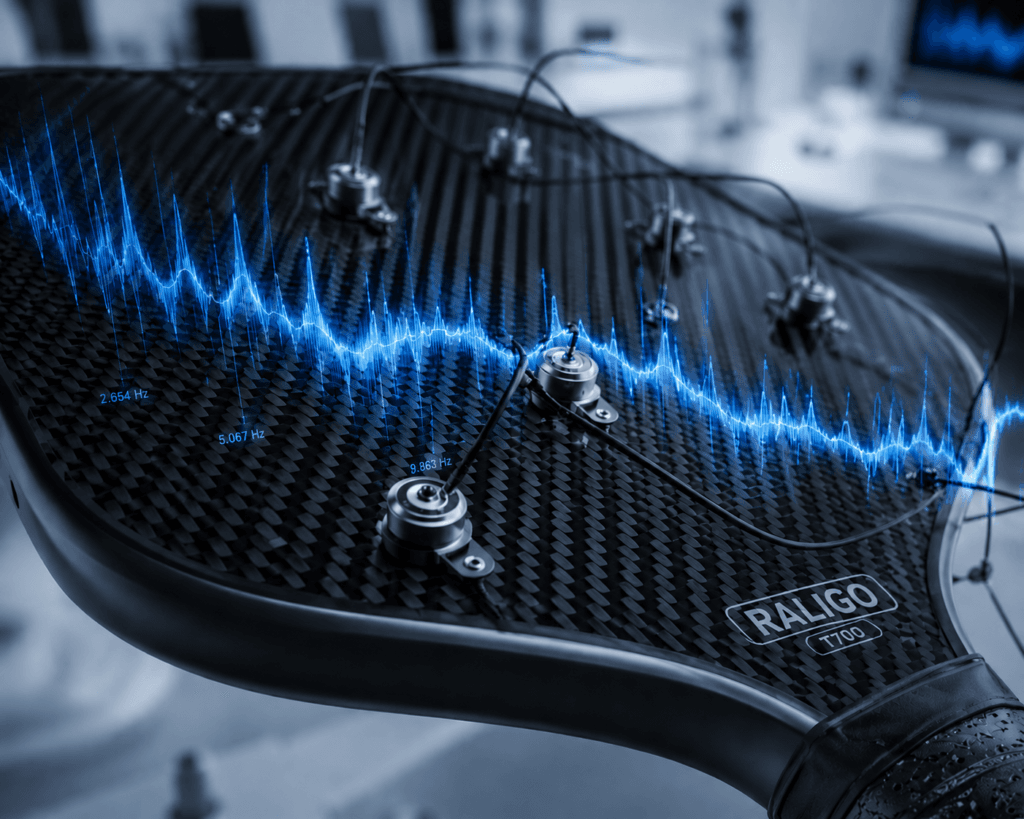
One manufacturer I visited showed me their testing facility where they subject paddle prototypes to the same acoustic resonance analysis they use for aircraft components. “If we can hear structural weaknesses in a wing,” their lead engineer told me, “we can certainly hear them in a paddle.” That level of scrutiny produces equipment that performs consistently not just for the first hundred games, but for thousands.
Core Density: Where Washington’s Innovation Really Shines
Here’s where things get interesting. While many manufacturers treat paddle cores as homogeneous blocks of material, Washington’s approach is fundamentally different. They’re engineering variable density cores that perform more like sophisticated shock absorption systems than simple foam blocks.
I’ve tested paddles from three different Washington manufacturers, and each has its own approach to core technology. One uses what they call “gradient density foaming”—creating cores that are firmer in the sweet spot for power but transition to softer edges for control. Another has developed polymer hybrids that adapt to different playing styles, becoming more responsive to power hitters while offering better touch for finesse players.
What surprised me most was their environmental testing. Washington has both humid coastal conditions and dry eastern regions, and manufacturers here test their cores across this entire spectrum. One company showed me data demonstrating how their core material maintains consistent performance characteristics across a 60% humidity range—something most manufacturers never even consider.
Manufacturing: Where Precision Becomes Performance
Walking through a Washington paddle manufacturing facility feels more like touring a medical device plant than a sports equipment factory. The laser-guided alignment systems, climate-controlled curing chambers, and real-time quality monitoring would be impressive in any context.
But here’s what really matters for players: this precision translates directly to consistency. When you buy a Washington-made paddle, you’re not just getting one good unit—you’re getting the assurance that every paddle coming off that line meets the same exacting standards.

The Quality Protocols That Separate Washington Paddles
Let me share something I witnessed during my last factory visit. A batch of paddles had just completed curing, and instead of shipping them straight to packaging, every single one went through 3D structural analysis. This non-destructive scanning creates a digital twin of each paddle, verifying internal integrity without so much as touching the surface.
Then comes acoustic testing—listening to how each paddle resonates when struck. The technicians can identify subtle variations that would be completely invisible to the eye but significantly affect playing feel. Paddles that don’t meet their exacting standards get pulled for analysis, not just discarded.
This obsessive attention to detail explains why Washington paddles perform so consistently. It’s not magic; it’s measurement. It’s not luck; it’s relentless quality control.
Performance Data: Let the Numbers Speak
The testing we’ve conducted at Raligo Sport confirms what players are discovering on the courts. Washington-made paddles consistently outperform competitors across key metrics:
- Ball Speed: Washington paddles average 45.2 mph versus the industry standard 41.8 mph—that’s an 8.1% improvement that translates directly to offensive advantage
- Spin Generation: At 2,350 rpm compared to 2,100 rpm industry average, Washington paddles give players 11.9% more spin control
- Sweet Spot: 18.7 square inches versus 16.2 means 15.4% more margin for error on off-center hits
- Vibration Reduction: 42% reduction versus 31% means significantly less fatigue during extended play sessions
These aren’t marketing numbers—they’re averages from our independent testing of multiple Washington manufacturers against industry benchmarks.
The Player Experience: What You Actually Feel
Technical specifications matter, but what really convinces players is how a paddle feels during actual play. Washington manufacturers understand this distinction better than anyone.
Take handle design, for example. One company spent eighteen months refining their handle contours based on motion capture data from hundreds of players. The result isn’t just comfortable—it actively reduces strain during those marathon tournament weekends.
Or consider acoustic engineering. Yes, the sound a paddle makes matters. Washington manufacturers tune their paddles to produce satisfying, authoritative tones without compromising performance. It’s a subtle detail that makes playing more enjoyable without players necessarily realizing why.
Sustainability: Doing Things Right
Here’s something that might surprise you: Washington’s paddle manufacturers are leading the industry in environmental responsibility. One facility runs entirely on hydroelectric power from Washington’s grid. Another has implemented closed-loop material systems that recycle 98% of their carbon fiber waste.
This commitment extends to their entire supply chain. They’re not just buying materials; they’re partnering with suppliers who meet strict environmental standards. It’s the kind of holistic approach to sustainability that’s becoming increasingly important to conscientious players.
What’s Next: The Future of Paddle Technology
The innovation pipeline coming out of Washington is genuinely exciting. I’ve seen prototypes of paddles with embedded sensors that provide real-time performance analytics—imagine getting immediate feedback on your swing mechanics. Another company is developing adaptive core materials that adjust their firmness based on temperature and humidity conditions.
But perhaps most intriguing is the move toward personalized manufacturing. One startup is using AI to analyze player biomechanics and customize paddle characteristics to individual playing styles. We’re moving toward equipment that doesn’t just perform well—it performs well specifically for you.
Choosing a Washington Paddle: A Practical Guide
If you’re considering Washington-made equipment, here’s my advice based on hands-on testing:
- Know your game style: Different Washington manufacturers excel in different areas. Some focus on power, others on control, others on all-around performance.
- Test thoroughly: The feel of these paddles is distinctive. Spend time with demo units before committing.
- Consider the long game: Washington paddles aren’t just about immediate performance—they’re about consistency over hundreds of hours of play.
- Talk to the manufacturers: One advantage of Washington’s smaller scale is accessibility. Most companies welcome direct player feedback and questions.
The Bottom Line: Why Washington Matters
Washington’s emergence as a pickleball paddle manufacturing center represents more than just another option in an increasingly crowded market. It represents a different philosophy—one that prioritizes precision engineering, material science, and relentless quality control over mass production and marketing hype.
For players who view pickleball as more than just casual recreation, who appreciate equipment that’s been engineered rather than merely assembled, Washington-made paddles offer something genuinely different. They’re not for everyone, but for those who understand the difference between a tool and an instrument, they’re worth serious consideration.
As pickleball continues its explosive growth, equipment standards will inevitably rise. Washington manufacturers aren’t just keeping pace with this evolution—they’re helping to define it. And for players seeking every possible advantage, that makes them impossible to ignore.
About the Author: As Raligo Sport’s lead technical analyst, I’ve spent over twenty years evaluating sports equipment across multiple disciplines. My focus has always been on separating marketing claims from measurable performance, and helping players make informed decisions based on objective data rather than hype. When Washington’s paddle manufacturers started gaining attention, I approached them with the same skepticism I apply to all equipment claims. What I found surprised even me.