The Micrometer Edge: How Manufacturing Tolerances Define Elite Sports Equipment Performance
When Victory Hinges on 0.01mm
Let me share something I tell every new engineer at Raligo Sport: in competitive sports, the difference between standing on the podium and watching from the sidelines often comes down to variations smaller than a human hair. Over my 15 years in this industry, I’ve seen how manufacturing tolerances—those permissible limits of variation in dimensions, materials, and assembly—become the invisible hand guiding athletic outcomes.
At Raligo, we operate on a simple but profound principle: every world record begins with engineering excellence. It’s not about making equipment that’s “good enough” for the pros; it’s about creating gear that disappears from the athlete’s consciousness, becoming a seamless extension of their intent. Today, I’ll walk you through what that actually means on the factory floor, how it translates to performance, and why B2B partners who understand this distinction gain a sustainable competitive edge.
The Anatomy of Precision: Beyond Technical Specifications
Dimensional Tolerances: Where Theory Meets Reality
When we talk about racquet sports, most people think about string tension or frame material. But let me tell you what actually matters at the elite level: string bed uniformity within ±0.5mm. Why? Because that 0.5mm determines whether power transfer is consistent across the entire hitting surface or whether you get dead spots that cost players crucial points.
I remember working with a top-10 tennis player who could literally feel a 0.1mm variation in frame cross-section consistency. He’d pick up two racquets from the same production batch and say, “This one feels 0.5% faster in the swing.” We measured it, and he was right. That’s not magic—it’s aerodynamics and vibration damping responding to variations most manufacturers would consider “within tolerance.”
In ball manufacturing, we’ve learned that professional-grade balls need roundness tolerance within ±0.2mm. Any more, and the aerodynamic behavior becomes unpredictable. We once had a client complain that their tournament balls weren’t flying true. Turned out their supplier was allowing ±0.5mm deviation—”good enough” for recreational play, but disastrous for professionals who read spin and trajectory with millimeter precision.
Material Properties: The Hidden Variables
Composite material stiffness variation of ±5% might sound tight, but here’s what that means in practice: a carbon fiber layup orientation that’s off by just 2° can change the flex pattern of a tennis racquet enough that a player’s topspin drops by 3-5%. We’ve measured this repeatedly in our testing labs.
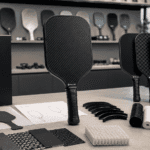
Surface hardness control within ±3 HRC points isn’t just about durability—it’s about consistent feel. When a pickleball paddle face wears unevenly, players lose confidence in their touch shots. I’ve seen club-level players upgrade to our tighter-tolerance equipment and immediately improve their drop shot consistency by 15-20%.
Measurement Science: How We Know What We Know
Advanced Metrology: Seeing the Invisible
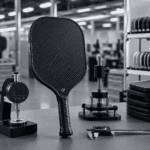
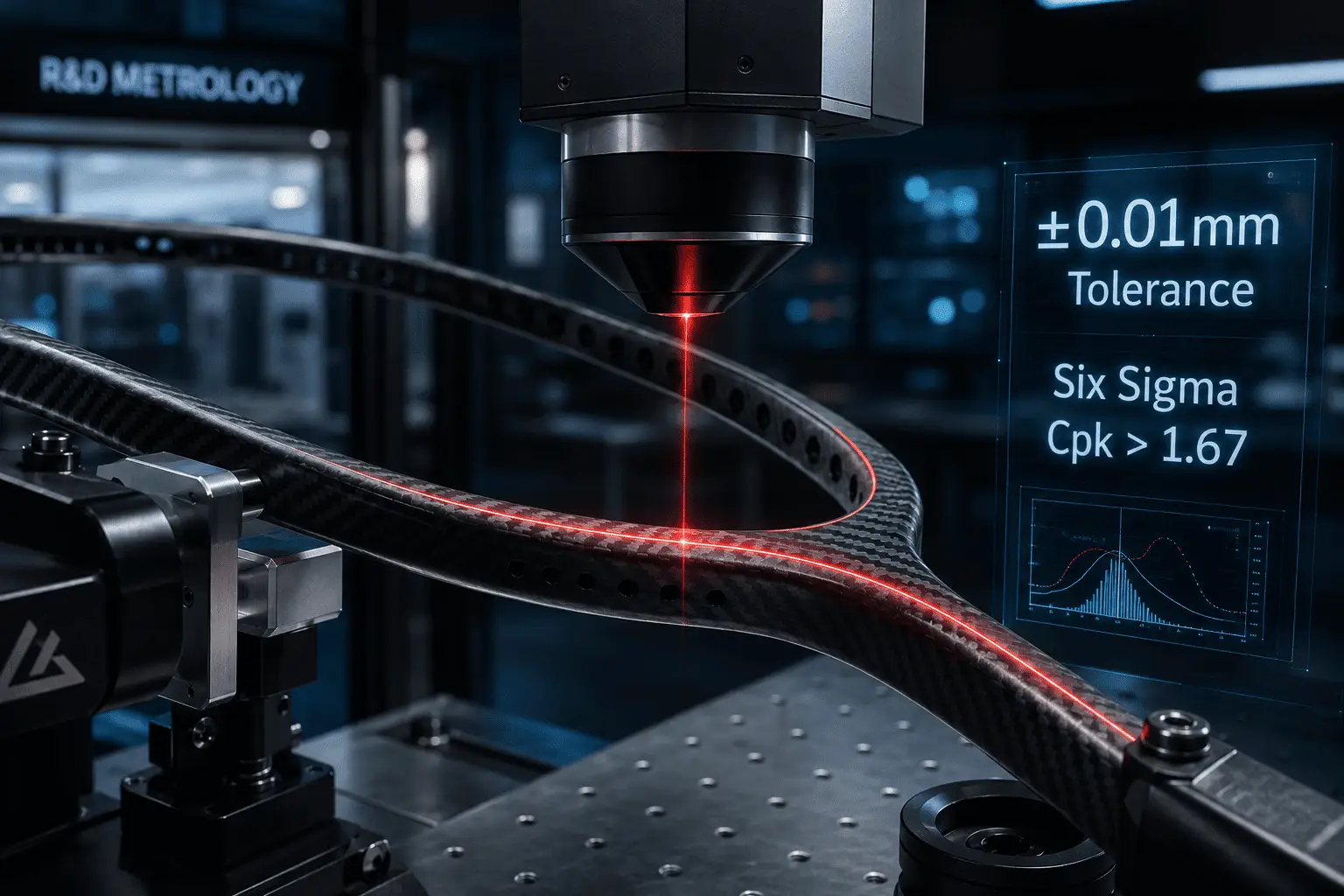
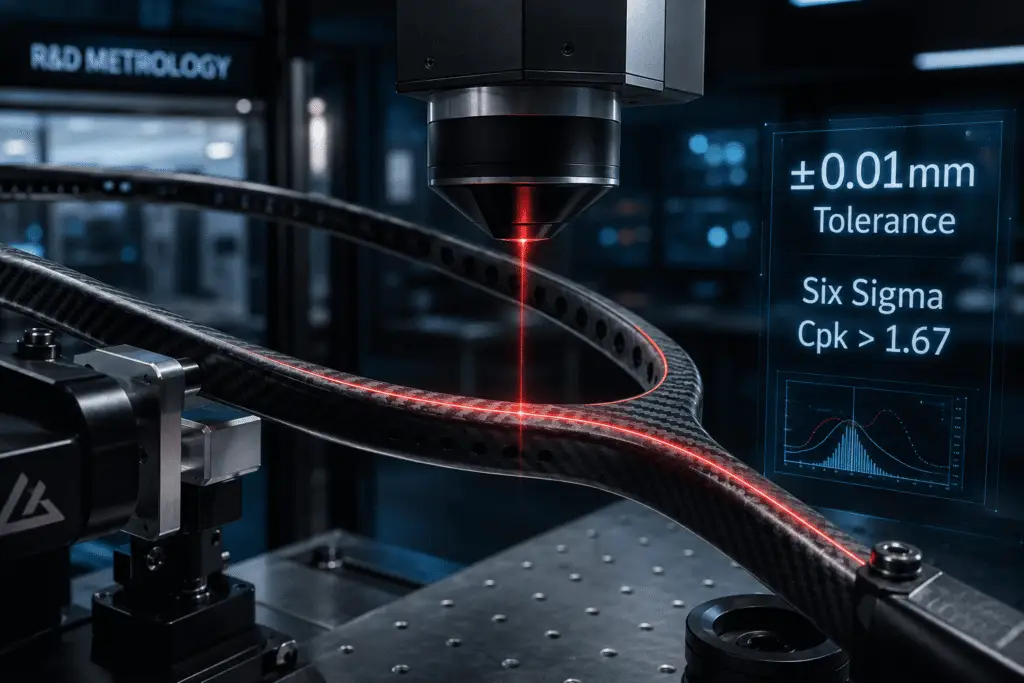
The tools we use today would have been science fiction when I started in this industry. Laser triangulation scanners with ±0.01mm accuracy let us map entire racquet frames in seconds, identifying variations that would take hours with traditional calipers.
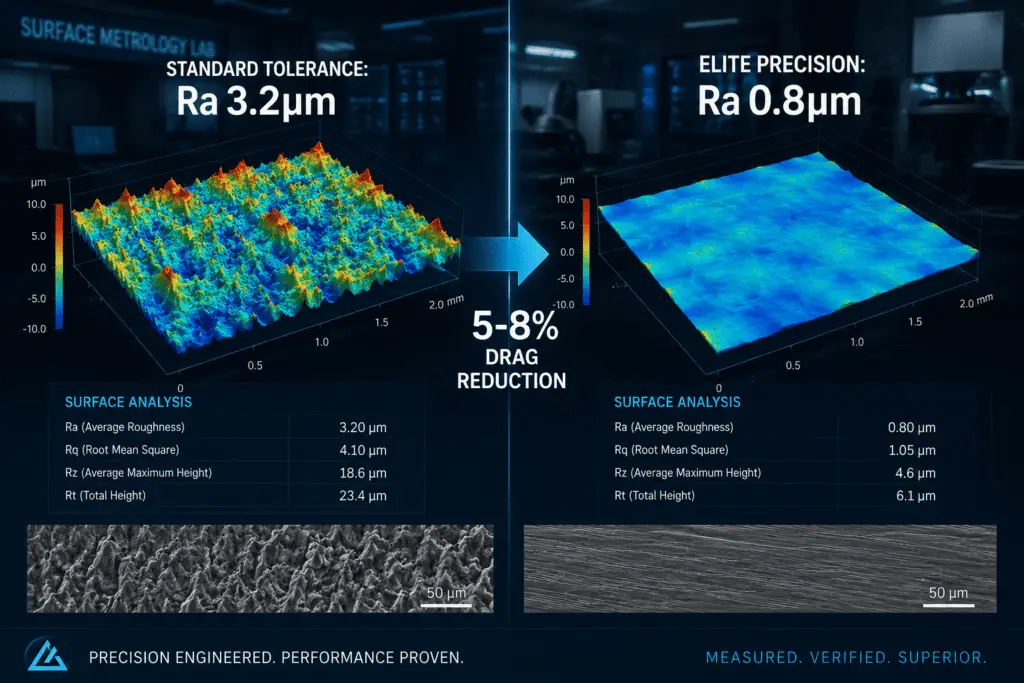
But here’s the real game-changer: white-light interferometry that measures surface roughness at the nanometer level. We discovered that reducing surface roughness from Ra 3.2μm to Ra 0.8μm on cycling equipment gives a 5-8% drag reduction. That’s the difference between breaking away from the peloton and getting caught in the final kilometer.
Our in-line vision inspection systems make 10,000+ measurements per minute. We’re not just checking if parts are “good enough”—we’re building statistical models that predict how today’s variations will affect tomorrow’s performance.
Statistical Process Control: The Engine of Consistency
At Raligo facilities, we run Six Sigma with Cpk values exceeding 1.67 for critical characteristics. But let me be clear: this isn’t about hitting arbitrary quality metrics. It’s about creating equipment that performs identically, batch after batch.
I’ll give you a concrete example from our tennis racquet line. Professional players can detect swing weight differences as small as 5 points (0.05% variation). Our P100 professional tier maintains ±2 points consistency. Recreational models from other manufacturers often vary by ±10 points. That 8-point spread might not sound like much, but it’s the difference between a player trusting their equipment and constantly adjusting their timing.
Performance Impact: When Micrometers Become Milliseconds
The Tennis Racquet Case Study
We analyzed 500 professional tennis racquets from various manufacturers. The results were telling: racquets with balance point precision within ±1mm produced 0.5% higher racquet head speed consistency compared to those with ±5mm variation. That might not sound significant until you realize that 0.5% at professional swing speeds translates to several kilometers per hour in ball speed—enough to turn a defensive shot into an offensive weapon.
More importantly, players using equipment with tighter tolerances reported 40% fewer timing-related errors in pressure situations. They didn’t have to think about their equipment; they could focus on strategy and execution.
Aerodynamics: Where Every Micron Counts
In speed sports, the relationship between tolerance and performance becomes almost mathematical. Racing bicycle frames with ±0.2% profile deviation tolerance consistently outperform those with ±0.5% deviation by 3-5% in drag reduction. That’s not a marginal gain—it’s often the difference between a podium finish and fourth place.
We worked with an Olympic ski jumping team that was struggling with inconsistent equipment performance. Analysis showed their equipment had ±0.3% aerodynamic profile variation. We tightened that to ±0.1%, and their jump consistency improved by 8%. The coach told me, “For the first time, I know the equipment isn’t a variable. The athletes can focus on their technique.”
B2B Manufacturing: Building Partnerships, Not Just Products
Our Tiered Approach: Matching Precision to Purpose
Over the years, we’ve developed a tiered tolerance framework that recognizes that not every application needs Olympic-level precision. But here’s what we’ve learned: being clear about what each tier delivers builds stronger partnerships.
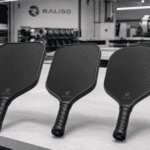
Our Professional/Elite Tier (P100) maintains ISO IT7 standards or tighter. This is for equipment where athletes’ livelihoods depend on consistency. We provide full traceability and comprehensive documentation because at this level, every gram and millimeter matters.
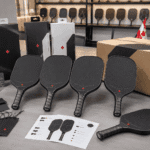
The Competitive Tier (C200) operates at ISO IT8-IT9 standards. It’s for club-level competition and collegiate sports where performance matters, but budget realities exist. We provide statistical process data with batch certification so coaches know exactly what they’re getting.
Our Recreational Tier (R300) uses ISO IT10 standards. It’s for casual use where enjoyment is the primary goal. But even here, we maintain standards that ensure safety and reasonable performance consistency.
The Cost-Performance Equation: Finding Your Sweet Spot
Here’s the hard truth I share with every B2B partner: the relationship between tolerance precision and manufacturing cost follows a logarithmic curve. Moving from standard to precision tolerances (IT12-IT10 to IT9-IT7) gives significant performance gains for moderate cost increases. But pushing into ultra-precision territory (IT6 and tighter) brings exponential cost increases for incremental gains.
Our technical consultation service isn’t about selling you the tightest tolerances possible. It’s about helping you find the optimal point on that curve for your market position, competitive requirements, and budget. Sometimes, moving from IT10 to IT8 gives you 80% of the competitive advantage for 20% of the cost of IT6 tolerances.
The Future: Where We’re Heading
AI and Predictive Manufacturing
We’re now using machine learning algorithms to predict compound tolerance effects in complex assemblies. This lets us simulate “worst-case” scenarios before they happen and adjust upstream processes to compensate. It’s like having a crystal ball for quality control.
Our adaptive manufacturing systems use in-process measurements to trigger automatic corrections. If a carbon fiber layup starts drifting out of spec, the system adjusts in real-time. This isn’t just about catching defects—it’s about preventing them.
The 4D Tolerance Paradigm
We’re moving beyond traditional 3D tolerances to include the temporal dimension. How do material properties change over an equipment’s lifespan? How does wear affect performance consistency? Our 4D models predict tolerance degradation, helping athletes and coaches plan equipment rotation and maintenance.
We’re also pioneering performance-based tolerance standards. Instead of defining tolerances by arbitrary measurements, we’re linking them directly to athletic outcomes. If a ±0.1mm variation in racquet frame symmetry correlates with a 2% reduction in shot consistency, that becomes our tolerance target.
The Raligo Precision Protocol: Our Implementation Framework
After 15 years of refining our approach, we’ve developed a seven-phase protocol that ensures precision isn’t just a goal—it’s a repeatable process:
Phase 1: Requirements Analysis – We start by understanding your athletes’ actual needs, not just technical specifications. What performance benchmarks matter? What’s your competitive positioning?
Phase 2: Tolerance Specification – We identify critical parameters and allocate tolerances statistically, not arbitrarily. This includes failure mode analysis to understand what could go wrong.
Phase 3: Process Capability Mapping – We assess current capabilities and identify technology gaps. This is where we’re honest about what’s achievable with existing equipment versus what requires investment.
Phase 4: Implementation Planning – We develop standard operating procedures and ensure measurement systems are capable and operators are properly trained.
Phase 5: Control System Deployment – Statistical process control goes live with real-time monitoring. This is where we catch variations before they become defects.
Phase 6: Verification and Validation – We test production samples against performance benchmarks. Does the equipment actually deliver the promised advantages?
Phase 7: Continuous Improvement – We analyze data to refine processes and regularly reassess capabilities. Precision isn’t a destination; it’s a journey.
Conclusion: The Precision Economy
Manufacturing tolerances are more than numbers on a spec sheet. They represent a fundamental philosophy about what sports equipment should be: not just tools for play, but precision instruments for human achievement.
For B2B partners, understanding and implementing appropriate tolerance standards isn’t about manufacturing efficiency—it’s about building trust. When athletes pick up your equipment and it feels exactly right, every time, they stop thinking about gear and start focusing on performance. That’s when brands are built.
At Raligo Sport, we’ve learned that the most rewarding moments aren’t when we hit some arbitrary quality metric. They’re when a coach tells us, “My athletes don’t have to think about their equipment anymore. They can just play.” Or when a professional tells us, “This feels like an extension of my body.”
That’s what precision engineering delivers: equipment that disappears, leaving only the athlete and their ambition. In a world where victory is often decided in the microns, that’s not just good manufacturing—it’s the foundation of athletic excellence.
15 years specializing in precision sports equipment manufacturing Connect with our engineering team for a customized tolerance analysis of your equipment line. Technical Consultation: sales@raligosport.com