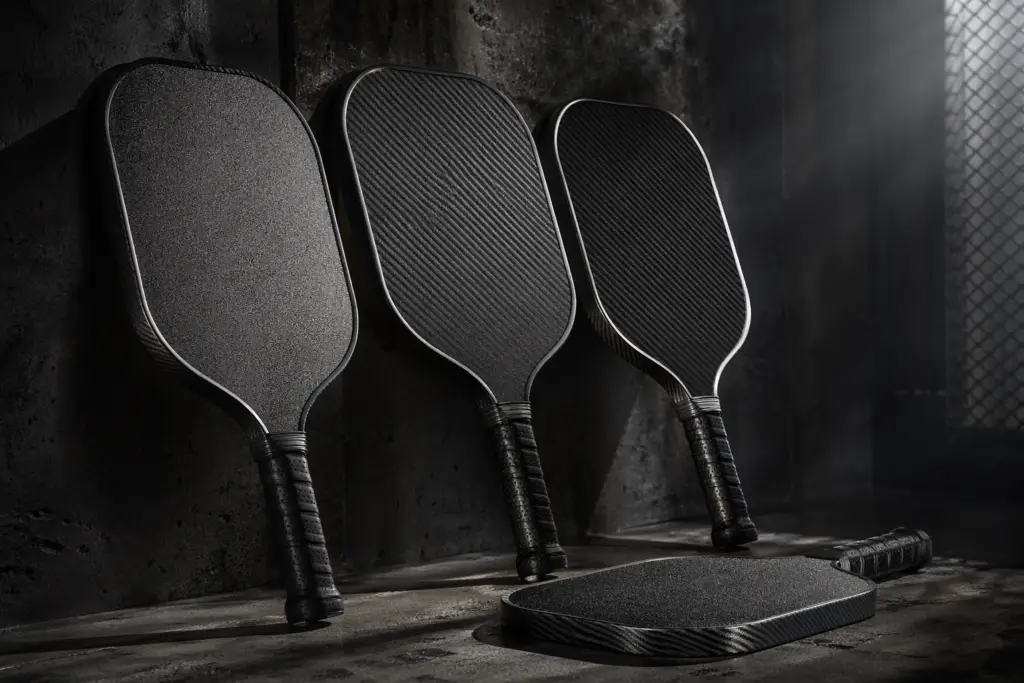
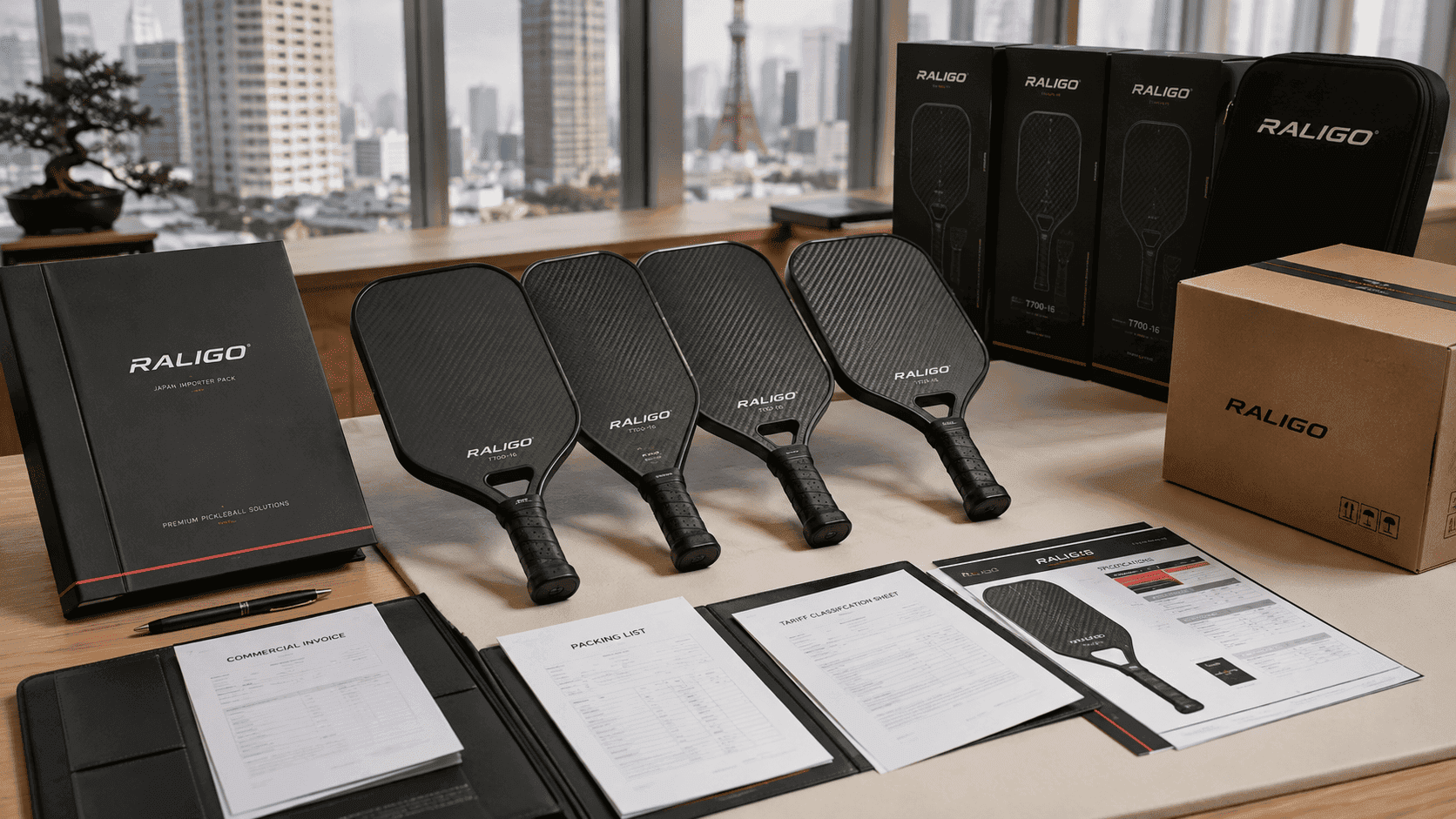
Japan is no longer a side note in the global pickleball supply conversation. The country now has a single unified governing body — “Pickleball Japan” (PJ), formed when the Japan Pickleball Association (JPA) and the Pickleball Japan Federation (PJF) merged effective April 14, 2026 — and U.S. operator Picklr announced plans to open 20 dedicated clubs in Japan. That venue growth is a leading indicator of equipment demand, and it is exactly why B2B importers are now asking how to bring carbon fiber paddles into Japan correctly.
This guide covers the mechanics that actually matter to a procurement team: how pickleball paddles are classified and dutied at the border, what Japan’s certification landscape does (and does not) require, and how core density and carbon fiber face spec shape both landed cost and market fit. Every section ends with a decision you can take into a PO.
What HS Code Applies to Pickleball Paddles Imported into Japan?
Pickleball paddles fall under HS Chapter 95, the goods-and-sports-equipment chapter, and sit in the subheading 9506.59 (articles and equipment for general physical exercise, gymnastics, athletics, or other sports, n.e.s.). This is the same chapter family Japan uses for badminton racquets and table tennis bats, so the classification logic is well-established — but the exact duty rate depends on the ten-digit Japanese tariff line, not the six-digit subheading alone.
Why this matters for landed cost: Japan Customs publishes duty rates by ten-digit “web tariff” code, and classification is decided by the imported article’s character, not by how the seller markets it. A paddle shipped as “carbon fiber sporting goods” versus “carbon fiber accessory” can be placed on different lines. Get the ten-digit code onto your commercial invoice before the ship date, and have your factory confirm the harmonized description matches the physical goods.
Decision: Ask your OEM supplier for the full ten-digit Japan tariff code and the exact goods description in English before finalizing the invoice. A one-line discrepancy at the border is the most easily avoided cost overrun in the whole import.
What Import Duty Do Pickleball Paddles Pay Entering Japan?
Japan does not run a single flat duty on sports equipment — the rate is set at the ten-digit line, and many 9506 subheadings carry a low or zero General rate under Japan’s tariff schedule, with further reductions available under Free Trade Agreement (FTA) or EPA (Economic Partnership Agreement) preferential rates where the country of origin qualifies.
The practical lever for a B2B importer is country of origin and the certificate of origin. If your carbon fiber paddles are manufactured in a country with which Japan has an EPA (China, ASEAN members, and others), you may cut the duty rate substantially versus the General rate — but only if you produce the correct origin documentation at clearance. This is where the factory’s role extends beyond manufacturing into trade documentation.
Decision: Confirm your supplier’s country of manufacture, then check Japan’s “1204 Duty Rates” schedule (customs.go.jp) and whether an EPA preferential rate applies. A certificate of origin is often worth more than a price negotiation on the unit FOB.
Do I Need Pickleball Japan (PJ) Approval to Sell Paddles in Japan?
Unlike the U.S., where the USA Pickleball “Approved” list is the de facto gate for tournament play, Japan’s newly unified body — Pickleball Japan (PJ) — is still building out its equipment standards and certification track. As of the 2026 merger, PJ’s focus has been on governance, membership, courts, referees, and certification of people (coaches, referees, professionals), not yet a hard-to-enforce paddle approval list for retail.
What this means in practice: USAPA approval remains your strongest export-ready signal. Japanese distributors and club buyers who follow North American playing standards will ask whether a paddle is on the USA Pickleball Approved Paddle List. A paddle built to USAPA surface specs (roughness, coefficient of friction, PBCoR) is a safe default that also positions you to ride PJ’s standards evolution as it formalizes.
Decision: Treat “USAPA-approved or USAPA-spec” as your baseline for Japan-market paddles, and monitor PJ’s equipment standards announcements. Do not print “approved by Pickleball Japan” on packaging — that claim does not have a recognized process behind it yet.
Why Core Density and Carbon Fiber Face Spec Decide Japan-Market Fit
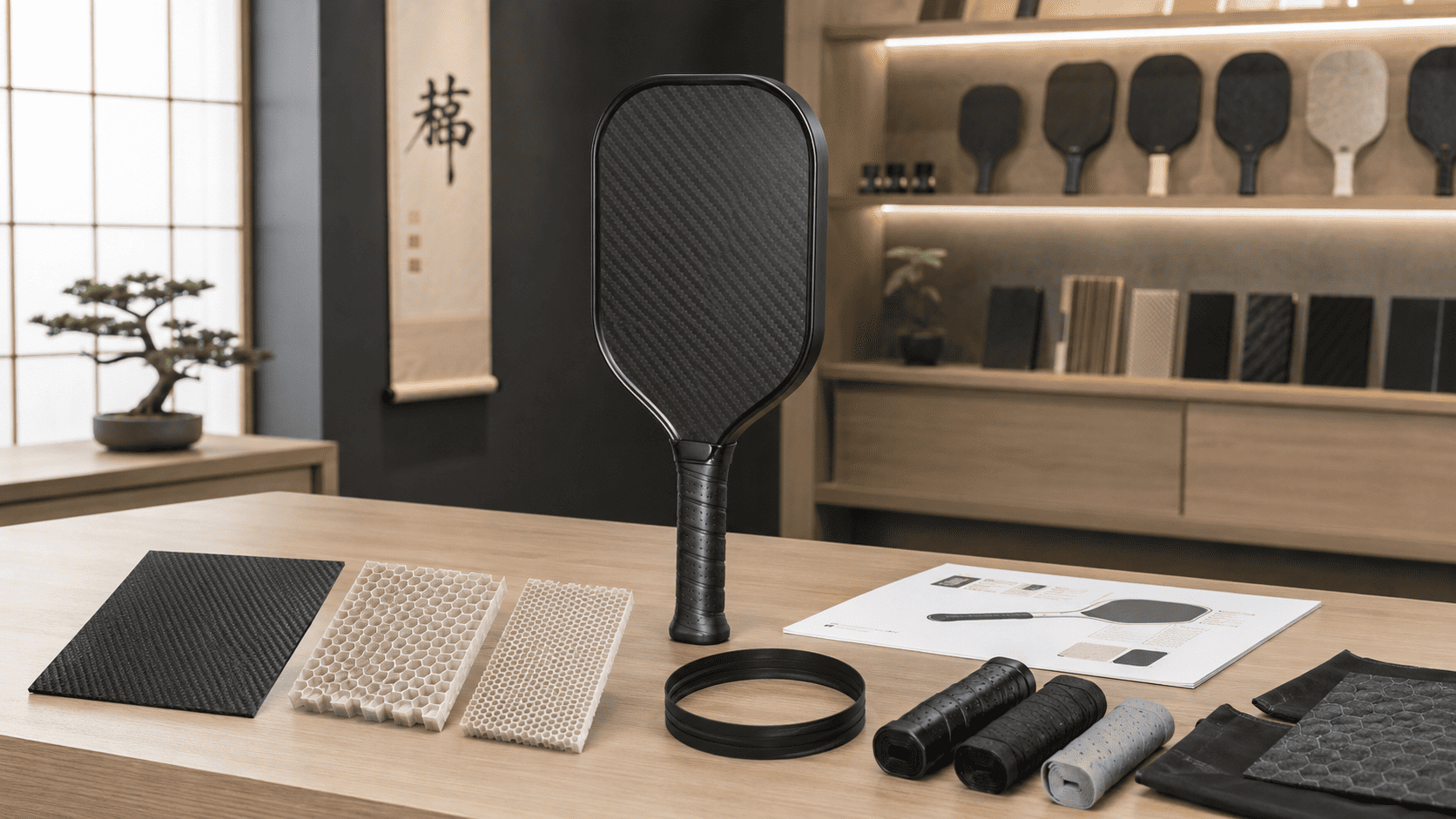
Japan’s playing culture skews toward club and indoor play, tight control, and a lighter, finesse-oriented game — closer to badminton and table tennis sensibilities than the power-heavy outdoor U.S. game. That tilt changes what “good” means in a paddle spec.
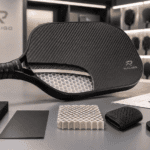
Two levers matter most. First, core density: a higher-density polypropylene honeycomb core stiffens the face and reduces dwell time, which favors power; a slightly lower or tuned density softens the face and lengthens dwell for touch and control. For Japan’s control-first indoor game, a mid-density 16mm core with a thermoformed unibody chassis is the portfolio sweet spot. Second, the carbon fiber face — Toray T700 raw carbon gives a crisp, repeatable response without the brittleness of a pure high-stiffness layup, and its spin profile holds up on indoor surfaces where spin is harder to generate.
Decision: Spec your Japan SKU as a 16mm thermoformed paddle with a tuned mid-density core and T700 raw carbon face, then verify the surface stays within USAPA roughness/COF limits so you do not build a control paddle that fails friction testing.
How to Find a Reliable OEM Supplier for the Japan Market
The supplier question for Japan is less “who can make a paddle” and more “who can hold a spec and a ten-digit tariff description across repeat orders.” Three checks separate a Japan-ready OEM from a generic carbon fiber shop:
1. Documentation discipline. Can the factory provide a certificate of origin, a ten-digit HS description, and batch-level material traceability on request?
2. Core-density consistency. Do they lock the core family, density, and weight range per model — not just per sample — so carton-to-carton consistency holds?
3. USAPA-spec surface control. Do they run profilometry (roughness) and coefficient-of-friction checks so the “control” paddle stays compliant after surface texturing?
Decision: Before placing a Japan-bound order, send the factory a one-line ask: your ten-digit Japan tariff code, your country of manufacture, and your core-density tolerance per model. If the answer is vague, keep looking.
A Japan Import Checklist for B2B Buyers
| Step | What to lock | Why it matters |
|---|---|---|
| Classification | Ten-digit Japan HS code (9506.59 family) | Determines duty rate and clearance path |
| Duty & origin | Certificate of origin + EPA preferential rate | Can materially cut landed cost |
| Compliance | USAPA-spec surface (Rz/Rt, COF, PBCoR) | Export-ready baseline; aligns with PJ evolution |
| Spec fit | 16mm thermoformed, tuned mid-density core, T700 face | Matches Japan’s control-first indoor play |
| Supplier | Tariff description + density tolerance + traceability | Prevents border and batch-consistency surprises |
Frequently Asked Questions
What HS code applies to pickleball paddles imported into Japan?
Paddles are classified under HS Chapter 95, subheading 9506.59, as articles and equipment for other sports. The exact duty rate depends on the ten-digit Japanese tariff line, so confirm the full code with your supplier before shipping.
Do I need Pickleball Japan approval to sell paddles in Japan?
Not yet as a hard retail requirement. Pickleball Japan (PJ), formed by the JPA/PJF merger in April 2026, is still formalizing equipment standards. USAPA approval or USAPA-spec construction remains the strongest export-ready baseline for now.
What import duty do pickleball paddles pay entering Japan?
Duty is set at the ten-digit tariff line rather than a flat sports rate, and EPA preferential rates can reduce it based on country of origin. A certificate of origin is often the single highest-value document in the clearance.
Is USAPA approval enough for the Japanese market?
For most distributors and club buyers following North American standards, yes — USAPA approval is the recognized signal. Monitor PJ’s equipment standards as they evolve, but do not claim “Pickleball Japan approved” on packaging.
How does core density affect Japan-market performance fit?
Higher core density favors power and stiffness; a tuned mid-density core lengthens dwell for control. Japan’s control-first indoor play rewards a 16mm thermoformed paddle with a mid-density core and T700 raw carbon face.
Ready to Source Your Japan-Market Paddles?
Talk to our OEM team about carbon fiber paddle manufacturing for the Japan market. From core density specs and HS-code documentation to bulk production, we handle it at our ISO-compliant factory.