Carbon Fiber vs Polymer Core: The Ultimate B2B Pickleball Paddle Material Selection Guide
Let’s be honest—if you’re a B2B brand, wholesaler, or custom manufacturer watching the pickleball market explode right now, you know there’s a ton of noise out there. But when it really comes down to building a product lineup that actually sells, there’s one critical decision you simply can’t afford to get wrong: material selection.
The materials you choose aren’t just about how the paddle feels on the court. They literally dictate your manufacturing costs, your profit margins, and exactly who is going to buy your gear.
If you’ve spent any time looking into this, you’ve probably heard endless debates about two materials: Carbon Fiber (usually the face) and Polymer (usually the core). Figuring out how these two work together is pretty much the secret sauce to launching a profitable paddle line.
So, let’s cut through the marketing fluff. Here’s a no-nonsense breakdown of the performance differences, the real cost implications, and some strategic sourcing advice from someone who knows the industry inside out.
1. What’s the Deal with Carbon Fiber? (The Face)
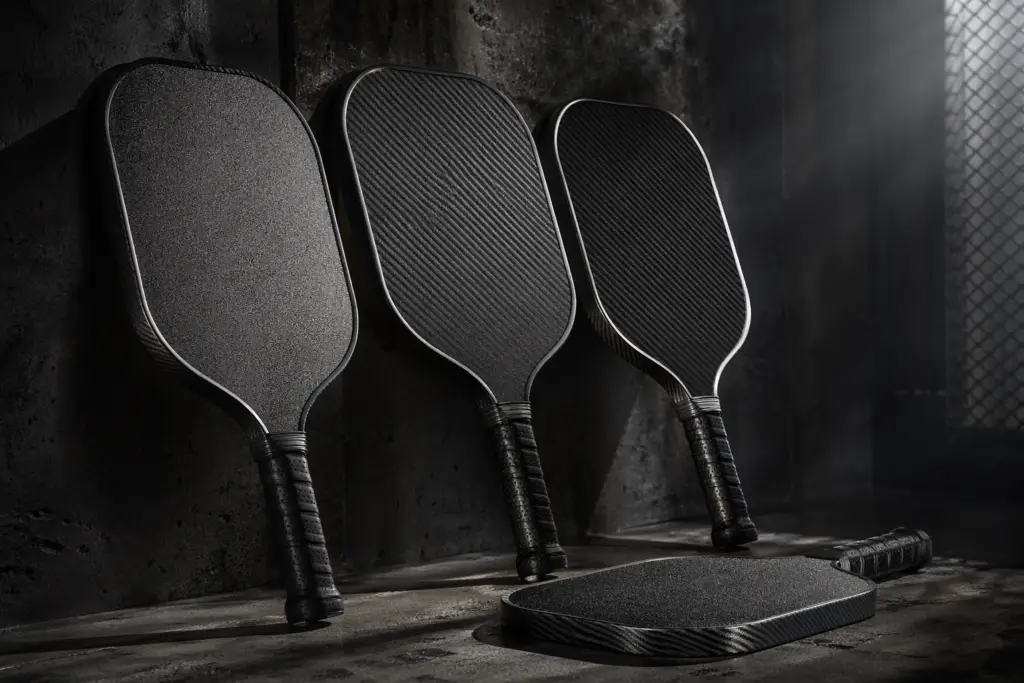
Over the last couple of years, carbon fiber has become the undisputed gold standard for premium paddles. If you’re targeting intermediate or advanced players, this is what they expect to see. In paddle construction, carbon fiber is primarily used as the facing (the surface), and you’ll often see specialized weaves like Toray T700 raw carbon fiber getting a lot of hype.
Performance: What it Actually Does
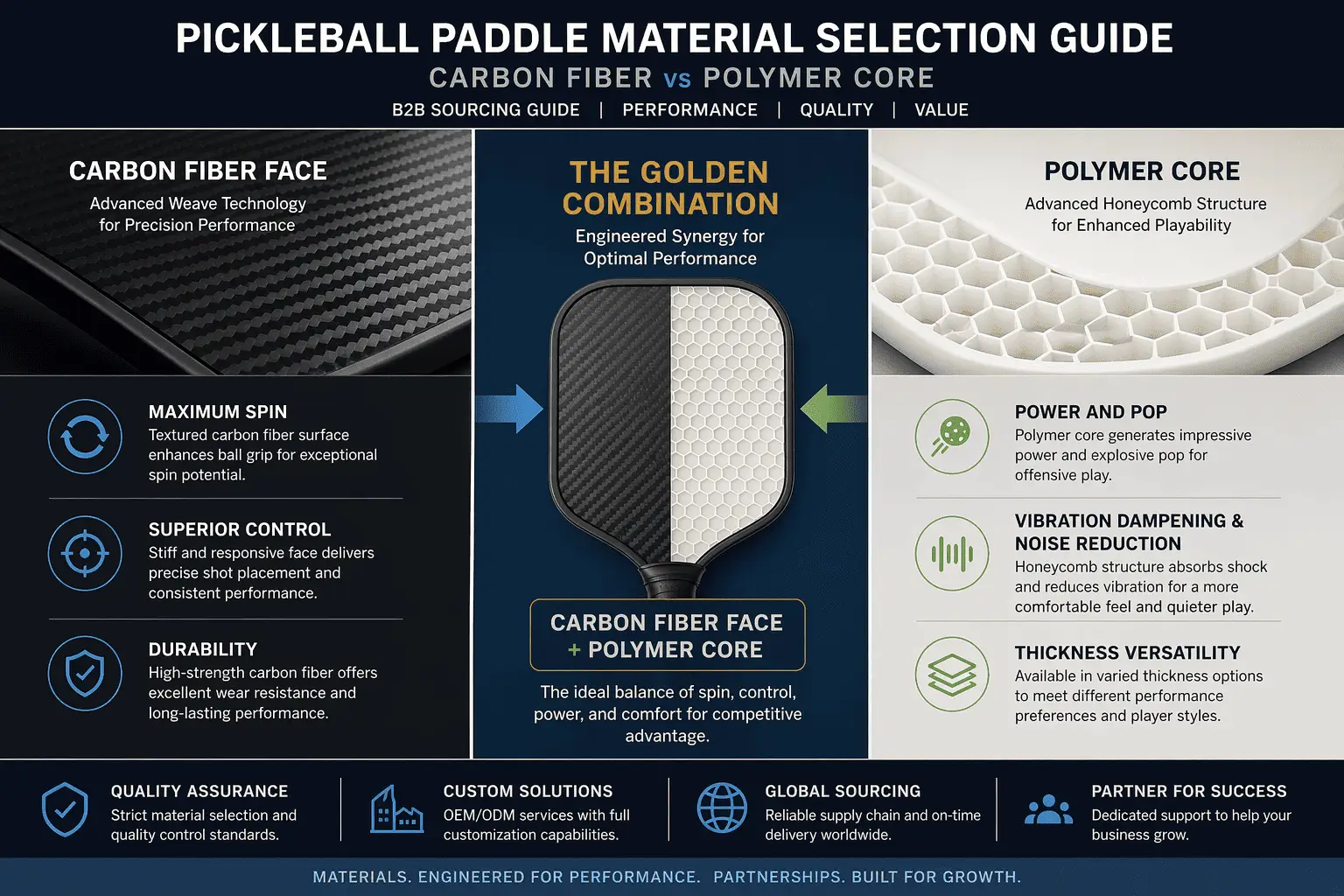
- Massive Spin: Raw carbon fiber gives you this incredibly gritty, long-lasting textured surface. It literally grips the ball and rips it back with crazy spin.
- Dialed-in Control: Compared to fiberglass, carbon fiber is much stiffer and more responsive. It actually absorbs a bit of the impact energy, giving players a “plush” or “soft” feel that is absolutely critical for dinking, drops, and precision shots.
- Serious Durability: Good quality carbon fiber holds up. While painted or spray-on grit wears off after a few months of heavy play, a raw carbon weave maintains its texture way longer.
The Cost Reality
Make no mistake—carbon fiber is a premium material, and you pay for it. Sourcing high-grade raw carbon fiber (like the T700 or T800 series) is going to noticeably bump up your manufacturing costs. Because of this, you really have to position carbon fiber paddles strictly in the mid-to-high-end retail tiers if you want to protect your margins.
2. Unpacking Polymer Cores (The Engine Room)
If the face of the paddle is what interacts with the ball, the core is the engine that drives everything else. It dictates the paddle’s overall power, feel, and weight. Today, Polymer Honeycomb (Polypropylene or PP) absolutely dominates the market. It’s pretty much replaced older materials like Nomex or aluminum.
Performance: What it Actually Does
- Reliable Power and Pop: Polymer cores compress when the ball hits them and spring back instantly. That’s what gives players that satisfying “pop” and effortless power.
- Vibration and Noise Control: Honestly, this is a huge selling point. Polymer absorbs shock incredibly well. This means less risk of tennis elbow for the player, and it significantly dampens that loud “thwack” sound, making the paddles much more neighborhood-friendly.
- Total Versatility: From a manufacturing standpoint, polymer is a dream. You can easily produce it in different thicknesses—go with 10mm if you want a power paddle, 14mm for a great all-rounder, or bump it up to 16mm for maximum control and a super plush feel.
The Cost Reality
Here’s the good news: Polypropylene honeycomb is incredibly cost-effective. It’s scalable and easy to mass-produce without blowing your budget. That’s exactly why it’s a staple material across basically every single price point in the market.
3. The Holy Grail: Carbon Fiber + Polymer Core
I want to clear something up right now because I see a lot of buyers getting confused here: Carbon Fiber and Polymer are not mutually exclusive. You don’t pick one or the other.
In modern, high-end paddle manufacturing, the absolute industry standard is a Polymer Honeycomb Core sandwiched perfectly between two Carbon Fiber Faces.
This combo gives you the best of both worlds:
- The Polymer Core handles the power, expands the sweet spot, and eats up the vibrations.
- The Carbon Fiber Face tames all that raw power, delivering elite control, spin, and the structural rigidity the pros demand.
4. My B2B Sourcing Playbook: Where to Position Your Brand
When you’re designing your product lines, you can’t just build a paddle in a vacuum. Your material specs have to align perfectly with your target buyer and your wholesale budget. Here is exactly how I’d break it down:
Tier 1: Recreational & Entry-Level Brands
- The Spec to Use: Fiberglass Face + 10mm to 13mm Polymer Core.
- The “Why”: Fiberglass is significantly cheaper than carbon fiber, plain and simple. Plus, it provides “free power” for beginners who haven’t quite figured out their swing mechanics yet. A thinner core keeps the paddle lightweight and easy to swing.
- The Business Strategy: High volume, low margin, low Minimum Order Quantity (MOQ). This is your bread and butter for big-box retailers or bundling up on Amazon.
Tier 2: Intermediate & Enthusiast Brands
- The Spec to Use: Graphite or Standard Carbon Fiber Face + 13mm to 14mm Polymer Core.
- The “Why”: This is a noticeable step up. It gives players way more control than a basic fiberglass paddle, and the medium core offers a really nice, balanced mix of power and touch.
- The Business Strategy: Medium volume, healthy margins. If you’re pitching to local sporting goods stores or building a dedicated e-commerce brand for players looking to upgrade, this is your sweet spot.
Tier 3: Professional & Premium Brands
- The Spec to Use: Raw Toray T700/T800 Carbon Fiber Face + 14mm to 16mm Polymer Core (bonus points for edge foam injection and thermoformed unibody construction).
- The “Why”: This is the top of the mountain. It maximizes spin, pushes the sweet spot right to the edges, and delivers the plush, predictable control advanced players obsess over.
- The Business Strategy: Lower volume, high margin. Be prepared, though—sourcing these requires partnering with top-tier manufacturing facilities that actually know how to do thermoforming and precise carbon weaving right. Your quality control (QC) costs will absolutely be higher here.
Wrapping It Up
Frequently Asked Questions About Pickleball Paddle Materials
What is the difference between carbon fiber face and polymer core in pickleball paddles?
Carbon fiber is used as the paddle face material providing spin, control, and durability, while polymer (polypropylene honeycomb) is used as the core material providing power, vibration dampening, and weight distribution. In high-end paddles, they work together as a polymer core sandwiched between carbon fiber faces.
Which is better for pickleball paddles: carbon fiber or polymer?
They are not competing materials but complementary components. The best pickleball paddles use a carbon fiber face bonded to a polymer honeycomb core. Carbon fiber delivers spin and control; polymer core delivers power and feel. The material combination determines overall paddle performance.
How do I choose between carbon fiber and fiberglass paddle faces for B2B sourcing?
Carbon fiber faces offer superior spin, control, and durability for premium tier products, but at higher cost. Fiberglass faces are more affordable and provide free power for entry-level lines. For B2B brands, carbon fiber targets Tier 3 professional positioning, while fiberglass suits Tier 1 recreational products.
If you’re a B2B brand stepping into the pickleball space—or trying to expand your current footprint—understanding the exact roles of the paddle face and core isn’t just helpful; it’s mandatory.
Polymer honeycomb is the undisputed king of cores because it’s cheap, reliable, and performs well. Carbon fiber, on the other hand, is going to cost you more, but it is an absolute necessity if you want anyone in the enthusiast or pro markets to take your brand seriously.
By carefully pairing the right carbon fiber face with the exact right thickness of polymer core, you can engineer a paddle that hits your target audience’s play style—and your budget—dead center. Let’s get to building.
If you’re evaluating T700 carbon fiber as your paddle face material, read our deep dive: Why T700 Carbon Fiber Is the Top Choice for Pickleball Paddle Manufacturers.